

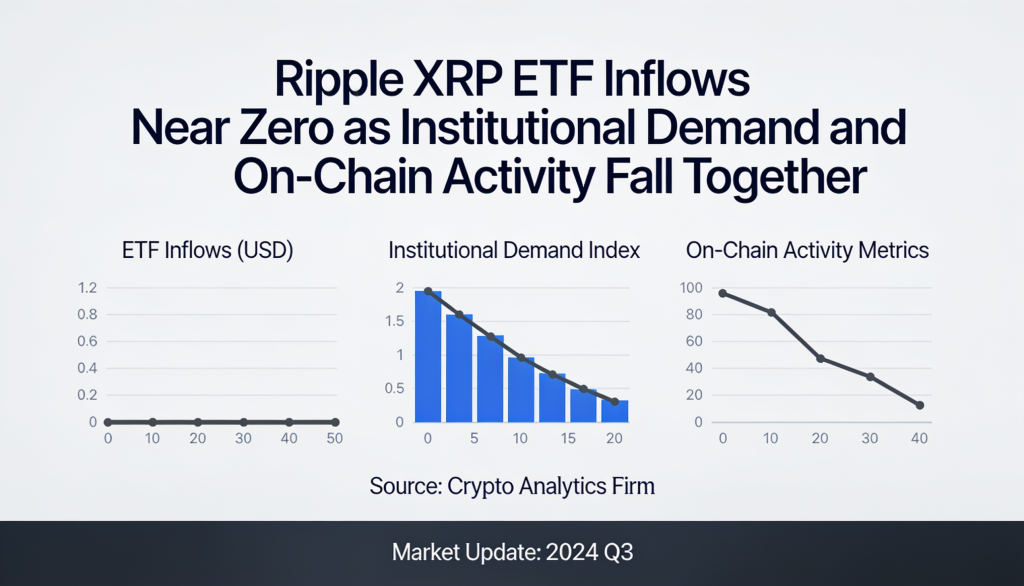
U.S. spot XRP ETFs recorded just $107,000 in inflows on July 10—a figure so small it appears almost negligible for a product category that attracted over $100 million in a single month just two months earlier.
Combined assets under management (AUM) across the seven XRP funds have now slipped below the $1 billion mark to approximately $996 million, ending what had been seen as one of the stronger institutional accumulation trends in the current crypto ETF cycle.
The key issue now isn’t whether institutional demand has cooled—it clearly has—but whether this slowdown represents a temporary pause in a longer-term allocation strategy or the start of a more prolonged pullback.
This distinction is critical for XRP’s price outlook, which has so far remained above $1 even as both retail and institutional demand weaken at the same time.
From $100M Inflows to Stagnation: A Sharp Reversal
The shift in XRP ETF flows has been rapid. In May 2026, these funds attracted more than $100 million over the month, with consistent weekly inflows.
By contrast, July tells a very different story. Several days have seen zero inflows, while July 8 recorded $7.29 million in net outflows—one of the largest single-day declines since March 2026.
In just six weeks, the momentum has shifted from steady accumulation to near standstill. Notably, much of July’s outflow appears concentrated in a single issuer, suggesting the move may be driven more by fund-specific redemptions rather than a broad-based institutional exit. This nuance will become clearer as the rest of July’s data unfolds.
What Could Reverse the Trend—And What Might Not
Ripple’s RLUSD stablecoin is already generating around $2.5 billion in volume on the XRP Ledger, while approximately $4 billion in tokenized real-world assets are currently active on the network.
Upcoming developments include native lending in the next major ledger upgrade and an already live Ethereum-compatible sidechain. If these initiatives drive sustained on-chain engagement—measured through active addresses and new wallet growth rather than just transaction volume—they could help revive ETF demand by signaling real network usage.
However, if these catalysts fail to gain traction, XRP may continue trading sideways, supported mainly by large holders while institutional investors wait for stronger confirmation before re-entering.
The downside scenario is less about a sharp price collapse and more about a gradual erosion, where persistent ETF outflows slowly weaken long-term support, indicating a deeper shift in institutional sentiment.
Broader crypto market conditions will also play a role. A rebound in Bitcoin ETF inflows and improving macro risk appetite could lead to renewed capital rotation into XRP ETFs.
While July’s data serves as a warning sign, it represents only a snapshot within a broader trend that has seen nearly $1.5 billion in cumulative inflows since launch. Institutional commitment has been evident so far—but whether it holds through another month of subdued prices and weak on-chain activity remains an open question.
About The Author





More Stories
Bond Volatility Surges as Bitcoin and Wall Street Remain Calm
Altcoins Surge as Bitcoin Holds Near $84,000
Bitcoin ETF Flows Turn Positive in 2026 After Erasing $5.8B Deficit