

Here’s a clear, fully paraphrased version with a fresh narrative flow:
Bitcoin climbed toward the $65,000 level after softer-than-expected inflation data, but blockchain data suggests that two major investor groups are using the rally to sell.
While favorable macro conditions are pushing BTC higher, both long-term and short-term holders appear to be offloading positions, which could limit further upside.
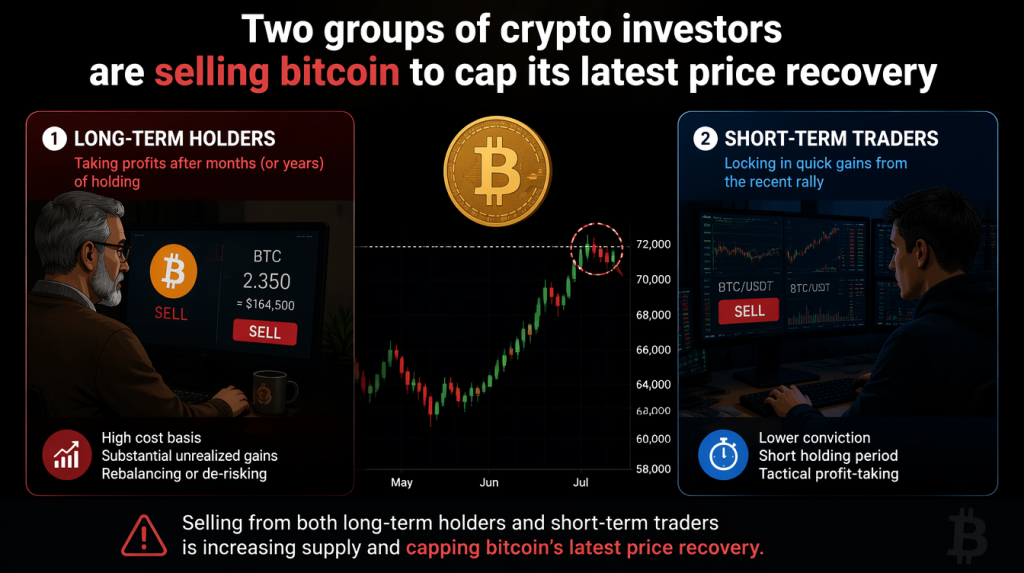
The first group includes long-term holders — defined by Glassnode as wallets holding assets for at least five months. Many of these investors, who bought near last year’s highs, are now exiting positions at a loss during the rebound instead of waiting for a deeper recovery. This behavior points to weak confidence in the durability of the current rally.
Short-term holders are showing a similar pattern. Those who accumulated bitcoin near recent lows are now taking profits at a rate exceeding $4 million per day, echoing selling activity seen in May when BTC briefly rallied toward its 200-day average above $82,000.
Together, this dual wave of selling is likely creating overhead supply just as bitcoin attempts to break higher, highlighting lingering uncertainty among investors still holding underwater positions.
Analysts noted that as prices approach $66,000, realized losses among long-term holders are increasing sharply. Investors who bought near cycle peaks are using the rebound as an opportunity to exit, accepting smaller losses compared to what they faced when BTC dropped below $60,000. This pattern suggests fading conviction among these holders.
At the same time, short-term holders who entered near recent lows are cashing out at levels of activity similar to those seen near May’s peak, adding further selling pressure.
Bitcoin has rebounded this week from around $61,500 to nearly $65,000, with most of the gains coming after Tuesday’s U.S. inflation report. Consumer price index (CPI) data showed headline inflation rising 3.5% year-over-year in June, below the expected 3.8%, signaling a slowdown. Core CPI, which excludes food and energy, rose 2.6% annually and was flat on a monthly basis.
The producer price index for June also came in below expectations, reinforcing the view that inflation pressures are easing. This reduced concerns about further Federal Reserve rate hikes, pushing the dollar index lower — down about 0.5% to 100.48 — while Treasury yields also declined.
However, some analysts question how sustainable this rally is. They argue that falling oil prices played a major role in lowering inflation, and with oil now rebounding, the data may already be outdated.
Ryan Lee, chief analyst at Bitget, pointed out that the 3.5% CPI figure was largely driven by a sharp drop in gasoline prices during June — a trend that has already reversed. He noted that Brent crude has climbed to a one-month high amid rising tensions around the Strait of Hormuz.
According to Lee, markets may be reacting to past data while current conditions are shifting, with July inflation likely reflecting increased geopolitical risks.
Jasper De Maere, an OTC trader at Wintermute, also urged caution. While he acknowledged that the inflation data is supportive and recent headlines are encouraging, he emphasized that broader risks remain.
He highlighted that U.S. military actions in Iran are ongoing and that market sentiment remains fragile, with the Fear & Greed Index only inching up from 22 to 25 — still firmly in “extreme fear” territory. He added that a single favorable inflation report does not necessarily signal a lasting shift in investor risk appetite.
About The Author





More Stories
CFTC Warns Prediction Platforms of Manipulation Risks in ‘Mention Markets’
Lummis Says Trump Opposition Helped Derail Crypto Clarity Act
XRP Ledger Retries Upgrade Designed to Split Payments and Compliance Roles