

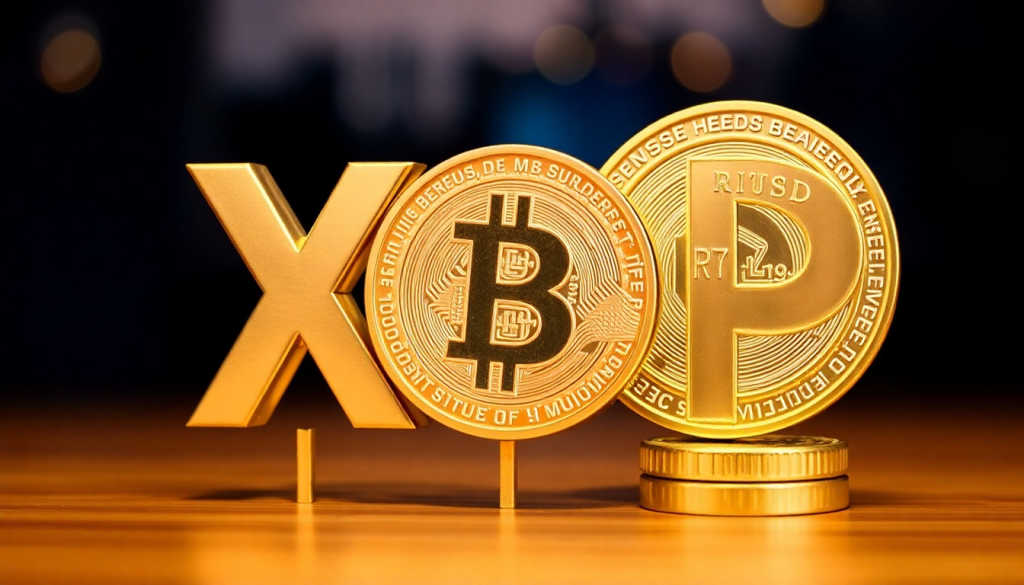
Ripple’s RLUSD stablecoin has received a significant boost in institutional credibility after Moody’s assigned it an A2 long-term deposit rating and a P-1 short-term rating, its highest short-term category. The assessment covers RLUSD issued on both the XRP Ledger and Ethereum, giving institutional investors another reference point for evaluating the dollar-pegged asset.
The rating comes as Ripple receives final approval to establish a national trust bank under the Office of the Comptroller of the Currency (OCC). According to Ripple, the bank will oversee RLUSD reserves and offer custody services to institutional clients. The Bank of New York Mellon will continue serving as the stablecoin’s primary reserve custodian.
However, the development raises a broader question for XRP holders: if RLUSD becomes widely used for institutional settlements, how much of that growth will translate into value for XRP? Binance’s former BUSD and BNB ecosystem provides a useful comparison, although Ripple’s business model operates differently.
Discover: Crypto Presales to Watch in Q4 2026
RLUSD Gains Moody’s Rating as Ripple Expands Its Institutional Reach
Moody’s assessment gives RLUSD a formal credit rating that institutional risk departments can use when reviewing the stablecoin. Issuance will remain under Standard Custody & Trust Company, Ripple’s New York-regulated subsidiary.
The approved trust bank activities include managing segregated reserves, serving as a collateral trustee, and providing fiduciary custody services for digital assets. Ripple outlined these activities on October 26.
Together, the rating and banking approval could strengthen Ripple’s position in institutional payments, corporate treasury management, and collateral services. For XRP, however, the potential benefit depends on whether institutions using RLUSD also generate meaningful demand for the network’s native token.
Every transaction on the XRP Ledger requires XRP to cover network fees, while accounts must hold XRP to meet reserve requirements. An increase in RLUSD transactions could therefore create some additional utility for XRP, but these basic requirements may generate only modest demand.
A potentially larger source of demand would come from cross-currency payments. Financial institutions could use XRP as a bridge asset to exchange one currency for another, reducing the need to rely entirely on dollar stablecoins or conventional intermediaries.
However, institutions can transfer RLUSD without buying XRP to cover the full value of each payment. Transactions conducted on Ethereum also do not require XRP to pay network fees.
As a result, RLUSD’s market capitalization could expand substantially without producing a comparable increase in XRP demand. The stronger bullish scenario would emerge if stablecoin adoption also deepened XRP liquidity, increased bridge-asset transactions, and attracted more institutional trading activity.
Can Ripple Recreate Binance’s BUSD–BNB Value-Capture Model?
Binance’s historical ecosystem illustrates how a stablecoin can complement a broader crypto platform. BUSD supplied dollar-denominated liquidity, while BNB supported multiple functions across Binance’s exchange and blockchain infrastructure.
BNB’s utility includes paying network fees and receiving trading-fee discounts. Binance has also used token burns to reduce the circulating supply over time. These features connect BNB more directly to activity throughout its ecosystem.
Ripple’s structure is different. RLUSD is designed to maintain a stable dollar value, while XRP serves as the XRP Ledger’s native asset and can function as a bridge currency for cross-border transactions.
Ripple could establish a similar value-capture relationship if wider RLUSD adoption leads institutions to use XRP more frequently for liquidity and settlement. However, that outcome would require XRP to play a meaningful role in the financial activity generated by the stablecoin.
Consider a hypothetical scenario in which RLUSD’s market capitalization increases from $2.5 billion to $25 billion. That would represent tenfold growth in the stablecoin’s size and could significantly expand Ripple’s institutional business.
Such an increase would not automatically translate into a tenfold rise in XRP’s price. The effect on XRP would depend on transaction volumes, ledger activity, institutional integrations, and the share of payments that actually use XRP as a bridge asset.
Ripple may be able to build a more closely connected ecosystem, but it would need to strengthen XRP’s role within the financial services surrounding RLUSD. Stablecoin expansion by itself would not replicate BNB’s exchange-related utility or its token-burning mechanism.
Ultimately, Ripple appears to be expanding its regulated dollar-based financial business. The key question for XRP investors is whether that growth will create meaningful, sustained demand for the native token—or primarily benefit RLUSD and Ripple’s institutional services.
About The Author




More Stories
Bitcoin Reclaims $81K as Asian Chip Rally Lifts Crypto, PEPE Gains 9%
Kospi Jumps 7% as SK Hynix Earnings Revive AI Stock Rally
Bitcoin and S&P 500 Could See Major Gains After U.S. Midterm Elections