

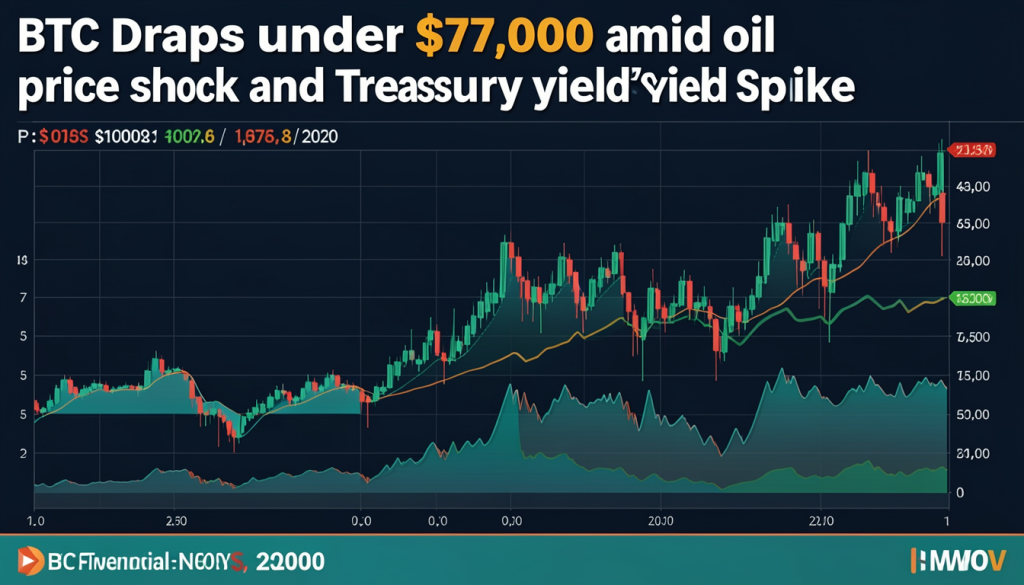
Bitcoin fell below $77,000 in Asian trading on Monday as a renewed rise in oil prices and Treasury yields pressured risk assets, while traders continued to rule out near-term policy easing from the Federal Reserve.
The move reflects a shift in macro conditions that has become increasingly unfavorable for crypto. The 30-year U.S. Treasury yield climbed to 5.13%, its highest level since 2007, with shorter-dated yields also pushing to fresh one-year highs. At the same time, prediction markets show overwhelming expectations that the Fed will keep rates unchanged, with odds of a pause at 98% for June and 94% for July.
Higher yields are a key headwind for bitcoin. As returns on government bonds rise, the relative appeal of non-yielding assets like BTC diminishes, particularly in an environment where inflation concerns—driven in part by elevated oil prices—remain persistent.
On-chain data, however, continues to point to underlying resilience.
According to Binance Research, nearly 60% of bitcoin’s supply has not moved in over a year, highlighting strong conviction among long-term holders. Exchange balances have also dropped to six-year lows, suggesting limited immediate selling pressure from spot markets.
Still, risks are building beneath the surface.
Metrics tracking short-term holders show growing stress. The MVRV ratio for recent buyers has fallen below 1, indicating that many are now holding bitcoin at a loss. This creates a more fragile market structure, as investors already underwater may be more inclined to exit positions if macro conditions deteriorate further.
Market participants are now watching a series of near-term catalysts. Nvidia’s earnings on Wednesday are expected to act as a proxy for broader risk sentiment given its central role in the AI-driven rally in equities. U.S. PPI data on Thursday will provide another signal on whether inflation pressures are spreading beyond energy.
Meanwhile, developments in Washington around the CLARITY Act—legislation aimed at defining crypto market structure—remain an additional point of focus.
For now, bitcoin sits at the intersection of supportive on-chain dynamics and tightening macro conditions. While low exchange balances and dormant long-term supply may help contain sustained selling, they offer limited protection against sharp drawdowns driven by rising yields or shifting risk appetite.
The key question for the near term is whether BTC can hold steady in a high-rate environment, as investors weigh persistent inflation against the diminishing likelihood of imminent monetary easing
About The Author





More Stories
Bitcoin Starts New Quarter Stuck in Familiar $82K-$85K Range
Citigroup Lifts 12-Month Bitcoin Target to $113K as ETF Inflows Return
Bitcoin’s Inflation-Fueled Jump to $85.5K Fades as Yields Stay High