

Bitcoin traded near $67,000 following the release of a stronger-than-expected U.S. employment report, showing limited immediate reaction as macro uncertainty continues to dominate market direction.
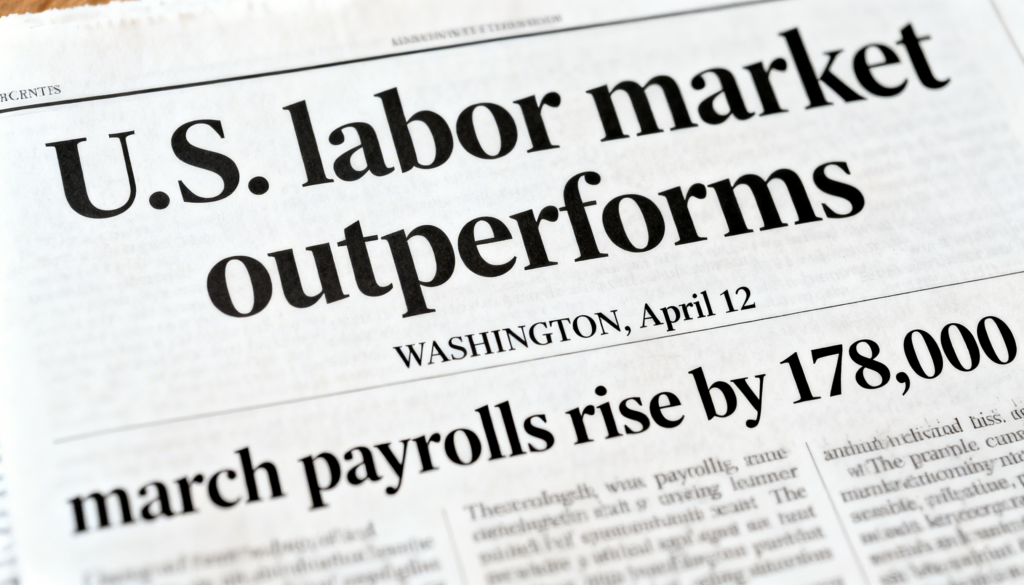
The U.S. labor market rebounded solidly in March after a weak February. According to data from the Bureau of Labor Statistics, the economy added 178,000 jobs, far exceeding forecasts of 60,000. The previous month’s figures were also revised lower, showing a loss of 133,000 jobs compared to the initially reported 92,000 decline.
The unemployment rate ticked down to 4.3% from 4.4%, coming in slightly ahead of expectations.
Despite the strong data, bitcoin remained largely unchanged in early trading, holding around the $67,000 level.
Traditional markets showed modest moves. U.S. stock index futures were slightly lower, with Nasdaq 100 futures down about 0.2%, while the 10-year Treasury yield rose four basis points to 4.36%.
In recent weeks, market expectations for interest rates have been driven more by geopolitical developments and oil prices than by domestic economic indicators. A recent surge in crude had led to speculation about potential rate hikes from the Federal Reserve.
However, Federal Reserve Chair Jerome Powell signaled earlier this week that policymakers are unlikely to respond aggressively to short-term energy-driven inflation. While higher oil prices can push inflation higher in the near term, they may also slow economic activity, suggesting a more cautious approach.
Still, the strength of the March jobs report highlights ongoing resilience in the U.S. economy, which could bring the possibility of rate hikes in 2026 back into focus if current momentum continues.
About The Author





More Stories
Bitcoin Starts New Quarter Stuck in Familiar $82K-$85K Range
Citigroup Lifts 12-Month Bitcoin Target to $113K as ETF Inflows Return
Bitcoin’s Inflation-Fueled Jump to $85.5K Fades as Yields Stay High