

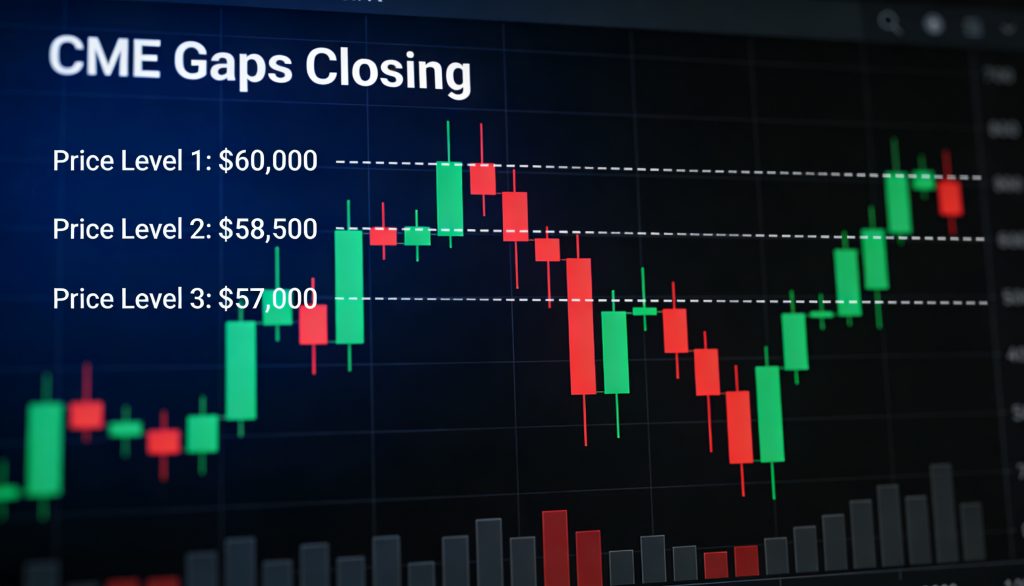
CME Group has shifted its Bitcoin futures and options markets to near-continuous trading, removing the long-standing weekend gap structure that has shaped institutional crypto pricing for years and marking another step toward fully integrated 24/7 markets.
From Friday, CME Bitcoin derivatives now trade on Globex around the clock, with only a two-hour maintenance window between 3:00 and 5:00 UTC on Saturdays. While weekend transactions will still settle on the next business day, the change effectively eliminates the traditional CME weekend discontinuity.
For years, the Friday close and Sunday reopen created a widely watched pricing gap between CME futures and Bitcoin’s always-on spot market. Traders frequently built strategies around “gap fills,” treating the disconnect as both a technical signal and a short-term trading opportunity. Limited weekend liquidity often amplified these moves, producing sharp, low-volume price swings that were frequently reversed once institutional participation returned.
The Sunday evening reopen, typically around 23:00 UTC, was often marked by brief volatility spikes as futures repriced to reflect weekend spot action. These moves were usually thinly supported and prone to rapid normalization once liquidity improved.
With CME’s updated schedule compressing the maintenance window, some reduced-liquidity volatility may still occur, but the scale and persistence of the classic weekend gap are expected to diminish significantly going forward.
The shift also strengthens continuous risk management for institutional players. Asset managers, hedge funds, and corporate treasury desks can now adjust Bitcoin exposure without waiting for traditional market reopenings, reducing weekend risk premiums embedded in pricing.
However, CME remains a relatively smaller liquidity venue compared with other segments of the market. Volmex Labs CEO Cole Kennelly noted that BlackRock’s IBIT ETF options market carries roughly $27 billion to $30 billion in open interest, compared with just $800 million to $900 million across CME Bitcoin futures and options. This gap has helped establish the BVIV-US Index (BVUS), derived from IBIT options activity, as a more influential benchmark for Bitcoin volatility.
Offshore perpetual futures and ETF-linked derivatives are likely to remain the dominant liquidity drivers in the near term. Still, CME’s move reduces structural friction by better aligning traditional futures markets with Bitcoin’s continuous trading environment.
At present, three CME gaps remain open, all formed earlier this year. Two sit above current spot levels near $73,000 — one around $78,500 and another near $80,000 — while a third remains below the market just under $70,000.
About The Author





More Stories
Bond Volatility Surges as Bitcoin and Wall Street Remain Calm
Altcoins Surge as Bitcoin Holds Near $84,000
Bitcoin ETF Flows Turn Positive in 2026 After Erasing $5.8B Deficit