

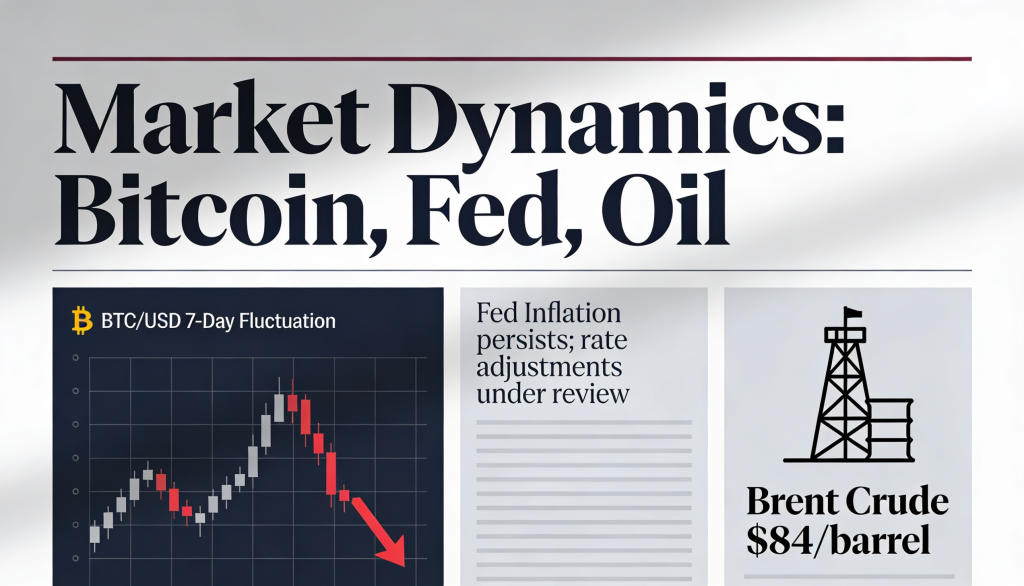
Bitcoin is under pressure from a mix of macroeconomic headwinds, with oil-driven inflation concerns, Federal Reserve policy uncertainty, and evolving expectations around AI demand all weighing on sentiment, according to market maker Enflux.
The cryptocurrency declined about 3% in Asian trading, holding near $77,000 as investors adopt a cautious stance ahead of a week filled with key economic events. The move reflects hesitation rather than a clear change in underlying market trend.
In a note to CoinDesk, Singapore-based Enflux said traders are reluctant to push bitcoin higher ahead of Wednesday’s Fed rate decision, followed by major data releases including GDP, PCE inflation, and the Employment Cost Index. These indicators will help shape expectations for potential rate cuts later in the year.
Oil remains the primary inflation concern. With Brent crude still above $100, the inflation outlook remains elevated, limiting the Federal Reserve’s flexibility to signal a more dovish policy shift.
Enflux noted that markets are balancing two key assumptions: geopolitical tensions may eventually ease, but not fast enough to influence near-term monetary policy. As a result, expectations for a June rate cut have effectively been priced out, leaving risk assets in a more uncertain environment.
Bitcoin has struggled to reclaim key technical levels amid this backdrop. It is currently trading around 4% below its short-term holder cost basis near $80,700, a level often viewed as a gauge of marginal buyer conviction. A sustained move above it would likely require clearer signs that inflation pressures tied to oil are temporary.
Until then, Enflux expects bitcoin to remain range-bound through upcoming macro releases, with larger price swings more likely triggered by data outcomes than the Fed decision itself.
Looking further ahead, the AI sector is introducing another layer of uncertainty. Reports of weaker-than-expected revenue at OpenAI have raised questions about whether AI demand growth is slowing.
This matters for bitcoin because publicly listed mining firms have been taking on debt and selling portions of their bitcoin holdings to fund a pivot toward AI data center infrastructure, which is seen as a higher-margin opportunity than traditional mining.
If AI demand cools, it could eventually reduce this miner-driven selling pressure by slowing expansion plans. However, any effect on supply dynamics would likely take time to materialize.
In the near term, softer sentiment in technology and semiconductor stocks could weigh on crypto markets, while any relief from reduced miner selling would likely emerge more gradually.
Overall, Enflux says bitcoin remains caught between competing macro forces, with inflation, interest rates, and AI-driven uncertainty keeping the market in a tight, directionless range for now.
About The Author


More Stories
Traders in the crypto market are turning wary with Bitcoin losing strength under the $80,000 mark.
The Bitcoin rally appears to be weakening, with key indicators pointing to downside risks.
As oil climbs to a three-week high on Hormuz standoff concerns, bitcoin drops under $77,000 alongside declines in ether and solana