

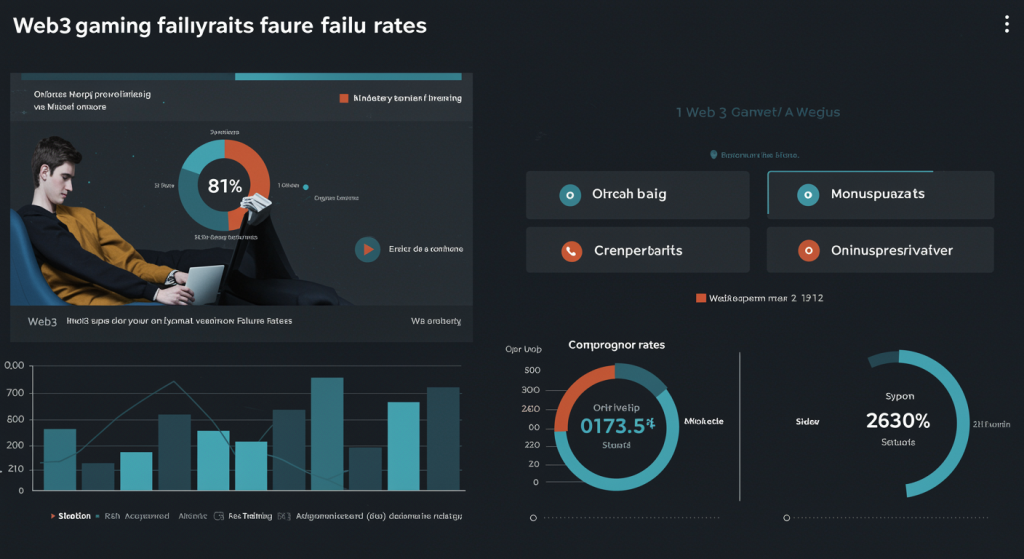
Web3 gaming’s meteoric rise has given way to a sharp পতন, as billions in funding failed to produce games that could attract and retain mainstream players.
In 2022, the sector accounted for roughly 63% of all Web3 venture capital. By 2025, that figure had dropped to single digits, with investors redirecting funds toward artificial intelligence, real-world asset tokenization, and layer-2 infrastructure—segments offering stronger signs of sustainable demand.
A report from Caladan estimates that up to $15 billion was poured into GameFi, only for about 93% of projects to effectively collapse. Token values have fallen დაახლოებით 95% from their 2022 peaks, while funding for gaming studios has declined by 93% over the same period.
The surge was driven by heavy investment in tokens and NFTs ahead of fully developed products. As sentiment shifted and capital dried up, more than 300 blockchain-based games shut down, leaving the sector as a case study in speculative excess.
“Capital was destroyed at every layer simultaneously,” the report said, pointing to losses among venture capital firms, retail NFT buyers, gaming guilds, and Telegram-based tap-to-earn ecosystems. Hamster Kombat, one of the most prominent examples, lost 96% of its user base within six months, while the gaming guild token YGG is now down 99.6% from its 2021 high.
Several projects highlight the scale of the fallout. Pixelmon raised $70 million through an NFT sale but still hasn’t released a playable game. Ember Sword spent $18 million across seven years before shutting down without issuing refunds. Gala Games is currently facing legal scrutiny over allegations involving $130 million in diverted tokens, while Square Enix quietly ended its Symbiogenesis initiative.
The collapse points to a deeper structural issue rather than just poor timing or execution. The GameFi model, built around financial incentives, failed to resonate with players who were primarily seeking engaging gameplay.
At its core, the play-to-earn system created a fragile economic loop. Players purchased tokens or NFTs, earned rewards in the same assets, and relied on new participants entering the ecosystem to sustain value. Once user growth slowed, token prices dropped, rewards diminished, and users exited—triggering a chain reaction that destabilized entire in-game economies.
Axie Infinity, once the flagship of the sector, illustrates this collapse. Daily active users have plunged from around 2.7 million at peak to roughly 5,500, according to DappRadar.
Even at the height of the boom, adoption remained limited. A Coda Labs survey cited by Caladan found only 12% of gamers had tried a crypto game, underscoring the disconnect between investor enthusiasm and player interest.
Funding dynamics exacerbated the problem. Studios often raised large sums before delivering functional games, weakening the incentive to prioritize user retention and gameplay quality.
The shift in capital tells the broader story. While gaming dominated Web3 investment in 2022, by 2025 funding had migrated to AI, real-world assets, and infrastructure. Even Animoca Brands, one of the sector’s largest backers, has reduced its gaming exposure to about 25% while pivoting toward other areas like stablecoins and AI.
Meanwhile, development timelines stretched over several years, clashing with the real-time nature of token markets. By the time many games were ready, their associated tokens had already lost most of their value.
What remains is a sector that expanded rapidly on speculation and contracted just as quickly when demand faded. With hundreds of projects shuttered and capital shifting elsewhere, Web3 gaming now stands as a cautionary example of what happens when financial incentives outpace product-market fit.
About The Author


More Stories
Ripple-linked XRP dips amid bitcoin sell-off and ETF approval setback
U.S. military running Bitcoin node sees crypto as tool for power projection versus China
Bitcoin pulls back from $80,000 amid oil-driven risk-off sentiment