

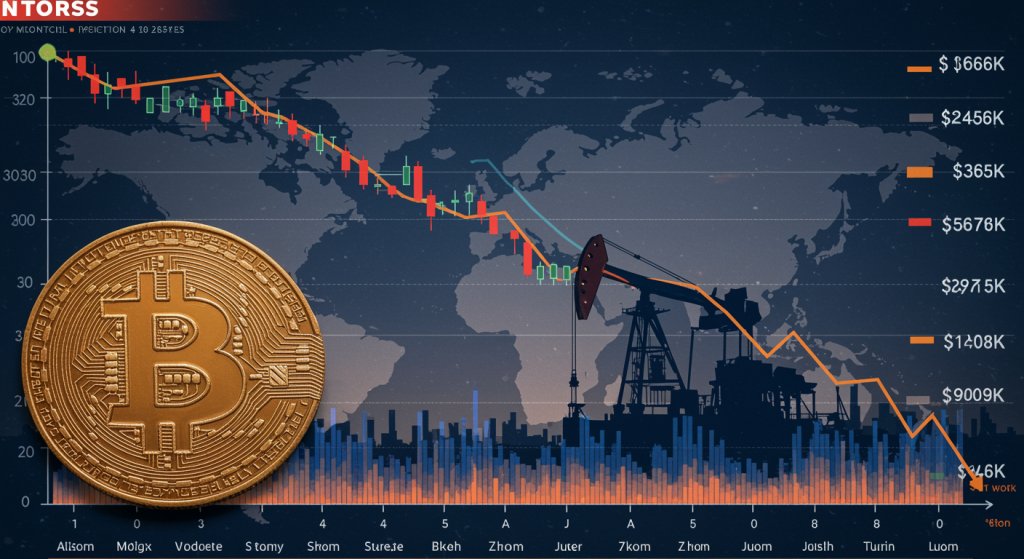
Bitcoin eased after briefly challenging the $80,000 mark, pressured by rising oil prices and persistent bearish positioning in derivatives markets. Still, the recent breakout from a prolonged consolidation range has fueled expectations that the rally could accelerate, particularly if short sellers are forced to cover. Meanwhile, sentiment across altcoins and capital inflows continues to deteriorate.
The broader crypto market declined Thursday, with bitcoin (BTC) slipping about 0.7% since midnight UTC to trade near $77,600. The pullback followed a strong move higher a day earlier, when BTC reached its highest level since January before encountering selling pressure just below the $80,000 resistance zone.
Macro factors added to the cautious tone. Oil prices jumped roughly 1.5% to $103 per barrel after reports that the U.S. seized three Iranian tankers in Asian waters, weighing on risk appetite. U.S. equity futures also moved lower, with both S&P 500 and Nasdaq 100 futures down around 0.5%.
Ether (ETH) underperformed, falling 2.5% to about $2,320 after failing to hold gains near the $2,500 level tested over the weekend.
Despite the near-term weakness, bitcoin’s broader trend remains constructive. The asset appears to have broken out above a two-month trading range between $63,000 and $75,000, where it had been consolidating since early February.
Derivatives data highlights a complex backdrop. Bitcoin futures open interest has slipped to around 775,000 BTC from near-record levels of 800,000 BTC earlier in the week, yet remains elevated by historical standards. At the same time, negative perpetual funding rates suggest traders are still leaning bearish.
This dynamic has led some analysts to label the move a “most hated” rally—one that could gain strength if short positions are unwound in a squeeze.
Across altcoins, trends are less supportive. Dogecoin (DOGE) open interest has climbed above 14 billion tokens—levels rarely seen since October—while positive funding rates indicate growing appetite for long positions. In contrast, falling open interest in assets like bitcoin cash (BCH), chainlink (LINK), and litecoin (LTC) signals capital outflows from segments of the market.
Order flow metrics reinforce the cautious outlook. The cumulative volume delta (CVD) shows sellers dominating activity in major altcoins such as XRP, solana (SOL), and ether, while only a few assets—including bitcoin, M, and CRO—are registering net buying pressure. This divergence suggests bitcoin’s rally is not yet broadly supported across the market.
Volatility remains subdued. Bitcoin and ether’s 30-day implied volatility indices are hovering near multi-month lows, indicating calm conditions despite geopolitical tensions and ongoing disruptions in oil markets.
In options markets, downside protection remains in demand, with puts trading at a premium to calls on Deribit. However, recent flows show increased interest in bitcoin call options at strike prices between $80,000 and $85,000, reflecting expectations of further upside.
Sector-wide performance underscores the weakness in altcoins. CoinDesk’s DeFi Select Index (DFX) fell 2.7%, making it the worst-performing benchmark on the day, while the broader CoinDesk 20 (CD20) index declined 1.1%. CoinMarketCap’s Altcoin Season Index dropped to 32/100, its lowest level in 10 days, pointing to a continued shift in investor preference toward bitcoin.
A handful of tokens bucked the trend. Spark (SPK) surged more than 70% after securing a listing on Upbit, South Korea’s largest crypto exchange. Privacy-focused monero (XMR) also outperformed, rising 3.3%, while dash (DASH) and zcash (ZEC) traded lower.
Meanwhile, DeFi tokens remained under pressure, with morpho and aave declining 4.6% and 2.8%, respectively, as sentiment in the sector continues to suffer following the recent $290 million KelpDAO exploit.
About The Author

More Stories
Ripple-linked XRP dips amid bitcoin sell-off and ETF approval setback
More than 90% of Web3 titles shut down post-$15B surge amid lack of gamer adoption: Caladan
U.S. military running Bitcoin node sees crypto as tool for power projection versus China