

Here’s a clear, concise paraphrased version of your content:
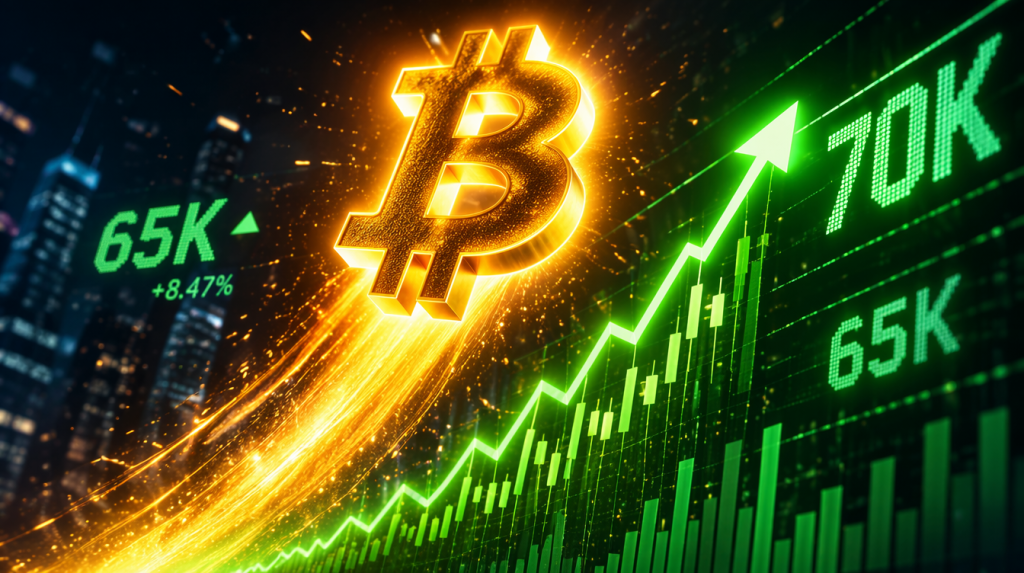
Bitcoin climbed past $65,000 as geopolitical shocks increasingly shifted into derivatives markets, while South Korea’s KOSPI bear market drove a 1,318% surge in trading volume on Upbit.
On July 15, 2026, Bitcoin briefly moved above $65K, according to CoinGecko, supported by softer-than-expected U.S. inflation data that reduced pressure on the Federal Reserve. This came despite ongoing U.S.–Iran airstrikes following orders issued by President Trump the previous weekend.
BTC had already rebounded above $63,000 within days of those strikes. The muted downside reaction to continued Middle East tensions suggests investors are becoming less fear-driven in their response.
This shift goes beyond simple resilience. It indicates that the geopolitical risk premium tied to Iran-related developments has weakened significantly, with market shocks now being absorbed primarily through derivatives rather than spot selling.
With BTC touching $65,000, a daily close above this level could turn it into support, leading several analysts to anticipate a retest of $70,000 as bullish momentum builds.
Iran Airstrikes: A Fading Impact on BTC
The contrast with June 2025 is notable. During similar strikes then, Bitcoin dropped below $99,000—its lowest level since May—triggering over $1 billion in liquidations within 24 hours, mostly from long positions, as reported by CNBC.
In July 2026, however, liquidations tied to Iran headlines have been far smaller, reflecting position trimming rather than widespread panic selling.
The geopolitical risk premium hasn’t vanished—it has shifted. Instead of causing broad spot market declines, its impact is now visible in derivatives, particularly in options-implied volatility and downside hedging.
Interestingly, the largest 24-hour BTC options volume was concentrated at the $80,000 call strike, suggesting traders are protecting against short-term risks while still positioning for upside.
As BeInCrypto’s Darryn Pollock noted, traders appear increasingly desensitized to recurring Middle East tensions rather than reacting with panic.
Market behavior over weekends supports this trend: while BTC still attracts initial panic flows, these reactions are becoming shorter and less intense with each new Iran-related event.
South Korea: Equity Sell-Off Fuels Crypto Activity
A major source of market activity in this cycle is South Korea. The KOSPI index has entered a bear market, falling more than 20% from its June peak. Heavyweights like Samsung and SK Hynix—together making up about half the index—have amplified the downturn.
SK Hynix, for instance, surged roughly 233% earlier in 2026 before dropping over 34% by mid-July, highlighting volatility tied to AI-driven valuations. Its massive $26.5 billion Nasdaq ADR listing has further intensified scrutiny over how much growth is already priced in.
As equities declined, Upbit—South Korea’s largest crypto exchange—saw trading volume jump 1,318% in 24 hours to $4.2 billion. Notably, XRP recorded higher trading volume than Bitcoin during this period, aligning with broader signs of capital rotation into altcoins. The Altcoin Season Index has risen to 58, while Bitcoin dominance has weakened toward key support levels.
However, the nature of these flows is mixed. South Korea’s Financial Supervisory Service reported that 1.2 million leveraged accounts faced margin calls during this period. This suggests part of the surge in crypto volume may be driven by forced liquidations in equities being redirected into digital assets, rather than purely bullish conviction.
The Bigger Question: Rotation or Exhaustion?
The key question now isn’t whether crypto reacts to geopolitical events, but whether the inflows into Bitcoin and altcoins represent sustainable rotation or short-term exhaustion buying.
As Pollock described, crypto is beginning to look less like a market caught in global tensions and more like a destination for traders fatigued by constant headlines—from Tehran to Seoul.
However, this dynamic carries risks. While exhaustion-driven demand can support prices in the short term, it may also create fragile positioning that could unwind quickly if a new, more severe shock emerges—such as a major disruption in the Strait of Hormuz that drives oil prices higher and reignites inflation concerns.
Such a scenario would test whether current options pricing adequately reflects extreme risks. For now, the data supports the idea that markets are growing numb to Iran-related developments. Whether that continues will depend less on location and more on how unexpected the next shock is.
About The Author




More Stories
CFTC Warns Prediction Platforms of Manipulation Risks in ‘Mention Markets’
Lummis Says Trump Opposition Helped Derail Crypto Clarity Act
XRP Ledger Retries Upgrade Designed to Split Payments and Compliance Roles