

Here is a fully paraphrased version with a smoother news-style flow:
SGP-0003 combines a major fee structure overhaul with a proposal to accelerate Solana’s disinflation schedule. However, it still requires nearly 40 million additional SOL in validator backing over the next two weeks to move forward to a formal vote.
Solana validators have started signaling support for a governance proposal that could reshape how SOL supply changes over time, potentially reducing new issuance while increasing token burns and influencing long-term market dynamics.
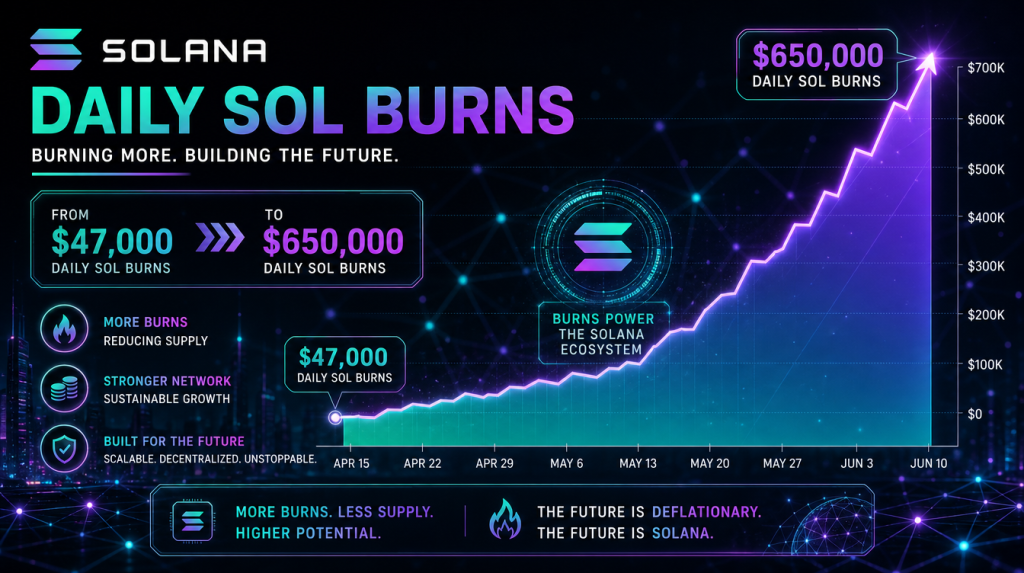
The proposal, known as SIMD-0553, introduces resource-based fees that charge users based on the amount of network capacity their transactions consume. Under the change, daily SOL burns could rise from roughly 650 SOL — around $47,000 at current prices — to between 7,500 and 9,000 SOL, equivalent to as much as $650,000 per day.
A second proposal, SIMD-0550, aims to double Solana’s annual disinflation rate to 30%. If approved, it would bring the network’s 1.5% inflation floor forward to 2029 instead of 2032 and reduce total emissions by approximately 18.9 million SOL over six years, worth about $1.36 billion at current prices.
SIMD refers to Solana Improvement Documents, the technical framework used by developers to propose protocol upgrades. SGP, or Solana Governance Proposal, is a newer validator voting mechanism that operates above the technical proposal process.
Together, the proposals would target SOL supply from both directions — increasing the amount of tokens removed from circulation while reducing the number of new tokens created. Solana’s inflation rate currently stands near 3.8%, down from its initial 8% rate under a schedule designed to reduce inflation by 15% annually.
Validator Support and Voting Threshold
Current support totals 24.94 million SOL, representing about 5.8% of the 432.65 million SOL currently staked. That places the proposal roughly 38% toward the 15% threshold required before it can proceed to a formal vote.
Validators still need to contribute another 39.95 million SOL in support, equivalent to roughly $2.9 billion at current prices, before the signaling period ends on August 18.
So far, 16 validators have signaled support, accounting for around 2.3% of the validator set. Infrastructure provider Helius represents the majority of the current support with 16.03 million SOL — nearly two-thirds of the total gathered. Blueshift follows with 3.6 million SOL, while Temporal Emerald has contributed 1.24 million SOL.
Burn Increase Alone Won’t Make SOL Deflationary
Despite the headline increase, the proposed burn mechanism would still be relatively small compared with Solana’s ongoing issuance. Even at the upper estimate of 9,000 SOL burned daily, the figure remains below the roughly 60,000 SOL introduced through daily inflation.
As a result, the fee change alone would not turn SOL into a deflationary asset. This is why SIMD-0550 and SIMD-0553 are being considered together — one reduces new supply growth, while the other increases the amount of SOL removed from circulation.
Helius, which currently provides 16.03 million SOL of the 24.94 million total support, also employs the engineer responsible for SIMD-0550.
The 15% approval threshold is designed to ensure only significant governance issues reach validator-wide voting. The Solana Foundation introduced the requirement in July, allowing routine technical upgrades to continue through the existing SIMD process while reserving broader governance votes for proposals with meaningful ecosystem impact.
Reaching the threshold would require several additional validators comparable in size to Helius to support the changes. With only two weeks remaining in the signaling period, the proposal still faces a significant challenge in gathering enough backing.
About The Author





More Stories
CFTC Warns Prediction Platforms of Manipulation Risks in ‘Mention Markets’
Lummis Says Trump Opposition Helped Derail Crypto Clarity Act
XRP Ledger Retries Upgrade Designed to Split Payments and Compliance Roles