

Here’s a clear and polished paraphrased version of your content:
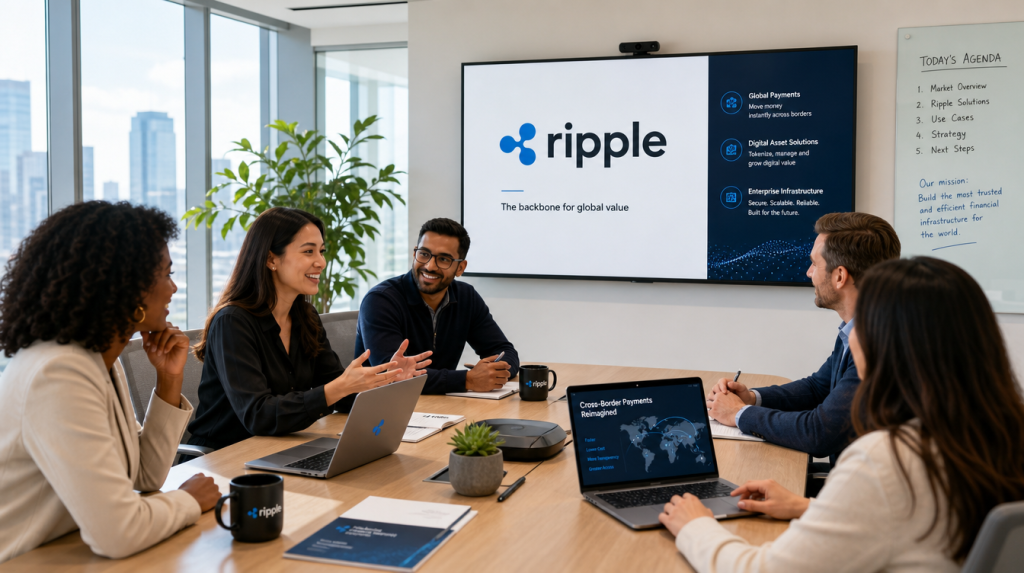
In the latest XRP update, Ripple revealed on August 3, 2026, that it has taken strategic equity stakes in two UK-based companies, Zilo and Licuido. These investments transform existing partnerships into ownership roles, helping Ripple build a complete, end-to-end institutional capital markets framework on the XRP Ledger.
The initiative addresses a key bottleneck in institutional tokenization: while creating digital tokens is relatively easy, using them for financing, collateralization, and settlement with the same efficiency as traditional assets remains a challenge.
The Core Issue: Idle Tokenized Assets
A recurring problem in institutional real-world asset (RWA) tokenization is that tokenized fund shares are issued but remain unused.
Historically, ownership tracking, issuance, and settlement have relied on separate legacy systems that often fail to integrate with blockchain-based collateral markets. This fragmentation has prevented seamless functionality.
Ripple has explicitly stated that its investments aim to solve these inefficiencies—where collateral remains inactive, settlements are slower than necessary, and institutions lack dependable ways to unlock liquidity from tokenized holdings.
Zilo provides transfer agency and fund administration services, maintaining a regulated record of asset ownership, including tokenized shares as funds transition on-chain. This legal ownership layer is essential for lenders before extending credit against tokenized positions. With clients such as Citi, Fidelity International, and State Street, Zilo connects Ripple directly to established custody and transfer agency infrastructure.
Licuido, regulated by the FCA, oversees issuance, distribution, and execution. It enables traditional assets like fund shares to function as digital collateral through on-chain atomic settlement.
Transactions on the XRP Ledger settle within three to five seconds. Ripple’s USD-backed stablecoin, RLUSD, serves as the payment component in delivery-versus-payment transactions, ensuring that asset transfers and payments occur simultaneously rather than in sequence.
Together, Zilo (record-keeping), Licuido (issuance and collateral movement), and RLUSD (cash settlement) form a unified system that allows institutions to manage tokenized fund assets from issuance through financing. Financial details of the deals were not disclosed.
Ripple’s SVP of Trading and Markets, Nigel Khakoo, emphasized in the official announcement that both Zilo and Licuido provide essential infrastructure—combining regulated transfer agency capabilities with liquidity for issuance and collateral mobility—to support scaling in tokenized finance.
Expanding on Proven Infrastructure
These investments are not speculative. Ripple confirmed that both companies were already partners, with Licuido actively supporting the tokenization of the Aviva Investors USD Liquidity Fund. This fund became the first tokenized fund approved by the Central Bank of Ireland to operate on a public blockchain, going live on XRPL on July 29, 2026.
The underlying assets are held by BNY, while Komainu provides digital asset custody.
Ripple’s broader institutional strategy includes a 2025 memorandum of understanding with Franklin Templeton and DBS. This agreement aims to list Franklin Templeton’s tokenized money market fund, sgBENJI, on the DBS Digital Exchange alongside RLUSD, with plans to use it as collateral in repo transactions.
The same concept of enabling collateral mobility—now being developed through Zilo and Licuido—was central to that earlier initiative.
On the network side, Ripple noted that the XRP Ledger has processed over four billion transactions since its launch and is supported by 120 independent validators. A major update, xrpld 3.3.0, designed to enhance infrastructure and institutional finance capabilities, was expected shortly after the announcement.
Ripple is also part of a UK government task force of 54 firms working to develop real-world tokenized financial market use cases over the next year. Participants include Circle, Coinbase, BlackRock, Goldman Sachs, J.P. Morgan, and Morgan Stanley. The group’s initial focus is on tokenized repo markets, with Ripple’s growing regulatory presence in Europe supporting its institutional ambitions.
Ultimately, the success of the Zilo and Licuido integration will depend on whether tokenized fund shares can achieve real secondary market liquidity and function effectively as collateral in active credit markets over the next one to two years—or whether they continue to face the same inactivity issues Ripple is aiming to eliminate.
About The Author





More Stories
Bond Volatility Surges as Bitcoin and Wall Street Remain Calm
Altcoins Surge as Bitcoin Holds Near $84,000
Bitcoin ETF Flows Turn Positive in 2026 After Erasing $5.8B Deficit