

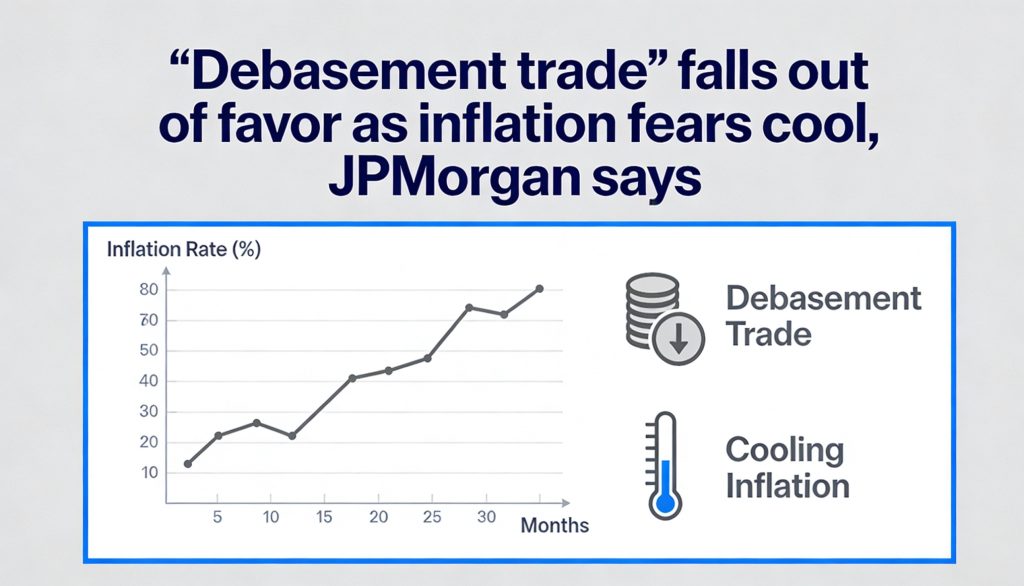
Investors are easing exposure to both bitcoin and gold, suggesting a cooling of demand for traditional geopolitical and inflation hedges as markets reassess risks tied to Middle East tensions.
The “debasement trade” that previously fueled demand for bitcoin and gold during periods of heightened uncertainty is losing traction, according to JPMorgan analysts led by Nikolaos Panigirtzoglou.
In a report published Thursday, the bank said investors have been withdrawing funds from both bitcoin and gold ETFs, while institutional positioning in related CME futures has also softened. The synchronized weakness points to a broader unwinding of macro hedge trades that gained popularity earlier in the year amid inflation concerns and geopolitical volatility.
Data from Farside Investors shows bitcoin ETFs have recorded steady outflows over the past two weeks, a trend that has coincided with softer demand for gold ETFs. At the same time, futures positioning across both markets has also declined, indicating reduced institutional participation rather than capital rotating between the two assets.
Panigirtzoglou noted that the data does not indicate a shift from bitcoin into gold, but rather a simultaneous pullback across both assets.
“Bitcoin had been the main manifestation of the debasement trade since the start of the Iran conflict,” the report stated.
The debasement trade refers to positioning in assets viewed as stores of value during periods of rising inflation risk, fiscal expansion, or currency weakness. Bitcoin and gold typically benefit when investors expect higher government borrowing, persistent deficits, or accommodative monetary policy.
Those concerns intensified earlier in the year when Middle East tensions drove oil prices higher and revived fears of renewed inflationary pressure across global markets.
JPMorgan suggested the recent reversal may reflect expectations that geopolitical risks could be easing, with investors potentially positioning for a de-escalation or diplomatic progress between the United States and Iran. Such a shift would reduce demand for inflation and conflict hedges that had supported both bitcoin and gold in recent months.
Overall, the bank’s analysis points to a broad cooling in macro-driven positioning, as investors step back from defensive hedges amid improving risk sentiment.
About The Author


More Stories
Bond Volatility Surges as Bitcoin and Wall Street Remain Calm
Altcoins Surge as Bitcoin Holds Near $84,000
Bitcoin ETF Flows Turn Positive in 2026 After Erasing $5.8B Deficit