

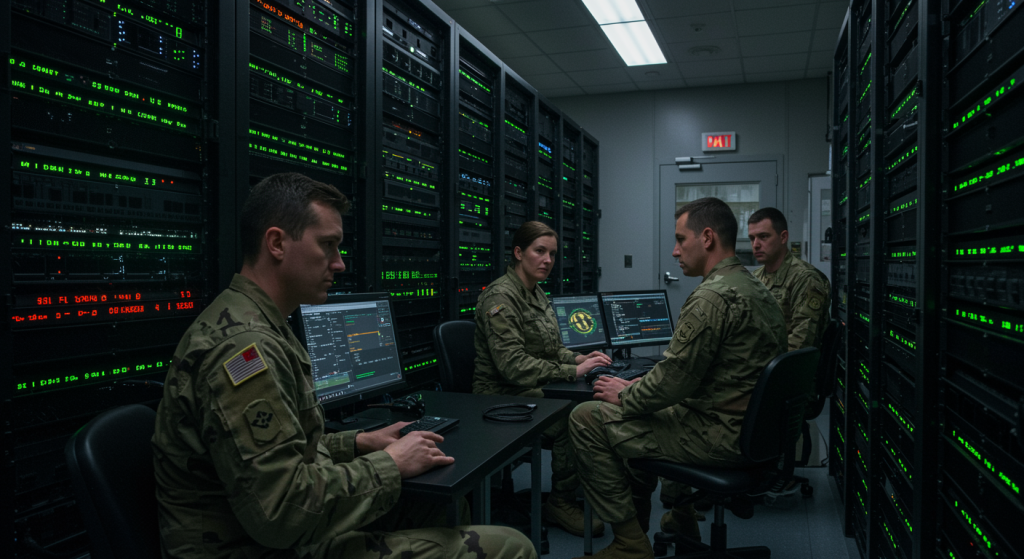
Admiral Samuel Paparo, commander of U.S. Indo-Pacific Command, told Congress this week that the military is operating a live Bitcoin node as part of cybersecurity experimentation, while also viewing the technology as a potential tool of national power in its strategic rivalry with China.
The four-star Navy admiral disclosed the initiative during testimony before the House Armed Services Committee on Wednesday, a day after highlighting Bitcoin’s “incredible potential” for power projection and national security during a Senate Armed Services Committee hearing.
His remarks represent the first public acknowledgment by an active U.S. combatant commander that the military is directly participating in the Bitcoin network.
“We have a node on the Bitcoin network right now,” Paparo said in response to questions from Representative Lance Gooden. “We’re not mining Bitcoin—we’re using the node to monitor activity and conduct operational testing aimed at strengthening and protecting networks using the protocol.”
A Bitcoin node is a computer that maintains a full copy of the blockchain, verifies transactions, and helps enforce the system’s rules by broadcasting validated data across the decentralized network. Unlike mining operations, nodes do not generate rewards and do not require specialized equipment.
Running a node enables participants to independently validate the state of the network without relying on intermediaries. As of early 2026, there are an estimated 15,000 to 20,000 publicly accessible full nodes, with the actual number likely higher due to private or firewalled setups.
While a single node—regardless of who operates it—has no meaningful impact on Bitcoin’s decentralization, the involvement of a major U.S. military command is symbolically significant.
INDOPACOM oversees U.S. military operations across the Indo-Pacific, a region central to strategic competition with China. Bitcoin’s design has long been framed as resistant to control by powerful governments, making the military’s participation a notable moment in the intersection of decentralized technology and geopolitics.
About The Author



More Stories
Ripple-linked XRP dips amid bitcoin sell-off and ETF approval setback
More than 90% of Web3 titles shut down post-$15B surge amid lack of gamer adoption: Caladan
Bitcoin pulls back from $80,000 amid oil-driven risk-off sentiment