

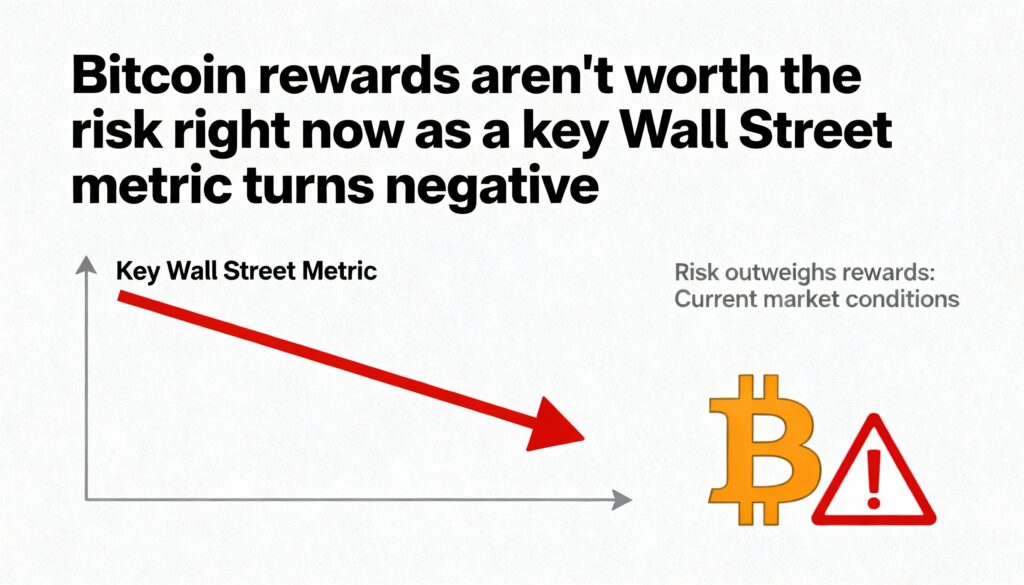
Bitcoin (BTC $88,726.94) may no longer offer rewards that justify its risk, according to its Sharpe Ratio — a widely used measure of risk-adjusted returns.
Data from CryptoQuant shows the ratio has turned negative, signaling that Bitcoin’s recent swings are not delivering enough return to compensate for volatility. Even as prices remain far below October highs above $120,000, sharp intraday moves and uneven rebounds have compressed risk-adjusted gains.
Historically, the Sharpe Ratio has gone negative during prolonged bear markets, including late 2018 and 2022, often persisting for months after steep declines. This has prompted some social media speculation that the latest reading could hint at the end of Bitcoin’s downtrend and the potential start of a new bull run.
Analysts caution, however, that a negative Sharpe Ratio does not forecast price direction. “The Sharpe Ratio doesn’t call bottoms with precision,” a CryptoQuant analyst said. “It shows when risk-reward has reset to levels that historically precede major moves. We’re oversold—not because prices can’t go lower, but because the risk-adjusted setup favors long-term positioning.”
Traders typically monitor the metric’s rebound toward positive territory, which historically aligns with improving risk-reward conditions and renewed bullish momentum. For now, Bitcoin remains near $90,000 amid volatile swings and underperformance versus gold, bonds, and global tech stocks, offering little sign of an immediate recovery.
About The Author



More Stories
Bitcoin holds near $68,300 while gold tumbles for a ninth session and Asian stocks fall
XRP slides 3% on break under $1.44 with BTC softness capping recovery
BTC mining turns unprofitable with $19,000 loss per coin despite 7.8% difficulty drop