

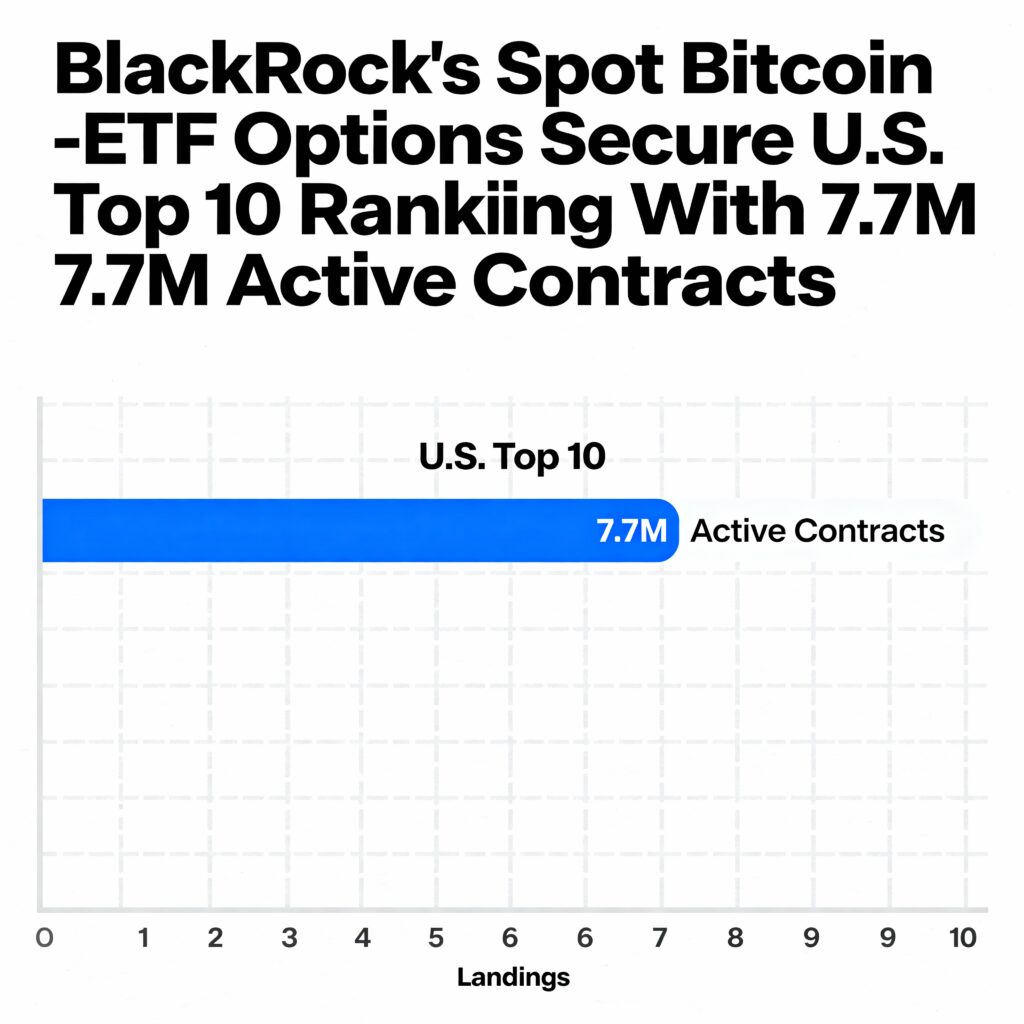
BlackRock’s Bitcoin ETF Options Enter U.S. Top 10 With 7.7M Contracts
Options tied to cryptocurrencies are seeing explosive growth in U.S. markets, and BlackRock’s bitcoin ETF (IBIT) is leading the charge. Just over a year after its November 2024 debut, IBIT options have vaulted into the top 10 U.S. options by open interest.
As of Tuesday, 7,714,246 IBIT contracts were active or open, ranking ninth among all U.S.-listed stock, ETF, and index options, according to optioncharts.io. Among individual stocks, IBIT options are second in open interest.
BloFin Research emphasized that this surge underscores Bitcoin’s rising appeal as a macro asset. “IBIT options open interest has reached ninth place in the U.S. market. Including Deribit’s open interest, it rivals VIX and SPY options, solidifying its status as a leading macro asset,” the firm told CoinDesk.
IBIT options offer institutions regulated exposure to Bitcoin and allow ETF holders to manage risk. Traders have used them for hedging, speculation, and income strategies such as covered calls. By definition, options give the holder the right to buy (call) or sell (put) the underlying asset at a predetermined price.
Even with gold up 50% this year versus Bitcoin’s -0.1% performance, IBIT options have seen heavier activity than SPDR Gold ETF (GLD) contracts, which had 5,151,654 open contracts on Tuesday. Options on tech giants like Apple, Intel, Netflix, Amazon, and Tesla, along with ETFs tied to emerging markets and 20-year Treasuries, have also lagged IBIT.
Remarkably, Nasdaq-listed IBIT options’ open interest even surpassed bitcoin options on Deribit—the crypto options pioneer—by the end of September. While S&P 500 and Nvidia options remain industry leaders with over 20 million contracts each, IBIT’s rise signals growing institutional adoption and the mainstreaming of crypto derivatives.
About The Author




More Stories
Bitcoin holds near $68,300 while gold tumbles for a ninth session and Asian stocks fall
Resolv stablecoin drops 70% as exploiter siphons $25 million worth of ETH
Equities catch up to bitcoin’s drop toward $60,000 amid a surge in bond yields.