

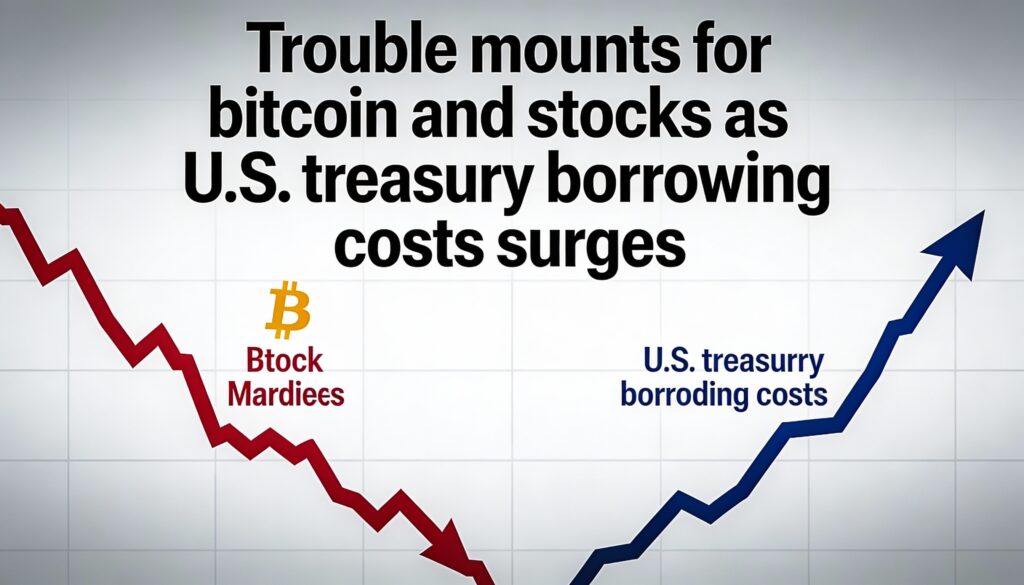
Long-term borrowing costs are climbing, creating headwinds for businesses and financial markets worldwide.
The 10-year U.S. Treasury yield, the benchmark interest rate for the government’s highly liquid, virtually default-free bonds, rose to 4.27% — the highest level since September 3, according to TradingView.
As the “risk-free” baseline, the 10-year yield sets borrowing costs across the economy and global markets. Foreign holders such as China and Japan own trillions in Treasuries, meaning rising yields push up financing costs from Wall Street to Shanghai. Banks also price mortgages, corporate loans, and consumer credit above the 10-year rate to account for additional risk.
Rising yields tighten financial conditions, potentially slowing investment, spending, and capital deployment. High-risk assets, including bitcoin, cryptocurrencies, and equities, are often the first to feel the impact. Bitcoin fell more than 1.5% to $91,000 in early Asian trading, while Nasdaq futures dropped over 1.6%.
Traders cite renewed geopolitical tensions, including President Donald Trump’s tariff threats against Europe over his Greenland plan, as a catalyst. Trump warned of a 10% levy on imports from eight European nations starting Feb. 1, rising to 25% on June 1 unless an agreement is reached.
European leaders condemned the threat as anti-free-market, with speculation over potential retaliation through U.S. asset sales. Analysts note that most holdings are privately owned, limiting government influence.
The yield surge is not confined to the U.S. Japanese government bond yields have risen after Prime Minister Sanae Takaichi proposed food tax cuts. Across advanced economies, higher fiscal spending and increased bond issuance are pushing yields higher, signaling broader financial tightening.
About The Author


More Stories
Bitcoin holds near $68,300 while gold tumbles for a ninth session and Asian stocks fall
Resolv stablecoin drops 70% as exploiter siphons $25 million worth of ETH
Equities catch up to bitcoin’s drop toward $60,000 amid a surge in bond yields.