

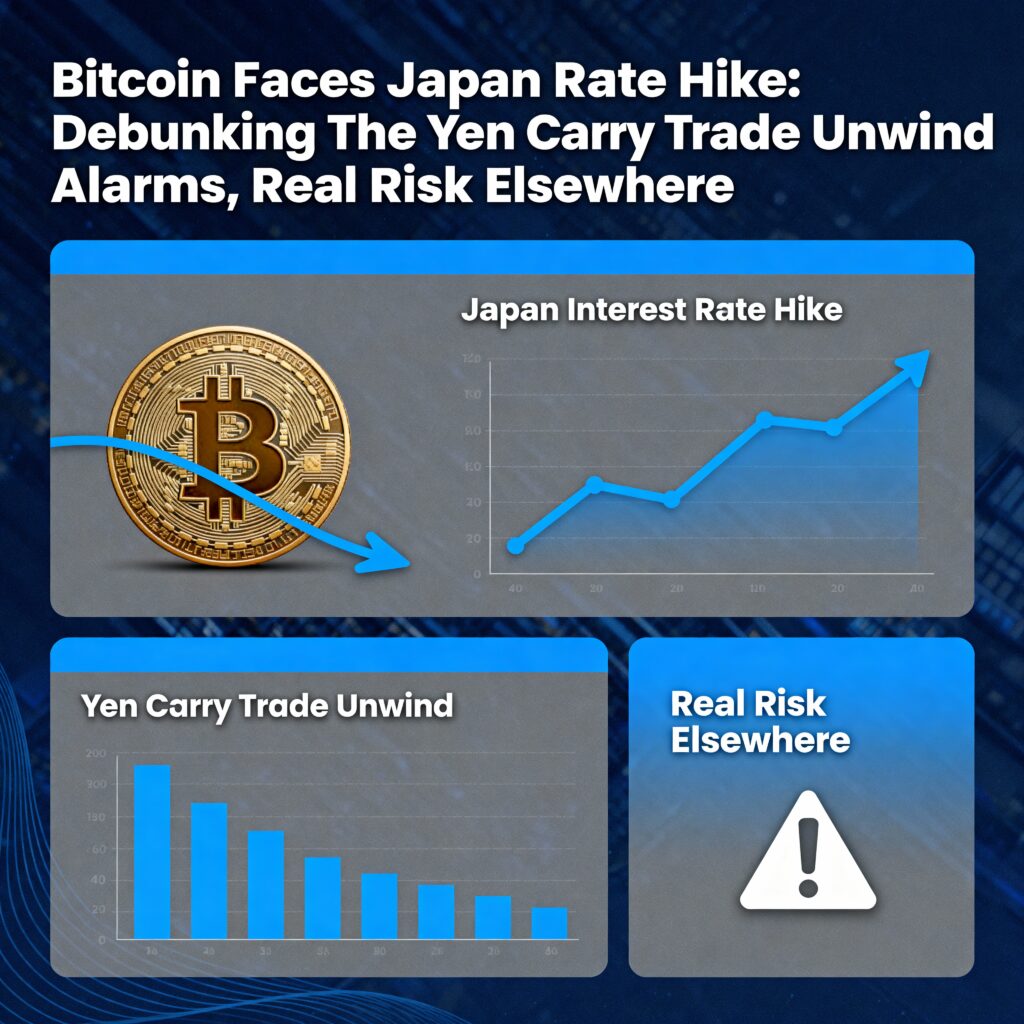
Bitcoin Braces for Japan Rate Hike: Yen Carry Trade Fears Overblown, True Risks Are Elsewhere
As Japan signals a potential interest rate hike, speculation is swirling around the yen carry trade and its possible effects on global markets—including Bitcoin. But analysts caution that the real risks may lie beyond sudden yen movements.
What Is the Yen Carry Trade?
The yen carry trade has long shaped global market flows. Investors borrow yen at historically low Japanese rates and invest in higher-yielding assets abroad, from U.S. stocks to Treasury bonds. For decades, Japan’s near-zero interest rates made this strategy attractive, fueling global risk-taking.
Now, with the Bank of Japan (BOJ) expected to raise rates, concerns are emerging that the yen could lose its cheap-funding status. In theory, this might prompt Japanese investors to repatriate funds, sparking a broad risk-off environment that could weigh on Bitcoin and other assets. A glimpse of this occurred in August 2025, when yen strength triggered temporary market turbulence.
Why a Crisis Is Unlikely
1. Rates Will Still Be Low: Even after the expected hike, Japanese interest rates would reach just 0.75%, far below U.S. rates of 3.75%. The wide yield gap continues to favor U.S. assets, reducing the likelihood of mass carry trade unwinds. The BOJ remains the most dovish major central bank.
2. Tightening Already Priced In: Japanese government bond (JGB) yields already signal market expectations for higher rates. The 10-year JGB yield is currently 1.95%, well above the projected post-hike rate, while two-year yields exceed 1%. “Japan’s 1.7% JGB yield isn’t a surprise. Forward markets have priced in BOJ normalization since 2023,” said Eamonn Sheridan, Chief Asia-Pacific Currency Analyst at InvestingLive.
3. Bullish Yen Positions: Speculators’ net long yen positions suggest limited room for panic buying after the rate hike. This contrasts with mid-2024, when bearish positioning fueled sudden yen strength following BOJ rate adjustments.
4. Changing Risk Dynamics: The yen’s role as a risk-on/risk-off indicator has weakened, with the Swiss franc emerging as a low-volatility alternative. Markets are no longer as sensitive to sudden yen-driven moves.
The Real Concern
While a BOJ rate hike may introduce some volatility, a repeat of August 2025’s turmoil is unlikely. Investors are already positioned for tightening, and adjustments are expected to be gradual.
Instead, the real risk lies in Japanese tightening sustaining elevated U.S. Treasury yields. Persistently high yields could curb global risk appetite, raising borrowing costs and pressuring valuations for stocks, cryptocurrencies, and other risk assets—including Bitcoin.
Bottom Line: Rather than fearing a sudden yen surge, investors should monitor the broader impact of BOJ policy on global yields and market sentiment. That is where the true market risk—and opportunity—resides
About The Author


More Stories
Bitcoin holds near $68,300 while gold tumbles for a ninth session and Asian stocks fall
Resolv stablecoin drops 70% as exploiter siphons $25 million worth of ETH
Equities catch up to bitcoin’s drop toward $60,000 amid a surge in bond yields.