

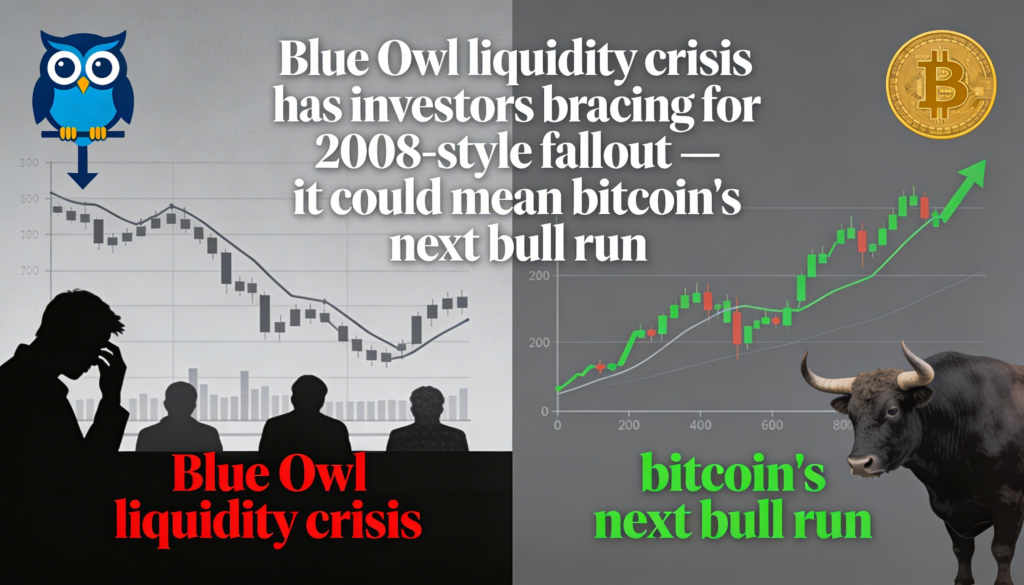
Shares of Blue Owl Capital (OWL) slid nearly 15% this week after the firm said it would offload $1.4 billion in loans to meet redemption requests from investors in one of its retail-oriented private credit funds — a move that has stirred uneasy comparisons to the early days of the 2008 financial crisis.
While broader equity benchmarks have so far held steady, Blue Owl stock is now down more than 50% over the past year. Other major alternative asset managers, including Blackstone, Apollo Global Management and Ares Management, also recorded notable weekly losses.
Early warning signal?
The episode has prompted some analysts to draw parallels to the summer of 2007, when two Bear Stearns hedge funds collapsed under mounting subprime mortgage losses. Around that same time, BNP Paribas froze withdrawals in several funds, citing an inability to properly value U.S. mortgage-linked assets — a development that foreshadowed a broader credit freeze and, eventually, the global financial crisis.
Mohamed El-Erian, former head of Pimco, questioned whether Blue Owl’s liquidity action could represent a similar “canary in the coal mine” moment. Still, he cautioned that current risks do not yet appear to approach the systemic scale of 2008. He also flagged signs of froth in artificial intelligence-related markets as another area worth monitoring.
Implications for bitcoin
For Bitcoin investors, the implications are complex. Credit stress does not automatically translate into gains for digital assets. In the short term, tightening liquidity conditions typically weigh on risk markets — including crypto.
Bitcoin did not exist during the 2008 meltdown, but its performance during the early COVID-19 panic offers insight. Between mid-February and mid-March 2020, BTC plunged roughly 70% as investors rushed to cash amid a global liquidity crunch.
However, the Federal Reserve’s subsequent response — injecting trillions of dollars into the financial system — dramatically shifted the landscape. Bitcoin surged from below $4,000 in March 2020 to more than $65,000 roughly a year later, fueled in part by abundant liquidity and growing institutional interest.
Born from crisis
The global financial crisis itself laid the groundwork for bitcoin’s creation. Developed by the pseudonymous Satoshi Nakamoto, the cryptocurrency was conceived as an alternative to a traditional banking system that had required massive government bailouts.
Bitcoin’s Genesis Block, mined on Jan. 3, 2009, famously contained the embedded headline: “Chancellor on brink of second bailout for banks,” referencing U.K. rescue efforts at the height of the crisis.
Seventeen years later, bitcoin has evolved from a niche experiment into a trillion-dollar asset class. What began as a rebellion against centralized finance is now increasingly intertwined with it, as asset managers launch exchange-traded products and corporations allocate BTC to their balance sheets.
A turning point or a contained event?
Whether Blue Owl’s liquidity maneuver proves to be an isolated incident or the first sign of deeper stress in private credit remains unclear. If pressures escalate and trigger large-scale central bank intervention, history suggests that bitcoin could ultimately benefit from renewed monetary expansion — though not without significant volatility along the way.
For now, markets are watching closely to see whether this episode fades quietly or marks the beginning of a broader repricing across credit markets.
About The Author

More Stories
Bitcoin holds firm near $68,000 despite new Trump tariffs, with altcoins driving a modest recovery.
Bitcoin rallies briefly, then slides as the Supreme Court strikes down Trump-era tariffs.
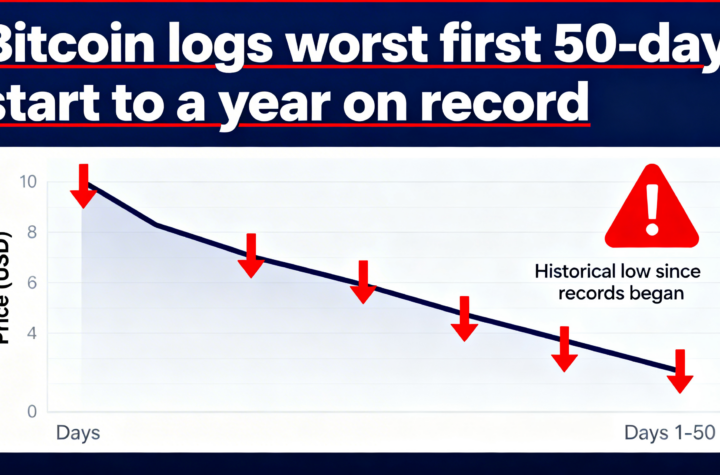
BTC records its worst start to a year through the first 50 days.