

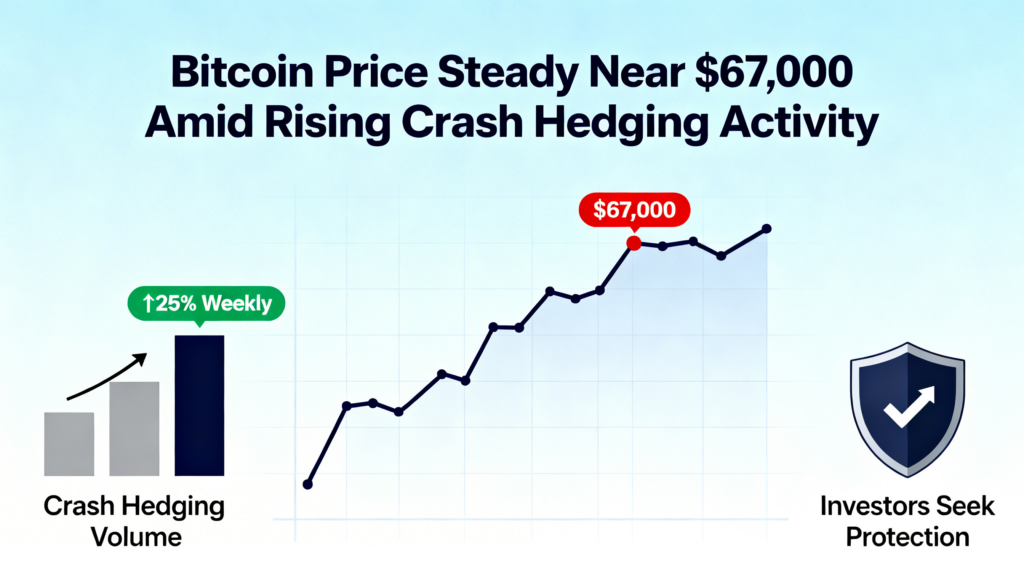
Bitcoin found footing near $67,000 on Thursday, rebounding after briefly slipping below $66,000 in early U.S. trading. The largest cryptocurrency was last trading around $68,382, up roughly 1% over the past 24 hours, as traders sought protection against further declines.
Altcoins remained largely flat, with ether (ETH), XRP, BNB, DOGE ($0.09970), and solana (SOL) showing little movement. The muted performance reflects ongoing caution in the broader crypto market.
Crypto-related stocks edged higher, led by bitcoin miners CleanSpark (CLSK) and MARA (MARA), both up about 6%. Meanwhile, U.S. equities lagged, with the S&P 500 down 0.3% and the Nasdaq 100 falling 0.6%.
On the regulatory front, White House-hosted discussions between crypto representatives and bankers showed modest progress on a digital asset market structure bill, though no formal agreement has yet emerged.
The recent crypto downturn continues to expose vulnerabilities. Chicago-based lender Blockfills is reportedly exploring a sale after a $75 million lending loss and a temporary suspension of client deposits and withdrawals. Investors remain wary of blowups reminiscent of Celsius and FTX in 2022. So far, the fallout has been contained, tempering worst-case fears while avoiding the kind of broad sell-off that historically marks market bottoms.
Broader financial risks also weigh on investors. Private-equity firm Blue Owl (OWL) permanently restricted redemptions in its $1.7 billion retail-focused credit fund, sending its shares down 6%. Other major private credit managers, including Apollo Global (APO), Ares Capital (ARES), and Blackstone (BX), saw declines of more than 5%. Geopolitical tensions persist, with the prospect of U.S. military action against Iran contributing to uncertainty. Oil prices jumped 2.8% to over $66 per barrel, the highest since August.
Caution is evident in crypto derivatives markets. Jake Ostrovskis, head of OTC at Wintermute, noted traders are buying downside protection while limiting upside exposure—essentially paying for insurance against further drops while capping potential gains.
The average U.S. bitcoin ETF cost basis now sits near $84,000, leaving investors with roughly a 20% paper loss. While this could prompt capitulation selling if prices fall further, total ETF holdings remain near peak levels, suggesting institutions are trimming exposure rather than exiting outright.
About The Author





More Stories
Bitcoin Starts New Quarter Stuck in Familiar $82K-$85K Range
Citigroup Lifts 12-Month Bitcoin Target to $113K as ETF Inflows Return
Bitcoin’s Inflation-Fueled Jump to $85.5K Fades as Yields Stay High