

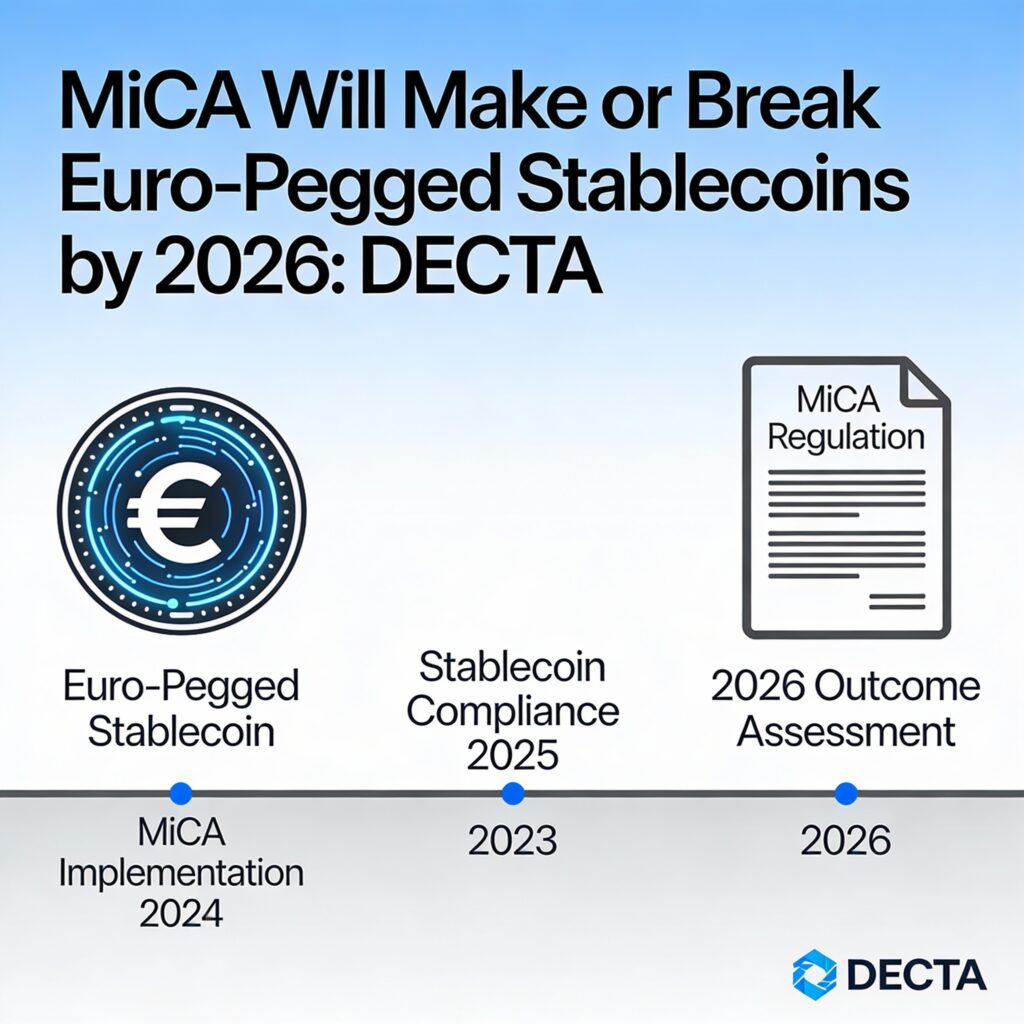
German payments firm DECTA expects euro-pegged stablecoins to gain momentum in both payments and tokenized finance as the European Union’s Markets in Crypto-Assets (MiCA) framework is fully rolled out.
In a report released earlier this month, DECTA said the euro-denominated stablecoin sector will continue to mature through 2026 as MiCA introduces harmonized rules across the EU, including standards for reserves, issuer supervision and operational compliance.
The company said the clearer regulatory footing should make it easier for compliant euro stablecoins to be integrated into payment networks, trading platforms and tokenized financial infrastructure.
DECTA added that market expansion over the next two years will depend on the pace at which MiCA-licensed issuers build distribution channels and banking relationships, the willingness of financial institutions to adopt stablecoin-based settlement for tokenized assets and programmable payments, and the strength of user demand for euro-denominated digital assets across exchanges and payment applications.
As EU platforms align with MiCA, DECTA expects a gradual move away from non-compliant or synthetic euro tokens toward fully regulated stablecoins.
Adoption, however, is likely to vary across member states due to differences in consumer awareness, national digital-asset policies and overall market development.
By 2026, euro-pegged stablecoins should have a more defined and regulated position within Europe’s digital-asset ecosystem, supported by a framework designed to emphasize stability, transparency and consistent oversight, DECTA said.
About The Author



More Stories
Bitcoin holds near $68,300 while gold tumbles for a ninth session and Asian stocks fall
Resolv stablecoin drops 70% as exploiter siphons $25 million worth of ETH
Equities catch up to bitcoin’s drop toward $60,000 amid a surge in bond yields.