

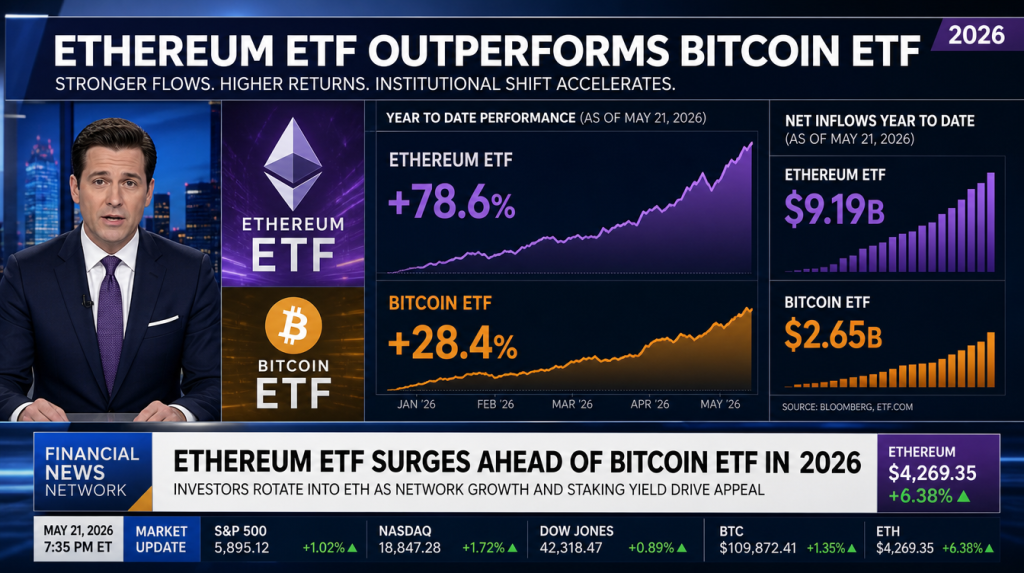
Ethereum ETFs recorded inflows of 37,959 ETH—about $71.17 million—during the seven days ending July 28, while Bitcoin ETFs saw outflows of 3,170 BTC valued at $200.23 million over the same period.
This divergence, highlighted by Lookonchain using CoinGlass data, marks the third straight week of net inflows into Ethereum ETFs and prompts a key question: does this signal a short-term rotation or the start of a longer-term shift in institutional crypto allocations?
The reality likely reflects elements of both, though driven by different factors. Bitcoin ETFs still manage significantly larger total assets, and the recent three-week trend follows an earlier period in the year when Ethereum ETFs experienced consistent outflows. The shift is notable, but it does not yet define the broader yearly trend.
Fund Flows Reveal Concentration Trends
A closer look at individual funds provides more clarity. BlackRock’s IBIT, the largest spot Bitcoin ETF, accounted for a loss of 3,511 BTC last week—more than the total net outflow of 3,170 BTC across all Bitcoin ETFs.
Grayscale’s Bitcoin funds declined by an additional 10 BTC, while Bitwise’s BITB dropped 27 BTC. On the other hand, Fidelity’s FBTC added 109 BTC and ARK 21Shares’ ARKB gained 77 BTC, partially offsetting losses but not enough to change the overall direction.
On the Ethereum side, inflows were highly concentrated. BlackRock’s ETHA brought in 37,424 ETH out of the total 37,959 ETH weekly inflows, effectively capturing nearly all of the category’s gains.
Grayscale’s Ethereum products added 5,515 ETH, while Fidelity’s FETH recorded outflows of 4,980 ETH, largely offsetting Grayscale’s contribution. ETHA’s dominance reflects its structural advantages: it holds about 68% of U.S. spot ETH ETF assets and offers lower fees compared to older Grayscale products, making it the preferred route for institutional capital.
Meanwhile, Bitcoin is trading near $63,900, up roughly 4% for the week despite ETF outflows. This divergence between price action and fund flows is not unusual, as ETF redemptions do not always indicate bearish sentiment.
Recent price pressure around the $64,000 level has coincided with significant liquidation activity, suggesting that some ETF outflows may be tied to portfolio rebalancing rather than outright negative positioning.
Capital Trends Favor Ethereum, Despite Bitcoin’s Lead
Bitcoin ETFs still dominate in scale, with $76.22 billion in assets under management compared to Ethereum’s $9.72 billion—a gap of more than sevenfold. This disparity is unlikely to close quickly, and interpreting recent flows as a rapid shift in institutional dominance toward Ethereum would be premature.
However, the data does point to a directional trend: new capital entering crypto ETFs in 2026 is increasingly favoring Ethereum.
Bitcoin ETFs have recovered only about 3.3% of the $8.2 billion that exited the category by mid-July. Combined with recent outflows from IBIT, this suggests the sector has yet to fully stabilize.
In contrast, Ethereum ETFs posted $103.9 million in net inflows for the week ending July 24, the highest among spot crypto ETF products during that period. Three consecutive weeks of inflows following earlier weakness indicate a meaningful shift rather than random fluctuation.
Beyond ETF flows, Ethereum’s case is also being supported by corporate treasury activity. BitMine saw its stock rise 13% this week as investors responded positively to its Ethereum-focused treasury strategy, while SharpLink Gaming continued to increase its ETH holdings despite ongoing market volatility.
Together, sustained ETF inflows and growing corporate demand suggest that Ethereum’s momentum may extend beyond a short-term rotation and reflect a more durable trend.
About The Author





More Stories
CFTC Warns Prediction Platforms of Manipulation Risks in ‘Mention Markets’
Lummis Says Trump Opposition Helped Derail Crypto Clarity Act
XRP Ledger Retries Upgrade Designed to Split Payments and Compliance Roles