

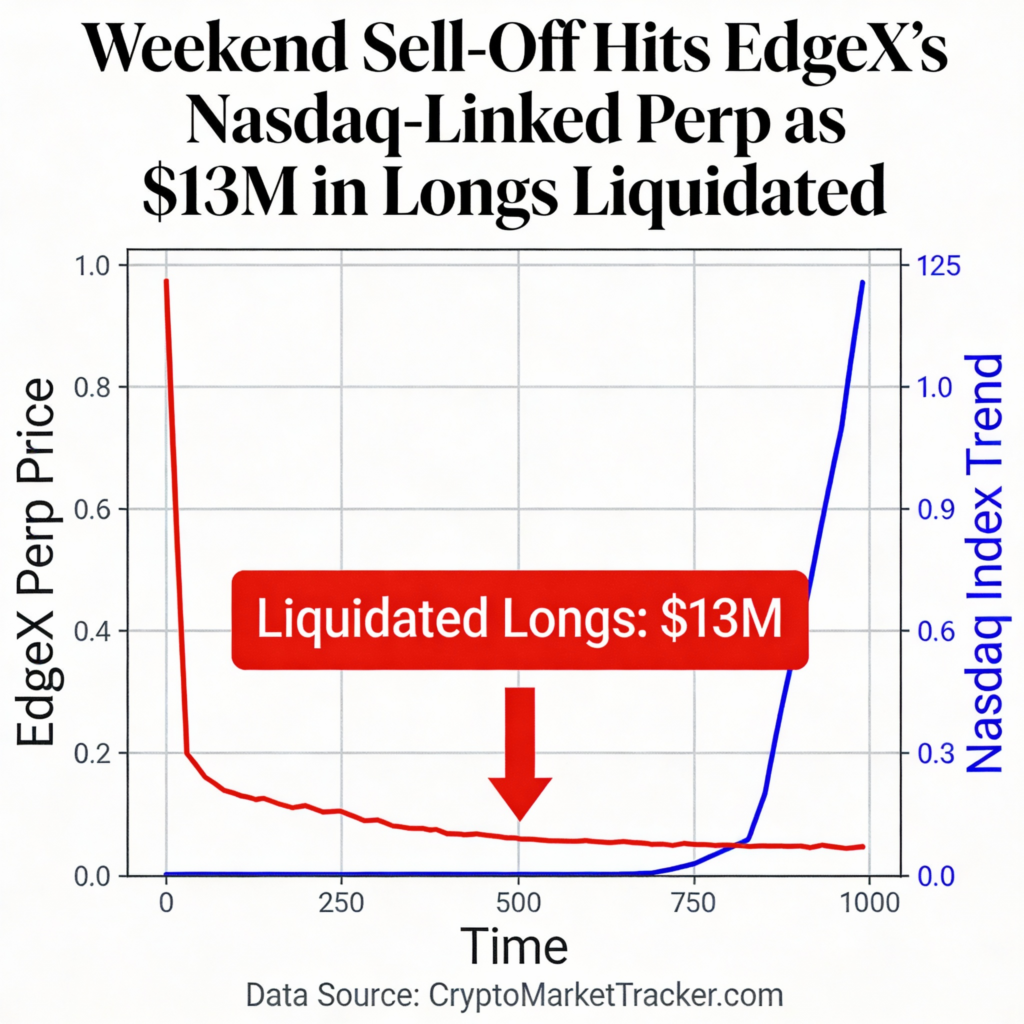
A sizable off-hours short trade sent EdgeX’s Nasdaq 100–linked XYZ100 perpetual sharply lower over the weekend, underscoring the vulnerabilities of equity-index perps when traditional markets are closed.
The move triggered approximately $13 million in liquidations after a newly created wallet executed a large short position, according to onchain data from Hypurrscan. Thin weekend liquidity amplified the selling pressure, highlighting the risks inherent in trading equity-linked crypto derivatives outside regular market hours.
On Saturday, the wallet initiated a six-hour time-weighted average price (TWAP) order to short 398 XYZ100 contracts, valued at roughly $10 million. The sustained sell pressure pushed the contract more than 3.5% lower within minutes, setting off a wave of forced liquidations.
Liquidations occur when leveraged positions are automatically closed after losses erode collateral below maintenance requirements. Blockchain data shows a single trader lost approximately $7.4 million in long positions, while another saw $2.7 million liquidated, bringing total losses across the market to around $13 million.
The sudden decline sparked debate among traders on X, with some questioning whether the market was susceptible to manipulation during off-hours, given that XYZ100 slid nearly 4% without any corresponding macroeconomic or equity-market news. Others argued that such price action reflects the natural risks of trading equity-linked perpetuals in thinly traded conditions.
“On weekends, you’re not trading the Nasdaq,” one trader wrote. “You’re trading whoever controls liquidity.”
EdgeX has rapidly grown into a major venue for perpetual futures trading. According to DefiLlama data, the platform processed about $167 billion in perp volume last month, frequently competing with established players such as Aster and Hyperliquid in daily turnover.
The liquidation cascade highlights both rising demand for tokenized equity exposure and the structural risks of trading products designed to track markets that are closed.
About The Author



More Stories
Bitcoin holds near $68,300 while gold tumbles for a ninth session and Asian stocks fall
Resolv stablecoin drops 70% as exploiter siphons $25 million worth of ETH
Equities catch up to bitcoin’s drop toward $60,000 amid a surge in bond yields.