

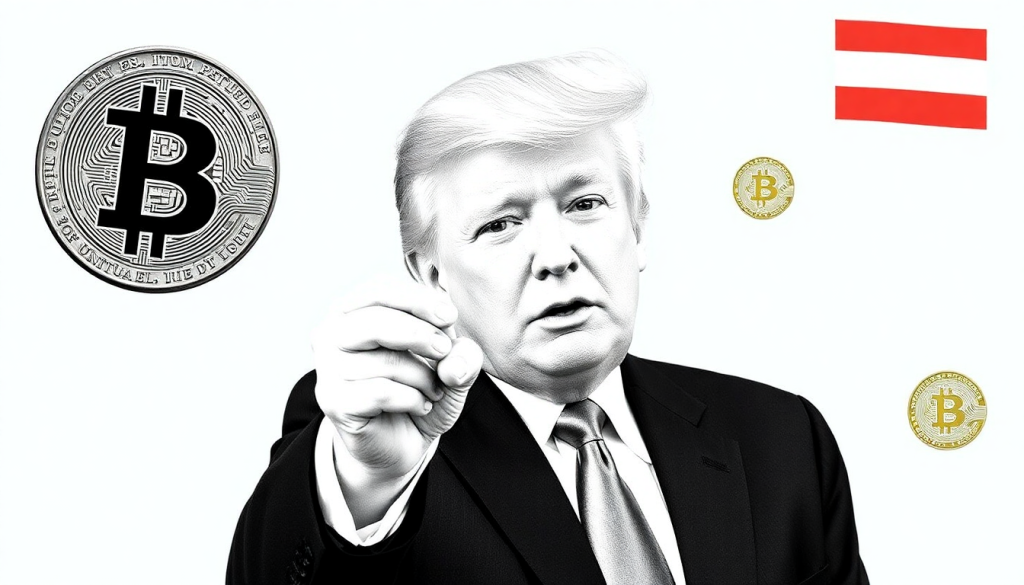
Three Political Risks That Could Shake Crypto Markets During the US Midterm Elections
The cryptocurrency market is approaching an important political turning point as US voters cast their ballots on November 3. The midterm election results could influence the direction of digital asset regulation, government spending expectations, and investors’ willingness to take risks.
Republicans are working to preserve their control of Congress, while Democrats hope to regain a majority in at least one chamber. The result will help determine how much room President Donald Trump has to implement his economic priorities and how much resistance his administration may encounter.
Crypto investors are watching three developments particularly closely: Trump’s proposed $5,000 payment to American adults, the stalled Digital Asset Market CLARITY Act, and growing tensions between Washington and Tehran.
While the election may not immediately change the underlying fundamentals of cryptocurrencies, its outcome could reshape market expectations around liquidity, regulation, and economic policy.
1. Trump’s $5,000 Dividend Could Influence Crypto Liquidity
Trump has proposed sending a $5,000 dividend to adult US citizens if Republicans maintain control of both the House and Senate. The plan could cover approximately 240 million adults, bringing the estimated total cost to nearly $1.2 trillion. He has also suggested using revenue generated from tariffs to help finance the payments.
If Republicans retain their congressional majorities, expectations for additional government support and stronger consumer spending could increase. Such developments may also influence the amount of capital flowing into financial markets, including cryptocurrencies.
The pandemic provides a useful example of how stimulus measures can coincide with stronger demand for digital assets. In 2020, US government payments arrived alongside aggressive monetary easing, contributing to a period of substantial market liquidity and rising cryptocurrency prices.
A Federal Reserve Bank of Cleveland study found that stimulus payments distributed in 2020 increased Bitcoin purchasing volume by 3.8%, although the direct price impact was relatively small.
The wider crypto bull market of 2020–2021 also benefited from low borrowing costs, growing institutional involvement, and abundant liquidity. Another stimulus program could encourage individual investors to increase their exposure to Bitcoin and other higher-risk investments.
However, Trump’s proposed payment remains unapproved. Any accompanying rise in inflation expectations or US Treasury yields could weaken the positive effect on risk assets. A Democratic-controlled Congress could also make the proposal considerably harder to pass.
2. CLARITY Act Faces an Uncertain Legislative Future
The election could have significant implications for the Digital Asset Market CLARITY Act, a major legislative effort aimed at bringing greater certainty to the US cryptocurrency industry.
The proposed legislation seeks to establish a clearer regulatory framework for digital assets while defining the responsibilities of different US regulatory agencies. Its progress, however, has been delayed after it failed to pass a Senate procedural vote in September.
Maintaining Republican control could improve the bill’s chances of moving forward. Even so, lawmakers would still need bipartisan support to overcome the remaining legislative challenges.
A Democratic victory, particularly in the House, could lead to closer congressional examination of Trump’s cryptocurrency-related business activities and political connections. If investigations and oversight become priorities, progress on crypto legislation could be pushed further back.
That does not necessarily mean Democrats would oppose clearer cryptocurrency rules. Support for establishing a more predictable regulatory framework extends across party lines, although lawmakers could seek substantial changes to the current proposal.
Consequently, the election could influence not only the timing of crypto legislation but also the form it eventually takes.
3. Iran Conflict Could Overshadow Election-Driven Optimism
Geopolitical tensions represent another major source of uncertainty for cryptocurrency investors. Even a favorable election outcome for the industry could struggle to support prices if the conflict involving Iran escalates.
The US recently conducted limited strikes on Iran’s Qeshm Islands, located near the Strait of Hormuz. The operation renewed concerns about a broader confrontation, although diplomatic communications between the two sides remained ongoing.
The midterm results could produce a mixed outlook for digital assets. A Republican victory, combined with expectations of stimulus payments, progress on crypto regulation, and reduced tensions in the Middle East, could create supportive conditions for the market.
On the other hand, a Democratic victory could introduce questions about the direction of US crypto policy, while further military escalation could pressure financial markets regardless of the election outcome.
For investors, the central issue is whether positive expectations around domestic policy can outweigh external economic and geopolitical risks.
Trump’s $5,000 dividend proposal may provide an optimistic narrative, but its actual market impact will depend on whether the plan becomes policy and how it affects liquidity. At the same time, inflation pressures, Treasury yields, and developments around Iran could play a greater role in determining crypto’s next major move than the election itself.
About The Author





More Stories
RUNE Surges 10% as North Korean Hackers Resume Moving Stolen Binance Funds
Bitcoin Recovers From Midterm Sell-Off as DeFi Tokens Outperform
Elon Musk Pitches Space-Based Data Centers as Democratic Sweep Weighs on AI Stocks