

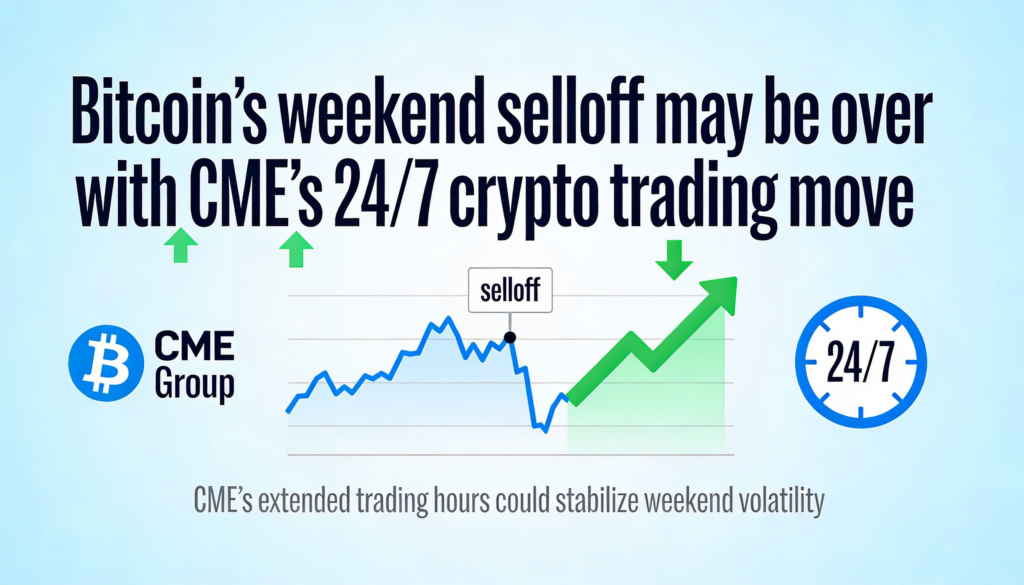
The decision by CME Group to introduce round-the-clock cryptocurrency trading is expected to materially reshape weekend liquidity and volatility patterns, according to market participants.
The Chicago-based derivatives powerhouse announced it will begin offering 24/7 trading for its crypto futures and options starting May 29 — a landmark shift in how traditional financial institutions engage with digital assets.
The exchange said the move is designed to meet surging demand from professional investors seeking continuous risk management, particularly during weekends when crypto markets remain open but institutional trading venues typically shut down.
Tim McCourt, CME’s global head of equities and FX, said the decision reflects sustained growth in the segment. Crypto derivatives traded across CME platforms reached a record $3 trillion in notional volume last year, underscoring deepening institutional participation.
“Client demand for risk management in the digital asset market is at an all-time high,” McCourt said.
Weekend volatility under the spotlight
Although cryptocurrency markets operate 24/7, CME’s regulated derivatives — widely used by hedge funds and asset managers — traditionally close Friday evening and reopen Sunday. Meanwhile, spot markets continue trading uninterrupted.
That mismatch has long produced so-called “CME gaps,” referring to price differences between Friday’s futures close and Sunday’s reopening. These gaps leave institutions unable to hedge exposures during periods when crypto prices can move sharply.
Analysts argue that shifting to continuous trading could alter liquidity dynamics across both institutional and retail markets, particularly during weekends when trading conditions are often thinner.
Bobby Ong, co-founder of CoinGecko, said the most extreme price movements tend to occur when regulated venues are offline.
“The most violent price swings happen precisely when institutional venues are dark,” Ong said, adding that liquidation cascades over weekends have historically been fueled by fragmented liquidity. “CME is structurally acknowledging what the data has shown for years.”
A smoother transition between sessions
Adam Haeems, head of asset management at Tesseract Group, described the shift as closing one of the final structural divides between crypto-native markets and regulated derivatives infrastructure.
Flows that previously paused late Friday and resumed Sunday will now continue without interruption, potentially lowering both the cost and risk of holding positions through the weekend. Haeems noted that much of crypto’s weekend volatility stems from this structural imbalance, and continuous access should help compress spreads and moderate abrupt price moves.
Still, he cautioned that extended hours alone do not guarantee deep liquidity. Institutional trading desks may not maintain the same staffing levels or risk appetite on weekends as they do during weekdays.
“The improvement will be real but gradual,” Haeems said.
Retail traders could also see fewer dramatic Monday price gaps as futures and spot markets become more aligned. Historically, CME gaps have filled more than 90% of the time — a pattern closely watched by futures-focused traders. That signal may diminish as trading becomes continuous.
Bitcoin’s evolving macro role
Maxime Seiler, CEO of trading firm STS Digital, said the move enhances the appeal of CME’s products for institutions that prefer regulated venues over crypto-native platforms that employ forced liquidation or auto-deleveraging mechanisms.
“The ability to trade futures and options on CME without the risk of auto-deleveraging is a significant advantage,” Seiler said.
He added that the shift could further cement bitcoin’s role as a macro hedge during periods when traditional markets are closed.
“With other asset classes offline, bitcoin may increasingly serve as a proxy for global risk, reacting in real time to geopolitical or economic developments,” he said.
In effect, CME’s transition to 24/7 crypto trading represents more than an operational update — it signals a structural convergence between traditional financial infrastructure and the always-on nature of digital asset markets.
About The Author

More Stories
Fears of a Blue Owl funding squeeze are stirring memories of 2008, with speculation that the turmoil may set the stage for bitcoin’s next rally.
Bitcoin holds firm near $68,000 despite new Trump tariffs, with altcoins driving a modest recovery.
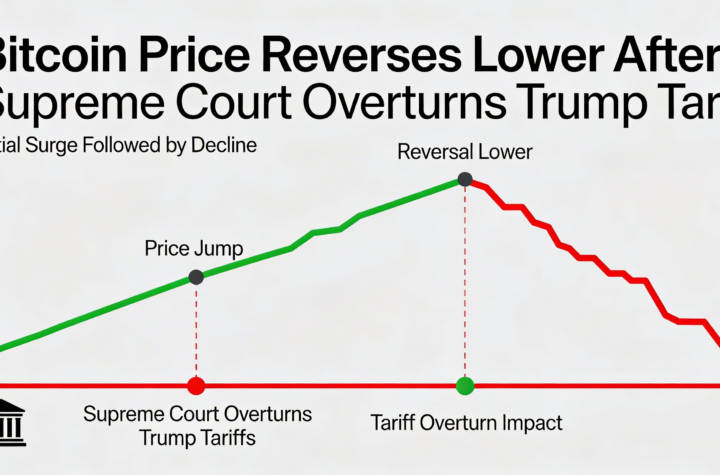
Bitcoin rallies briefly, then slides as the Supreme Court strikes down Trump-era tariffs.