

Bitcoin Trades Near Production Cost as Difficulty Regression Model Signals Fair Value
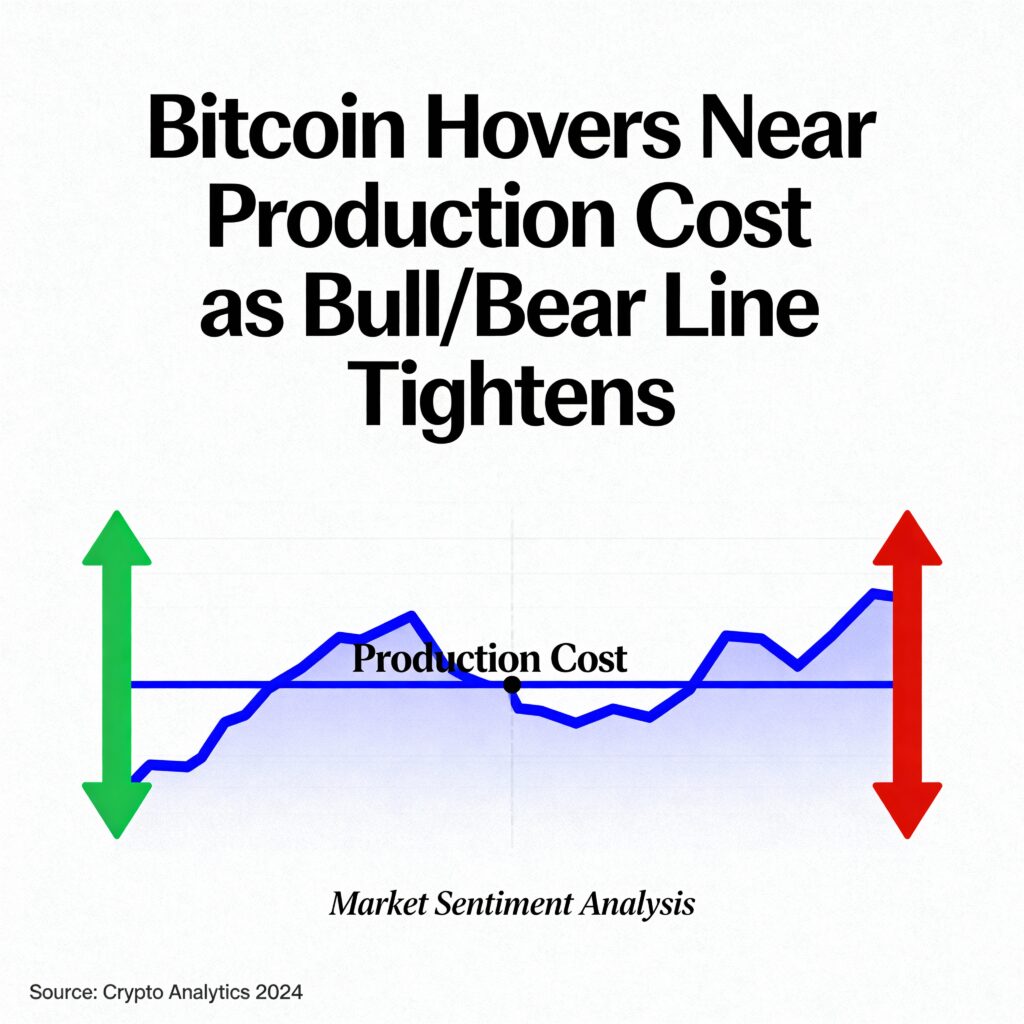
Bitcoin is closely tracking the Difficulty Regression Model, according to Checkonchain. The model estimates the all-in cost of producing one bitcoin by using mining difficulty as a single, comprehensive metric, factoring in operational variables without requiring detailed assumptions about hardware, energy, or logistics.
Currently, the model sits near $92,300, roughly matching Bitcoin’s spot price. The cryptocurrency briefly dipped to around $80,000, below the model, before rebounding back to its valuation. Historically, Bitcoin tends to maintain a bullish trend when trading above the model and shifts into bearish regimes when trading below it.
In April 2025, Bitcoin fell to about $76,000 and bounced precisely at the model’s level, reinforcing its role as a key support. For much of 2025, Bitcoin traded at a roughly 50% premium over the model, compared with 2024 when it stayed closer to production costs. During the 2022 bear market, it traded at a discount of up to 50%, while in prior bull markets, prices exceeded the model by multiples—doubling it in 2021 and quintupling it in 2017.
As Bitcoin matures, extreme premiums appear less likely. Overall, the model suggests Bitcoin is trading near its production cost, indicating a fair value zone—an assessment echoed by Metcalfe’s Law valuations, which place Bitcoin near $90,000.
About The Author



More Stories
Bitcoin holds near $68,300 while gold tumbles for a ninth session and Asian stocks fall
Resolv stablecoin drops 70% as exploiter siphons $25 million worth of ETH
Equities catch up to bitcoin’s drop toward $60,000 amid a surge in bond yields.