

A U.S.–Iran agreement helped push oil prices lower and lifted equities, but Bitcoin’s reaction has been muted, with ETF outflows only just stabilizing after a strong run of redemptions. Analysts say markets are waiting for the deal to be formally signed before fully pricing in any optimism.
Bitcoin (BTC) briefly climbed above $67,000 late Monday before falling back below $66,000, reflecting a cautious stance compared with other risk assets responding to developments in the Iran peace process.
BTC was trading around $65,845 on Tuesday, up 0.3% over 24 hours and 4.8% for the week, according to CoinDesk data. It reached a 24-hour high of $67,217 before losing momentum. Ether performed more strongly, rising 2.8% to $1,764, while Solana gained 3.2% to $73. XRP advanced 3.2% to $1.22, and Hyperliquid’s HYPE outperformed major tokens with a 6.3% gain to $69.
Macro markets responded more decisively. A memorandum of understanding between the U.S. and Iran, signed electronically by President Donald Trump and Vice President JD Vance, helped drive sentiment, with Trump also indicating that the Strait of Hormuz would fully reopen on Friday.
Oil markets reacted sharply, with Brent crude falling below $83 per barrel after its steepest drop in over two weeks. Meanwhile, equities rallied, with the S&P 500 gaining 1.7% and the Nasdaq 100 rising 3.1% on Monday.
Despite the risk-on backdrop, Bitcoin has lagged behind other markets.
“Oil dropped more than 4% and Asian equities jumped more than 3% on the ceasefire, but BTC barely moved,” said Jimmy Xue, co-founder and COO of Axis. He described the move as “a relief rally that the market hasn’t fully committed to, rather than a clear shift into Bitcoin risk-on positioning.”
The hesitation reflects market memory of previous false starts. Bitcoin previously reversed gains after earlier Iran-related relief rallies, including after an April ceasefire attempt and following June 9 developments that later unraveled. Adding to uncertainty, Trump also warned the deal could be scrapped if Iran does not agree to dismantle its nuclear program.
According to Xue, traders are likely waiting for the scheduled June 19 signing in Switzerland before treating the agreement as durable.
ETF flows also show caution. U.S. spot Bitcoin ETFs have just ended a four-week streak of outflows totaling roughly $5.4 billion, including a record weekly withdrawal of about $3.4 billion. However, the return of sustained inflows has not yet been confirmed. One supportive signal is continued movement of Bitcoin into cold storage, suggesting long-term holders are not distributing supply.
Not all analysts are cautious, however.
“Overall, it’s a constructive setup for risk assets, including crypto,” said Chris Perkins, incoming head of Franklin Crypto at Franklin Templeton. He added that with the SpaceX IPO behind the market, improving macro conditions could help bring retail investors back into crypto.
Perkins also pointed to the potential impact of the CLARITY Act, which would define whether digital assets are classified as securities or commodities, noting that prediction markets currently see its passage as a near toss-up but potentially significant for institutional participation.
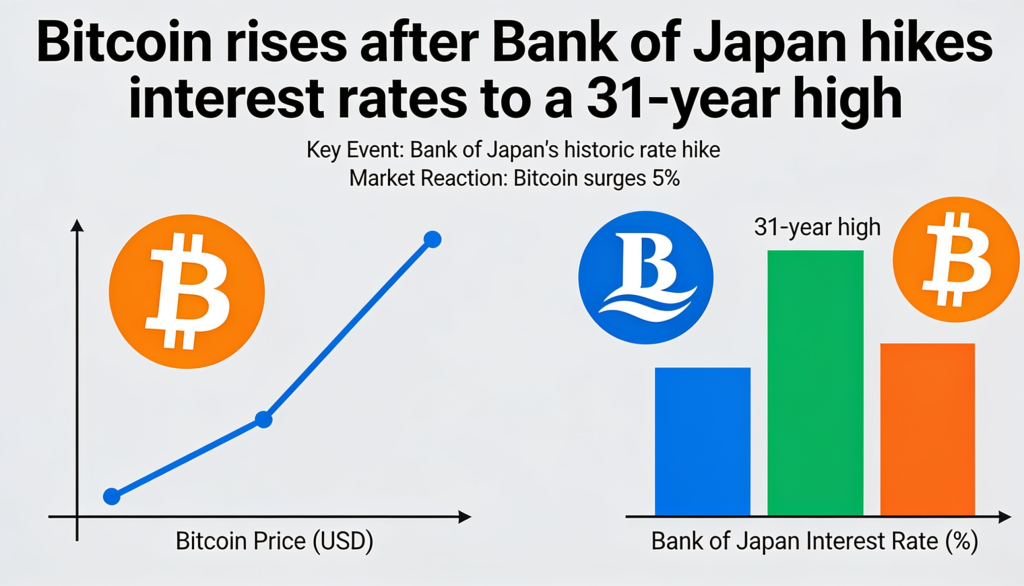
Looking ahead, attention is turning to central bank decisions. The Bank of Japan recently raised rates to 1%, a 31-year high, the Reserve Bank of Australia is expected to hold steady, and the U.S. Federal Reserve is set to announce its decision on Wednesday.
For Bitcoin—often treated as a high-beta risk asset—the Fed decision and the Iran deal signing on Friday are the key events likely to determine whether the current rebound continues or fades like previous attempts.
About The Author





More Stories
Bitcoin Starts New Quarter Stuck in Familiar $82K-$85K Range
Citigroup Lifts 12-Month Bitcoin Target to $113K as ETF Inflows Return
Bitcoin’s Inflation-Fueled Jump to $85.5K Fades as Yields Stay High