

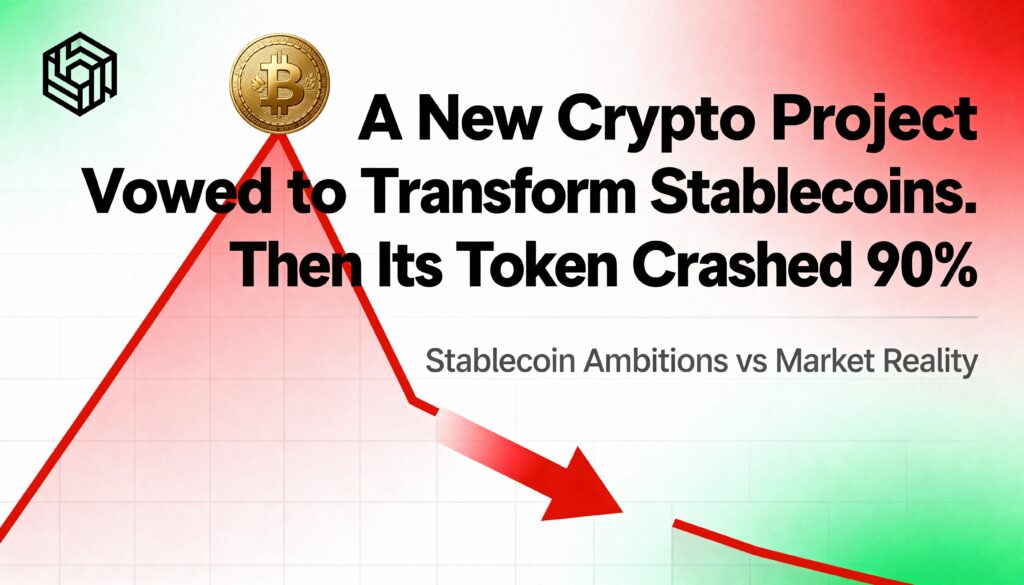
Plasma’s Stablecoin Vision Stalls as XPL Trades Nearly 90% Below Its Peak
Plasma’s grand plan to reinvent stablecoin infrastructure is losing momentum fast. XPL, the project’s native token, now sits almost 90% below its early high, weighed down by low network activity, token supply concerns, and minimal communication from the team. Investors are left wondering whether the token has finally stabilized — or if more downside lies ahead.
Plasma launched its Layer 1 blockchain for stablecoins in late September to significant fanfare. The project had just closed a massively oversubscribed token sale, raising $500 million — ten times more than planned — and positioned itself as a frontrunner in what many called crypto’s defining theme of 2025: stablecoin infrastructure.
Its marketing echoed the usual promises: high throughput, instant payments, and seamless scaling. It touted integrations with Binance Earn, Chainlink Scale, and partnerships with firms such as Elliptic. On paper, it looked like a competitive entrant ready to reshape stablecoin settlement. Instead, Plasma has become one of the most dramatic token disappointments of the cycle.
XPL surged to roughly $1.67 on Sept. 27, pushing Plasma’s market cap above $2 billion, according to CoinMarketCap. But by late October, the token had plunged more than 80% to around $0.31. The decline continued into November, with XPL now hovering between $0.18 and $0.20 — an 88–90% collapse from its early peak.
With the token drifting sideways but not recovering, the market’s core question is simple: Has XPL bottomed, or is the downturn still unfolding?
Part of the early hype came from the pace of Plasma’s development. The Milan-based team built its chain in under a year — a timeline the project itself acknowledged came with engineering trade-offs. Still, the narrative of a purpose-built stablecoin chain offering zero-fee USDT transfers and a self-custodial, banking-like user experience resonated with investors and drove intense speculative demand.
But that momentum evaporated quickly. Crypto traders shift rapidly between narratives, and without on-chain catalysts or growing utility, Plasma struggled to retain attention.
Current network data reinforces that struggle: Plasma has averaged only 3.6 transactions per second over the past 10 minutes — far below the 1,000 TPS potential it advertised, and a sign the chain hasn’t attracted meaningful usage.
Token structure also fueled concerns. Plasma launched with 1.8 billion XPL in circulation — 18% of the total 10-billion supply — with large allocations earmarked for team members, investors, and incentives. Traders recognized that upcoming unlocks could introduce further selling pressure, accelerating the decline.
The combination of low usage, high expectations, and a large circulating supply left XPL highly exposed once the initial enthusiasm faded. With short-term speculators moving on, only committed long-term holders remain — leaving XPL in a precarious position.
A November Update That Didn’t Move the Needle
Earlier this month, Plasma released a detailed November progress report outlining seven weeks of post-launch engineering and infrastructure work. But while the update highlighted ongoing development, it provided no meaningful catalyst to reinvigorate the token.
The team announced a codebase refactor, expanded testing, and a rebuilt peer discovery layer. But the centerpiece of its roadmap remains “Plasma One,” a wallet and payments product designed to anchor real-world use cases.
Plasma One — a neobank-style wallet offering stablecoin-based yield — is positioned as the project’s differentiator. Yet the update did not translate into visible on-chain traction, leaving investors with a future promise rather than present utility.
Communication Gaps Deepen Uncertainty
One of the most consistent criticisms aimed at Plasma is its lack of communication. The team rarely engages publicly and communicates through formal, infrequent updates — a stark contrast to most major crypto projects, which maintain an active, round-the-clock online presence.
In a market that trades nonstop, extended silence can shift sentiment quickly. Plasma’s approach has heightened concerns.
CoinDesk attempted to schedule interviews to clarify the project’s status. After nearly two weeks of coordination, Plasma agreed to a video interview — only to cancel the day before without explanation, suggesting a written interview instead. When CoinDesk submitted questions, the team responded that it was “not in a position to comment at the moment.”
After repeated requests, a spokesperson eventually said the team would share updates and engage with media “when we have significant product developments to share and progress made toward that vision.”
For now, what’s happening inside Plasma remains unclear — and that opacity continues to loom over XPL’s already fragile outlook.
About The Author



More Stories
Bitcoin holds near $68,300 while gold tumbles for a ninth session and Asian stocks fall
Resolv stablecoin drops 70% as exploiter siphons $25 million worth of ETH
Equities catch up to bitcoin’s drop toward $60,000 amid a surge in bond yields.