

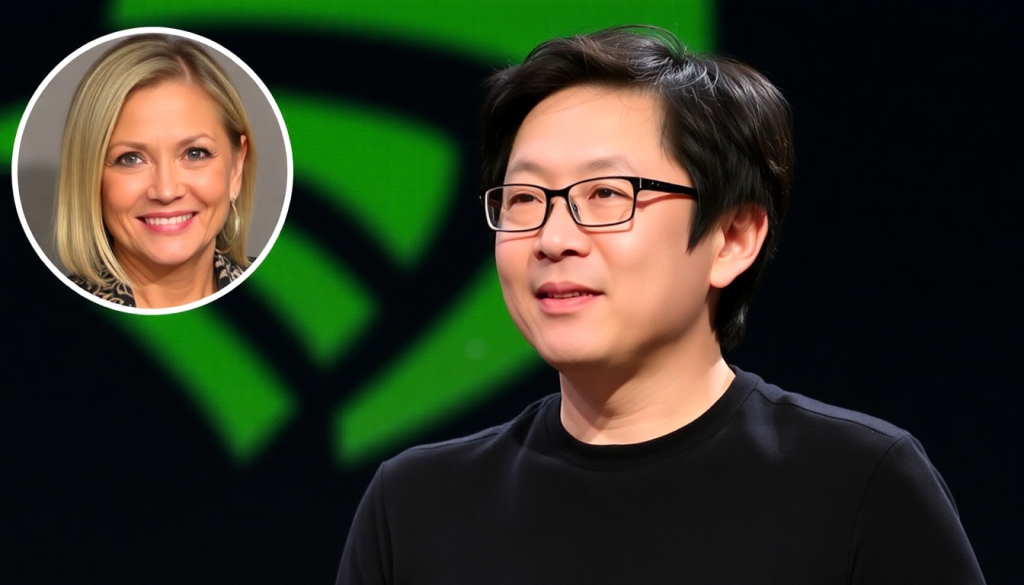
The reported resignation of Jensen Huang as Nvidia’s CEO has raised questions about the company’s next leadership transition, including which Apple executive could emerge as a permanent successor. Meanwhile, Nvidia’s stock has come under significant selling pressure. How has NVDA performed following the announcement?
On November 12, 2026, Nvidia announced that co-founder and longtime CEO Jensen Huang had stepped down from his positions as President, Chief Executive Officer, and board member, with the resignation taking effect immediately.
The leadership change comes amid growing scrutiny surrounding Huang’s personal affairs and allegations involving potential national security concerns. Nvidia CFO Colette Kress has taken over as Interim CEO while continuing to oversee the company’s finances. Meanwhile, the board appointed longtime director Harvey C. Jones as its first Chairman and began searching for a permanent successor. An Apple executive has reportedly emerged as an early candidate for the position.
The announcement triggered a sharp reaction in the stock market, with Nvidia shares dropping more than 10% in premarket trading. The decline added to recent losses that had already wiped hundreds of billions of dollars from the company’s market capitalization. By midday, NVDA was trading within the mid-$150 to low-$160 range.
Why Did Jensen Huang Leave Nvidia?
Huang’s departure follows reports concerning two alleged extramarital relationships that attracted attention because of their potential corporate and national security implications.
The first controversy involved Alice Huang, a businesswoman associated with Singapore-based AI company Megaspeed, which reportedly maintains significant commercial ties with Nvidia. U.S. authorities have identified her as a suspected operative connected to China’s Ministry of State Security.
Reports also claimed that Jensen Huang had been photographed with her on several occasions, raising concerns about whether foreign intelligence interests could have targeted the Nvidia chief executive.
Huang subsequently apologized to Nvidia employees for being unfaithful to his wife. However, he rejected allegations that he had compromised national security or disclosed confidential company information.
The controversy intensified following additional reports alleging a second relationship involving Kimberly Powell, Nvidia’s vice president of healthcare and one of Huang’s direct subordinates.
The combination of the two allegations reportedly prompted Nvidia’s board to initiate an internal investigation. Following a late-night meeting, the board ultimately accepted Huang’s resignation.
The alleged relationship involving a senior employee, alongside concerns surrounding the reported connection to a suspected Chinese intelligence asset, placed additional pressure on Nvidia’s leadership.
Who Is Colette Kress, and Which Apple Executive Could Replace Jensen Huang?
Colette Kress has been Nvidia’s Executive Vice President and Chief Financial Officer since September 2013. She is now responsible for maintaining leadership continuity as the company begins its search for a permanent CEO.
Before joining Nvidia, Kress accumulated nearly 25 years of experience in senior financial positions across the technology industry.
Her previous roles included serving as CFO of Cisco’s Business Technology and Operations organization and leading financial operations for Microsoft’s Server and Tools division. She also held earlier positions at Texas Instruments.
Kress earned her bachelor’s degree in finance from the University of Arizona and an MBA from Southern Methodist University.
During her time at Nvidia, the company’s revenue expanded from approximately $4 billion to more than $200 billion, as its graphics processors and AI accelerators became essential infrastructure for the artificial intelligence industry.
Her appointment as Interim CEO is intended to provide stability while Nvidia’s board evaluates potential candidates for the permanent position.
Among the names attracting attention is Apple’s Johny Srouji, who has reportedly emerged as an early contender. His experience in Apple’s semiconductor and hardware operations could make him a notable candidate for Nvidia’s next leadership chapter.
Hyperliquid’s NVDA Perpetual Contracts Reflect Nvidia’s Stock Decline
Hyperliquid provides traders with leveraged perpetual contracts linked to Nvidia’s share price, offering round-the-clock exposure without requiring ownership of the underlying stock.
These contracts generally follow movements in traditional NVDA shares and have experienced increased trading activity amid the leadership controversy.
Following the initial reports about Huang’s alleged affairs and the board investigation in early November, Hyperliquid’s NVDA perpetual market began tracking the stock’s downward movement.
The contract price declined from approximately $170–$175 to the mid-$150 range, trading around $158–$160 on November 12. This represents a decline of roughly 9%–11% during the latest sessions, with larger losses compared with pre-scandal levels.
Open interest has remained elevated at hundreds of millions of dollars, indicating substantial speculative positioning. Funding rates have also fluctuated as traders adjusted their exposure between bullish and bearish positions.
Trading volume increased sharply following news of Huang’s resignation, suggesting heightened liquidation activity and rapid changes in market positioning.
From a technical perspective, the contract has fallen below several important short-term support levels, while momentum indicators have entered deeply oversold territory.
Any recovery in Nvidia’s traditional stock price could quickly influence its Hyperliquid perpetual counterpart. However, the platform’s leveraged trading environment can magnify price swings, increasing the risk of further declines while also creating the potential for sharp rebounds.
About The Author





More Stories
Hidden Market Force Could Trigger Bigger Bitcoin and Ethereum Price Swings
Satoshi-Era Bitcoin Wallet Linked to $260B Lawsuit Moves 75 BTC After 15 Years
Bitcoin Drops to $68,000 as Anthropic IPO Hype Fuels Market Uncertainty