

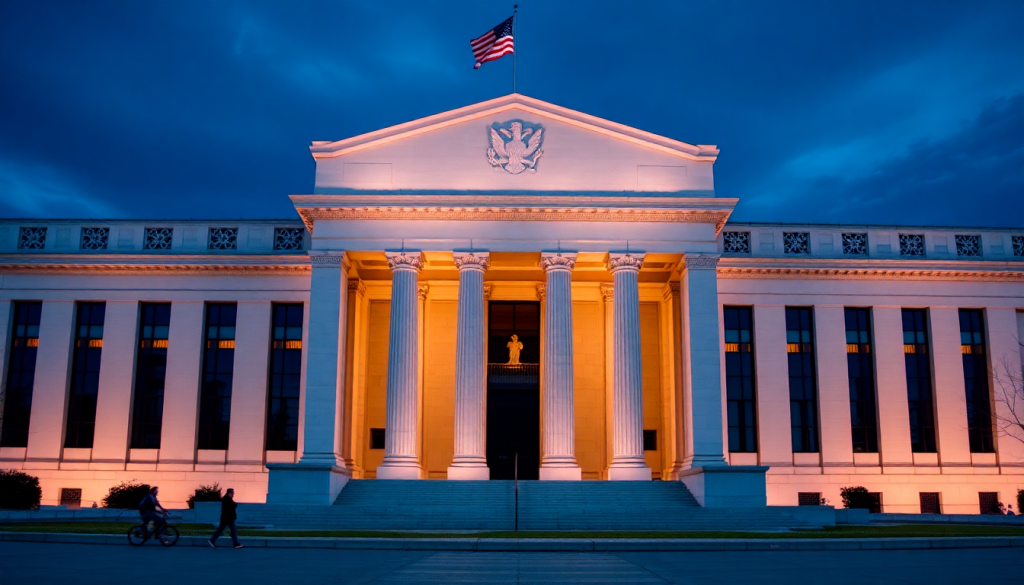
Bitcoin’s volatility could depend on how the Federal Reserve and Bank of Japan decisions influence interest-rate differentials, the yen and carry trades as investors evaluate the possibility of greater policy alignment.
Markets are bracing for two closely timed central-bank decisions, with the Federal Reserve scheduled to announce its policy decision on Wednesday afternoon. Futures markets were pricing in more than an 80% probability of a 25-basis-point Fed rate increase. With the meetings taking place within a short period, traders are focused on how expectations for tighter monetary policy evolve across the Pacific.
Expectations for the Fed have shifted considerably since late August. The probability of a rate hike rose from around 50% to as much as 92%. The repricing occurred alongside a monthly advance in the yen against the U.S. dollar, according to the report, adding another factor to the market environment ahead of the Fed announcement and the BOJ meeting two days later.
Investors are not looking at either central bank separately. If both institutions raise rates, the interest-rate differential between Japan and the United States could narrow for the first time in several years. Traders are assessing what such a shift could mean for carry trades and broader risk appetite as the fourth quarter approaches.
The expected decisions also form part of a broader monetary-policy shift. The Federal Reserve, European Central Bank and BOJ could potentially tighten policy during the same period for the first time since 2006. This puts the week’s decisions into the larger context of potentially converging interest-rate paths among the world’s major economies.
For Bitcoin and other risk-sensitive assets, the key issue is the uncertainty surrounding future monetary-policy paths rather than any particular price target. Traders are monitoring the potential reduction in the U.S.-Japan rate gap, movements in the yen and possible changes in carry-trade activity following the two policy decisions.
The Mechanism: How Two Central Bank Decisions in 48 Hours Could Affect Bitcoin
The Federal Open Market Committee’s September 15-16 meeting includes an updated Summary of Economic Projections, according to the Federal Reserve’s meeting calendar. Investors are paying close attention to the Fed’s dot plot and potential dissenting votes at the BOJ for clues about the speed at which monetary-policy paths in the two economies could move closer together.
Expectations surrounding the BOJ are relatively firm. A CNBC survey of 18 economists conducted from September 9 to 14 showed that 89% anticipated a 25-basis-point increase to 1.25%, a level described in the report as a new three-decade high. Economists cited stronger inflation, accelerating wage growth and pressure from Washington among the factors supporting the expected move.
However, economists differed on how quickly the BOJ should continue tightening. Jesper Koll, expert director at Monex Group, anticipated a larger 50-basis-point increase, while Carlos Casanova, senior economist for Asia at Union Bancaire Privée, expected the BOJ to leave rates unchanged, saying economic data did not yet support a faster tightening cycle.
The first major signal will come from the Fed’s Wednesday decision and its revised dot plot. Futures markets will then reveal how expectations for U.S. rates change, giving investors an immediate indication of whether markets expect the interest-rate gap between the United States and Japan to shrink.
The BOJ will announce its decision on Friday, with traders likely to scrutinize any dissenting votes. Political developments could also influence expectations. Takahide Kiuchi, executive economist at Nomura Research Institute, told CNBC that the Trump administration had effectively prevented a potential Takaichi administration from stopping the BOJ from increasing rates.
The yen provides another important indicator. Around 61% of economists surveyed by CNBC expected the Japanese currency to trade between 155 and 160 per dollar over the following month.
The yen’s reaction and any changes in carry-trade positioning could indicate whether the expected period of simultaneous tightening actually takes shape and how that environment could affect Bitcoin and other risk-sensitive assets.
About The Author



More Stories
Crypto Market Rallies After Fed Delivers First Rate Hike Since 2023
Bitcoin Echoes 2022 as Fed Resumes Interest Rate Hikes
U.S. Diesel Prices Hit Record High as Bitcoin and Gold Face Pressure