

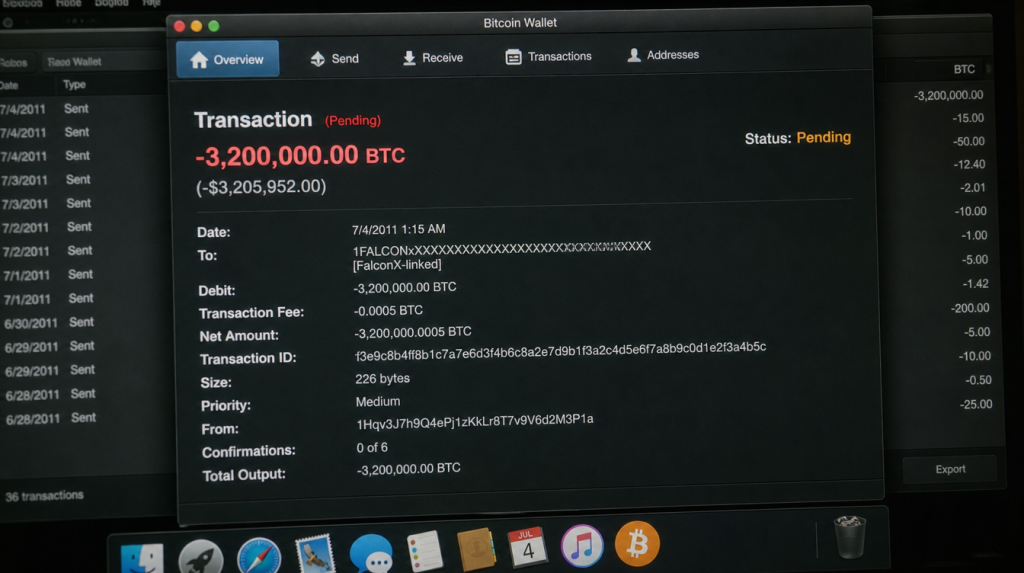
A Bitcoin wallet that had remained inactive since 2011 transferred nearly 50 BTC worth around $3.2 million on Thursday, moving the coins to an address that has previously interacted with wallets linked to institutional crypto brokerage FalconX.
The 49.97 BTC remained untouched in the receiving address as of Friday, but the wallet’s history of sending funds to FalconX-associated deposit addresses has raised questions over whether the coins are simply being consolidated, moved for custody reasons, or positioned closer to a potential trading platform.
According to Galaxy Research, the wallet originally received the Bitcoin on July 16, 2011, when BTC was trading at roughly $10. The holder had not moved the funds since then, allowing the stash to grow in value to about $3.2 million after surviving more than 14 years of market cycles, price crashes, and industry failures.
The transaction was recorded in block 961331 at 20:14 UTC on Aug. 6. It combined four inputs from the long-dormant wallet totaling 49.97 BTC with two smaller inputs from separate addresses. The transaction sent exactly 50 BTC to a SegWit address, while another output received approximately 0.00116 BTC after network fees were deducted.
SegWit, short for Segregated Witness, is a Bitcoin transaction format designed to improve efficiency by reducing the amount of block space transactions require. Addresses that begin with “bc1” typically use this format.
The destination address was not newly created. Data from blockchain analytics platform Arkham shows that the wallet has been active for several years and previously transferred 6.336 BTC and 16.131 BTC to addresses identified as FalconX deposit wallets.
The address has also received Bitcoin from wallets associated by Arkham with a Nexo hot wallet and Prime Trust custody.
Despite the transaction, the newly received 50 BTC remained in the address as of Friday morning. There is currently no blockchain evidence showing that the dormant coins were deposited into FalconX, transferred to another exchange, or sold.
Bitcoin wallets from the network’s early years often attract attention when they become active because many of these holders acquired their coins when Bitcoin prices were extremely low compared with today.
However, simply moving coins does not reveal the owner’s intentions. Such transfers can represent many actions, including upgrading wallet security, changing custody arrangements, reorganizing holdings, or preparing for a potential sale.
The movement also comes shortly after one of Bitcoin’s most significant cold-wallet security incidents in recent years, highlighting that even coins held safely for more than a decade can face risks if the technology protecting private keys becomes compromised.
Coldcard manufacturer Coinkite recently advised users to move their funds after revealing a firmware vulnerability dating back to 2021 that could expose private keys generated by affected devices. The company said attackers have drained up to $114 million from vulnerable wallets since July 30 through multiple waves of theft.
There is no indication that the 2011 Bitcoin wallet is connected to the Coldcard exploit, and the address existed years before the hardware wallet was introduced. However, the security disclosure has prompted some long-term Bitcoin holders to review older storage methods, potentially contributing to increased movement from previously inactive wallets.
About The Author





More Stories
CFTC Warns Prediction Platforms of Manipulation Risks in ‘Mention Markets’
Lummis Says Trump Opposition Helped Derail Crypto Clarity Act
XRP Ledger Retries Upgrade Designed to Split Payments and Compliance Roles