

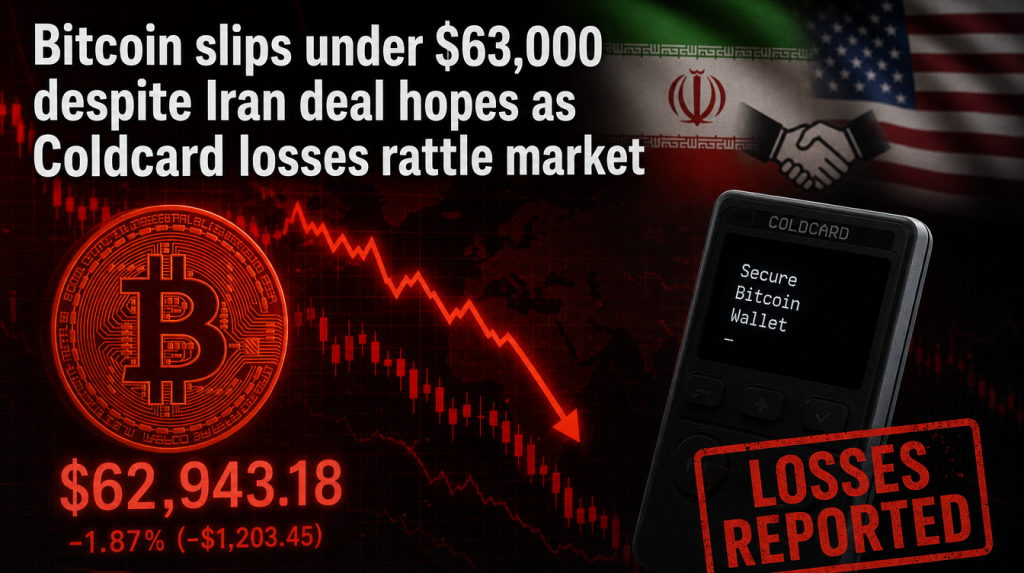
Oil prices and Treasury yields moved lower after renewed U.S.-Iran negotiations reduced inflation concerns, but bitcoin and ether failed to gain momentum as continued Coldcard-related wallet sweeps pushed reported losses close to $89 million.
Major cryptocurrencies declined on Monday despite improving macro conditions following signs of progress in potential U.S.-Iran talks. Investor sentiment remained pressured by the ongoing Coldcard hardware wallet exploit, which has continued to generate new losses.
Bitcoin fell from a Sunday peak of $63,600 to around $62,800 on Monday, marking a 1% daily decline and a 4% drop over the past week. Ether also slipped more than 1% to $1,858 and has remained below the $1,900 level since last week, down 5% over seven days. XRP declined nearly 1% to $1.07, while Solana dropped about 0.5% to roughly $73. Dogecoin also lost around 0.5%, trading just below $0.07.
BNB was the only major cryptocurrency showing strength, holding flat on the day while gaining 1.6% over the week. Hyperliquid’s HYPE token fell 1% to $52.52 and recorded the weakest performance among the top 10 cryptocurrencies, down 12.8% over the past seven days.
The broader macro environment appeared supportive for risk assets. Brent crude futures for October fell as much as 7.3% to $81.55 per barrel after President Donald Trump said he had canceled planned military action against Iran and would begin renewed discussions on Monday. Saudi Arabia and other regional allies were reportedly pushing for an agreement that could help reopen the Strait of Hormuz.
Treasury markets also strengthened across maturities as lower oil prices eased inflation concerns. The 10-year Treasury yield declined four basis points to 4.69% after reaching its highest level since January 2025 last week. Nasdaq 100 futures and European equity futures both gained 0.8%, while gold edged 0.3% higher to about $4,060 per ounce.
Historically, falling oil prices, lower bond yields, and stronger equity futures have often supported crypto markets. However, bitcoin did not respond positively this time, with the primary pressure coming from the Coldcard security incident rather than macroeconomic factors.
As previously reported, a third wave of bitcoin movements linked to compromised Coldcard-generated addresses was detected over the weekend, bringing total observed losses to 1,367 BTC, worth nearly $89 million, across 4,585 addresses.
The average amount stolen per address has declined with each successive wave, suggesting attackers may have already targeted larger wallets and are now moving toward smaller balances.
The first wave drained 1,083 BTC from 1,196 addresses on July 30, while the third wave removed 208 BTC from 1,912 wallets, affecting more addresses but producing significantly lower total losses.
Meanwhile, crypto investment flows showed a divergence, with ether-focused funds recording modest inflows on Friday while bitcoin funds experienced outflows. The split is notable because bitcoin typically leads broader market direction, with ether often following its moves.
Traders are now watching whether bitcoin can maintain support around $62,000 as U.S.-Iran discussions continue. A successful agreement that further lowers oil prices could provide another opportunity for crypto markets to recover. If bitcoin fails to respond again, it would suggest that internal market concerns, rather than macro conditions, are driving the current weakness.
About The Author





More Stories
CFTC Warns Prediction Platforms of Manipulation Risks in ‘Mention Markets’
Lummis Says Trump Opposition Helped Derail Crypto Clarity Act
XRP Ledger Retries Upgrade Designed to Split Payments and Compliance Roles