

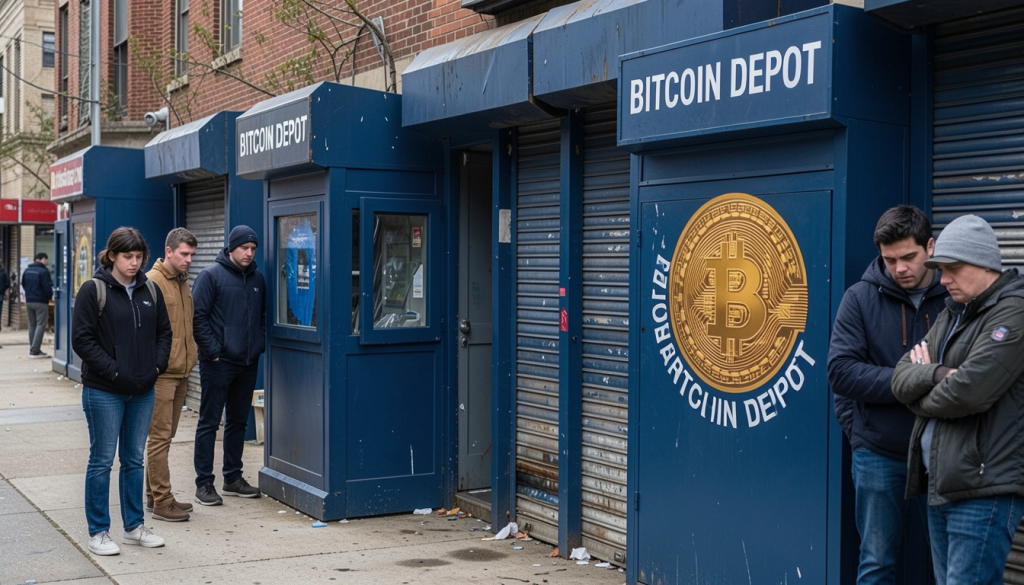
Bitcoin Depot, once the largest operator of bitcoin ATMs in North America and a publicly traded company on Nasdaq, has filed for Chapter 11 bankruptcy and is shutting down its operations.
The Atlanta-headquartered firm made a voluntary filing in the U.S. Bankruptcy Court for the Southern District of Texas on Monday, detailing plans to wind down its business and liquidate assets under court supervision. Its full network of ATMs has already been deactivated.
At its height, Bitcoin Depot managed more than 9,200 kiosks across the U.S., Canada, and Australia, offering customers a way to convert cash into bitcoin at retail locations. The company had gone public as recently as 2023.
The downturn in its financial performance had been sharp. Preliminary first-quarter figures showed revenue plunging 49% year-over-year, while the company swung from a $12.2 million profit to a $9.5 million loss. Gross profit also dropped significantly, falling 85% to $4.5 million.
Chief Executive Officer Alex Holmes attributed the company’s struggles largely to an increasingly restrictive regulatory environment. He pointed to tighter compliance requirements, transaction caps, and, in some regions, outright bans on bitcoin ATM operations. Rising legal challenges and enforcement actions have further strained the business, rendering its model unsustainable, he said.
Bitcoin Depot is also dealing with a prominent lawsuit brought by attorneys general in Massachusetts and Iowa, alleging that its machines were used in crypto-related scams. Reported losses tied to crypto ATM fraud climbed to a record $389 million last year, marking a 58% increase from 2024 and drawing heightened scrutiny from regulators.
The bankruptcy process includes the company’s Canadian subsidiaries, while its other international units will be wound down according to local regulations.
The company’s collapse comes even as the broader crypto industry gains traction, driven by growing institutional adoption through products like ETFs and ongoing legislative efforts such as the Clarity Act.
About The Author





More Stories
Bitcoin Starts New Quarter Stuck in Familiar $82K-$85K Range
Citigroup Lifts 12-Month Bitcoin Target to $113K as ETF Inflows Return
Bitcoin’s Inflation-Fueled Jump to $85.5K Fades as Yields Stay High