

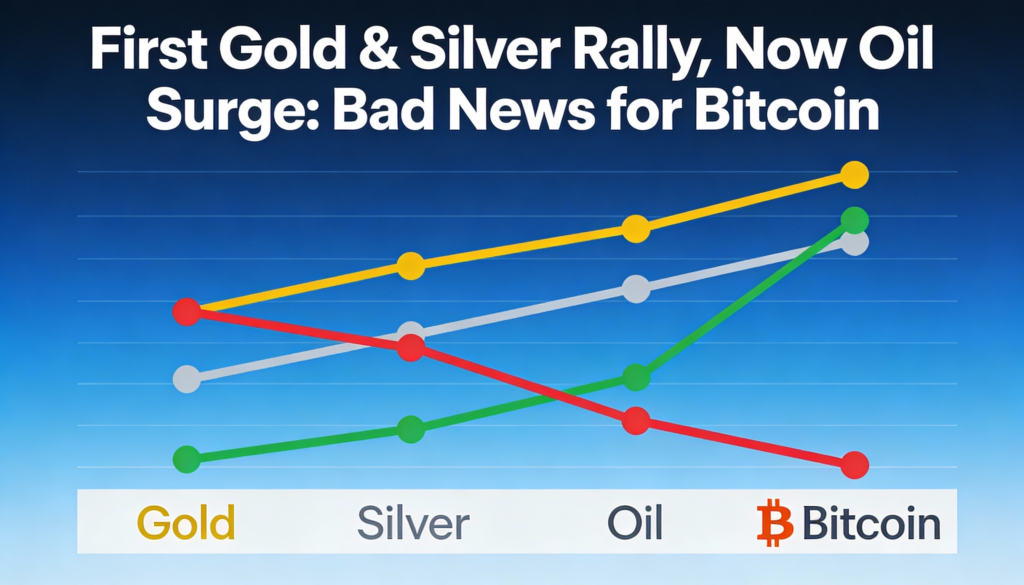
Oil’s rally is emerging as a new inflation threat, complicating hopes for rapid interest-rate cuts and adding pressure to bitcoin.
For bitcoin bulls, the macro backdrop continues to deteriorate. After gold and silver surged to record highs and siphoned capital away from crypto markets, oil prices are now climbing as well — a shift that risks tilting economic conditions further in favor of bitcoin bears.
West Texas Intermediate crude, the benchmark for North American oil prices, has risen about 12% this month to $64.30 per barrel, its highest level since September. International benchmark Brent crude has followed suit, climbing to roughly $68.22.
The move undermines the case for easing monetary policy, which many investors see as critical to reviving bitcoin’s rally. The cryptocurrency peaked above $126,000 in early October before sliding below $90,000 amid tightening financial conditions.
Oil and inflation
Oil sits at the center of inflation dynamics. Higher crude prices feed directly into gasoline and transportation costs, lifting prices across the economy — from food and clothing to electronics and other consumer goods. Those higher costs are typically passed on to households, pushing inflation higher.
Rising prices often trigger wage demands, creating a feedback loop in which higher labor costs lead companies to raise prices further.
The Federal Reserve has long warned that energy prices can have a meaningful impact on inflation. “Oil price pass-through to inflation is both economically and statistically significant, and it occurs both directly and through second-round effects,” the Fed has said, noting that higher energy prices can also raise inflation expectations and push up core prices.
Central banks typically respond to persistent inflation by keeping borrowing costs elevated. That dynamic weighed heavily on bitcoin in 2022, when aggressive Fed tightening contributed to a roughly 64% drop in the asset.
The latest oil rally comes as the Fed is already confronting renewed inflation concerns. On Wednesday, policymakers held rates steady in a 4.5% to 4.75% range, citing inflation that remains “somewhat elevated,” partly due to tariffs imposed by President Donald Trump on imported goods.
ING said the Fed’s messaging suggested policymakers are “more confident that the policy easing cycle is close to a conclusion.”
In other words, the Fed appears in no hurry to cut rates — and rising oil prices could strengthen its resolve to keep financial conditions tight.
Why oil is rising
Geopolitical tensions and tightening supply are driving crude higher.
Markets are reacting to escalating rhetoric involving Iran, a major oil producer, alongside declining U.S. inventories. In a Truth Social post this week, Trump warned that a large U.S. naval force was moving toward Iran and urged Tehran to strike a nuclear deal or face a “far worse” U.S. response.
Iran responded by vowing to retaliate forcefully, highlighting the potential economic and human costs of a broader conflict.
At the same time, U.S. Energy Information Administration data showed crude inventories fell by 2.3 million barrels in the week ended Jan. 24. Falling inventories typically signal demand is outpacing supply, forcing refiners to draw down stockpiles.
Together, geopolitical risk and tightening supply conditions are lifting oil prices — and adding another macro headwind for bitcoin.
About The Author



More Stories
Bitcoin Falls Below $82K as AI Fears Resurface and DeFi Tokens Sink
Crypto Traders Value Reliance Jio IPO at $110 Billion
Asian Markets Slide as Bitcoin Pulls Back and China Enters Bear Territory