

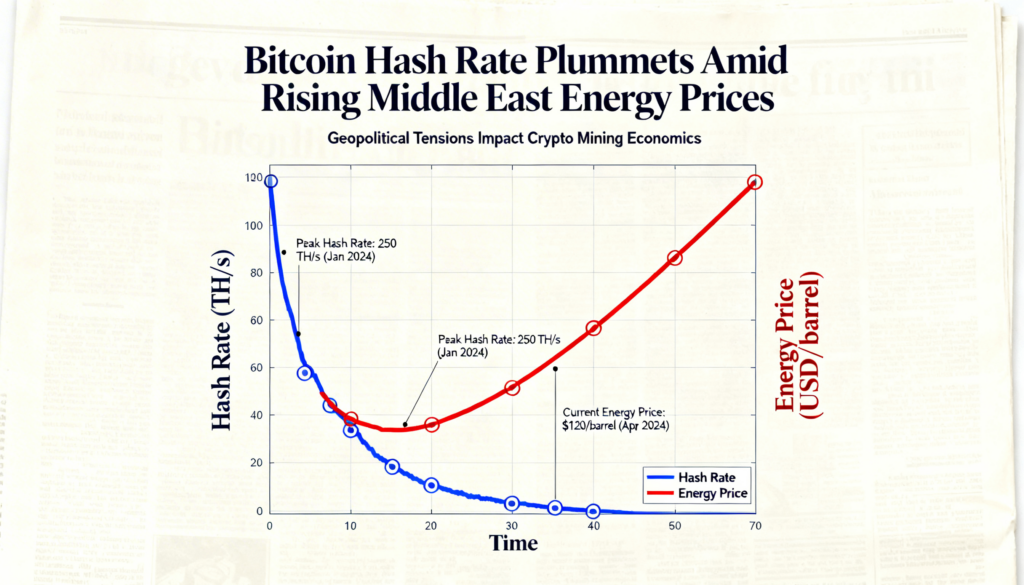
Bitcoin’s hash rate is declining as rising energy prices linked to the Middle East conflict put added strain on miners and the broader market.
The network’s hash rate has fallen about 8% over the past week to 920 EH/s, a move analysts tie to geopolitical tensions from the Iran war and surging oil costs. Roughly 8% to 10% of global bitcoin mining occurs in regions sensitive to energy price swings, amplifying the impact.
This slowdown could trigger another phase of miner capitulation, historically associated with downward pressure on bitcoin’s price. The cryptocurrency is currently trading under $72,000, roughly 5% below Monday’s high.
The hash rate drop is expected to prompt an 8% reduction in mining difficulty—the second-largest negative adjustment in five years, according to mempool.space—following one of the largest difficulty declines seen in mid-February, highlighting ongoing volatility in mining activity.
Miners are facing squeezed margins due to rising competition, low transaction fees, and bitcoin price volatility. Many publicly traded mining firms have responded by diversifying into AI and high-performance computing and selling more bitcoin to fund operations, measures that could further weigh on bitcoin’s price.
About The Author





More Stories
Bitcoin Starts New Quarter Stuck in Familiar $82K-$85K Range
Citigroup Lifts 12-Month Bitcoin Target to $113K as ETF Inflows Return
Bitcoin’s Inflation-Fueled Jump to $85.5K Fades as Yields Stay High