

Bitcoin’s October flash crash exposed the fragility of what had been one of its most widely anticipated bull runs — and signaled a shift in how the cryptocurrency is being priced by markets.
Entering 2025, expectations for bitcoin were sky-high, with some industry projections calling for year-end levels between $180,000 and $200,000. The rally did turn historic, but not in the way many had envisioned.
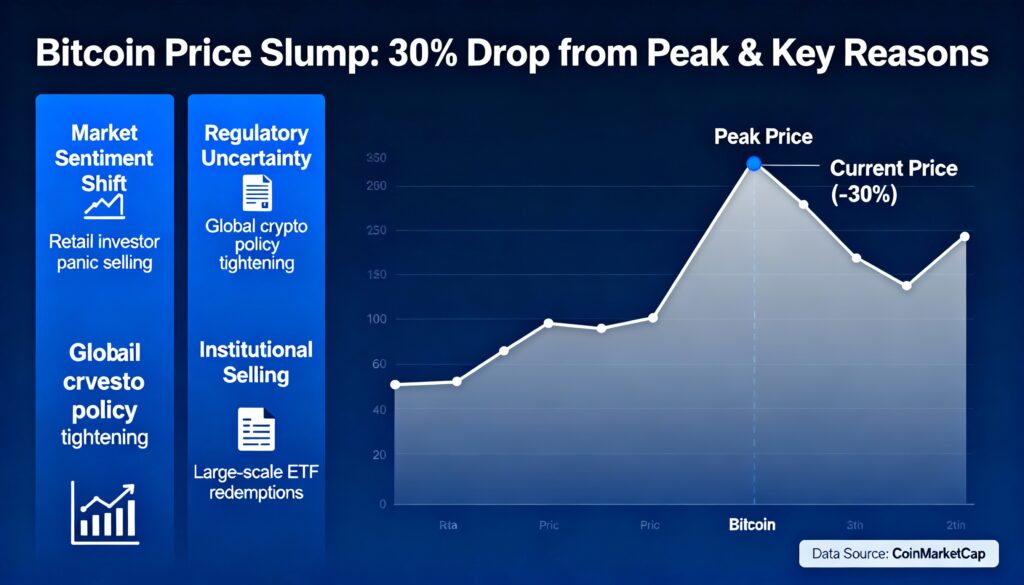
Bitcoin surged to a record above $126,200 on Oct. 6, reaching its peak well ahead of most forecasts. The momentum unraveled just four days later, when a sudden flash crash jolted markets and underscored the volatility that continues to define digital-asset trading.
Since the October high, bitcoin has slid roughly 30% and now trades more than 50% below many of the bullish targets set for 2025. Rather than accelerating higher, the cryptocurrency is down about 6% for the year and has spent much of the past two months range-bound between $83,000 and $96,000, according to TradingView.
The abrupt selloff caught traders off guard, wiping out months of leveraged bullish positioning within minutes. Still, the move did not amount to a structural breakdown, said Mati Greenspan, founder of Quantum Economics. Instead, he characterized it as a market reset reflecting bitcoin’s deeper entanglement with macro forces.
“Bitcoin was repriced as a risk asset, not a revolution,” Greenspan said.
“The October 10 flash crash wasn’t a failure,” he added. “It was a liquidity event driven by macro stress, trade-war concerns and crowded positioning, revealing how front-loaded the cycle had become.”
The sudden change in trading behavior has complicated forecasting and forced even some of the crypto sector’s most prominent analysts to reassess their expectations.
About The Author





More Stories
Smaller Altcoins Rally as Bitcoin Holds Near $85,000
U.S.-China AI Rivalry Intensifies as Chinese Firms Raise Billions Ahead of IPOs
Bitcoin Is Down 32% From Its $126K Record High One Year Later