

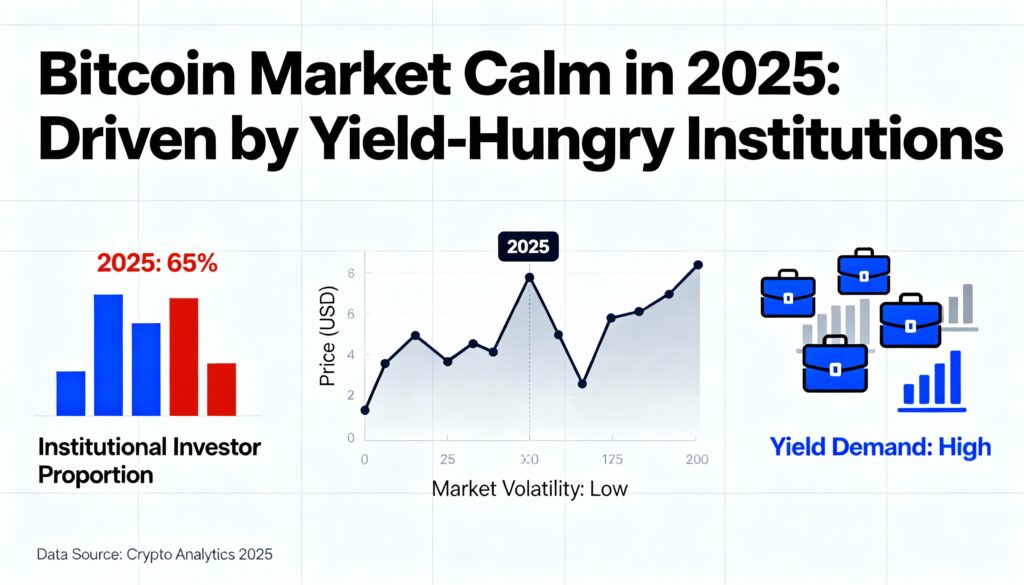
Bitcoin markets became noticeably less volatile in 2025 as institutional investors increasingly used derivatives to extract yield from their holdings, applying sustained downward pressure on implied volatility.
The shift is evident in options-based volatility gauges such as Volmex’s BVIV and Deribit’s DVOL, which track expected price swings over the next 30 days. Both measures opened the year near 70% and are on track to end around 45%, after bottoming near 35% in September. The steady decline reflects a structural change in how bitcoin exposure is being managed.
A key driver has been the widespread use of covered call strategies by institutions holding spot bitcoin or spot bitcoin ETFs. By selling call options against their holdings, investors collect premiums upfront while giving up some upside beyond the strike price — a trade-off that has proven attractive during extended periods of range-bound trading.
“We saw a clear structural decline in BTC implied volatility as institutional capital increased and actively harvested yield by selling upside calls,” said Imran Lakha, founder of Options Insights, in a post on X.
Options allow investors to buy or sell an asset like bitcoin at a predetermined price before expiration. Calls express bullish exposure, while puts are typically used to protect against downside. For sellers, options resemble selling lottery tickets: premiums are collected upfront, and if the option expires worthless — which most do — the seller retains the full premium.
Institutions with large, long-term bitcoin positions have leaned heavily into selling out-of-the-money calls, where significant price appreciation would be required for buyers to profit. In subdued markets, the strategy has delivered relatively consistent income, encouraging further adoption.
The scale of call selling has created a persistent supply of options, weighing on implied volatility across maturities. According to Jake Ostrovskis, head of the OTC desk at Wintermute, more than 12.5% of all mined bitcoin now resides in ETFs and corporate treasuries — holdings that generate no intrinsic yield.
“With no native yield, call overwriting became the dominant flow throughout 2025, applying steady supply-side pressure on implied volatility,” Ostrovskis wrote in a note to CoinDesk.
Hedged exposure
Institutional participation has also altered the shape of the bitcoin options market. For much of 2025, put options — commonly used for downside protection — traded at a premium to calls across both short- and long-dated expiries.
This persistent put skew marks a departure from earlier cycles, when longer-dated options typically exhibited a bullish call bias. Rather than signaling negative sentiment, the shift reflects the preferences of sophisticated investors who combine long exposure with systematic hedging.
“The demand for downside protection and pressure on upside, which is typical of institutional positioning, pushed the market from call skew into put skew across the entire term structure,” Lakha said. “It’s a sign that real money is long and hedged, not necessarily bearish.”
Together, yield-focused options strategies and widespread hedging have helped dampen bitcoin’s price swings, pushing the market toward a more mature, institutionally influenced trading regime as 2025 comes to a close.
About The Author





More Stories
Smaller Altcoins Rally as Bitcoin Holds Near $85,000
U.S.-China AI Rivalry Intensifies as Chinese Firms Raise Billions Ahead of IPOs
Bitcoin Is Down 32% From Its $126K Record High One Year Later