

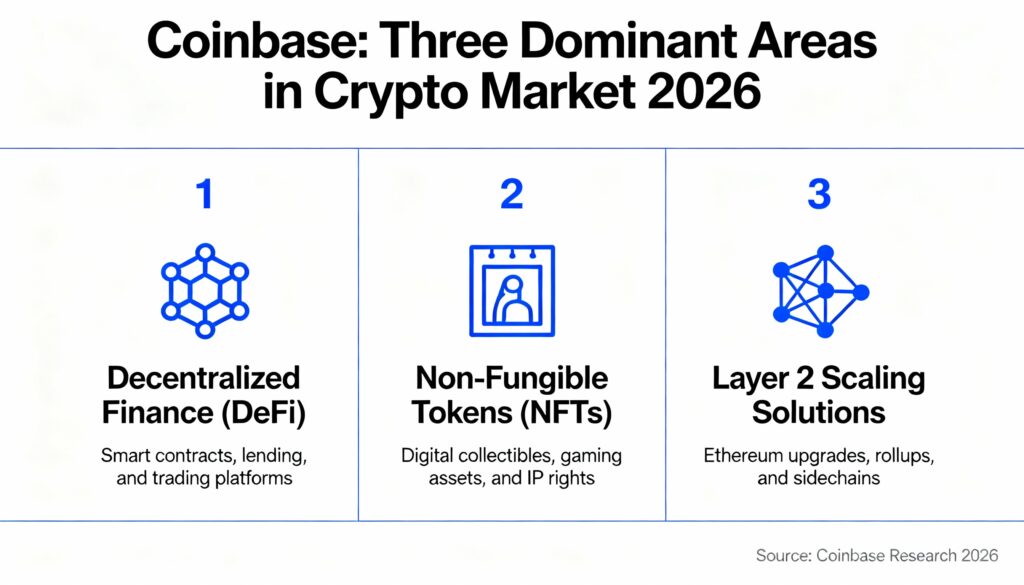
Coinbase Institutional says that in 2026, structural shifts—not hype cycles—will shape crypto trading and adoption, as market activity increasingly concentrates in a few key areas.
In a new outlook, the firm frames next year as a test of whether crypto’s core markets can scale under more disciplined conditions. Traditional cycle models—reliant on retail speculation, token launches, and protocol-specific catalysts—are becoming less predictive as institutional participation and market infrastructure play a larger role in price formation, according to the report by global head of research David Duong and research associate Colin Basco.
Perpetual futures remain the backbone of crypto activity. Derivatives now dominate trading volumes, shifting price dynamics toward positioning, funding rates, and liquidity conditions rather than retail momentum. Coinbase notes that leverage fell sharply after late-2025 liquidation events, describing the move as a structural reset that removed speculative excess while preserving derivatives participation. Stronger margin practices and risk controls have made markets more resilient to shocks.
Prediction markets are evolving into durable financial infrastructure. Rising volumes and deeper liquidity suggest these platforms are increasingly used for information discovery and risk transfer. Market fragmentation is driving demand for aggregation, attracting sophisticated participants and broadening usage beyond crypto-native traders, especially as regulatory clarity improves.
Stablecoins and payments remain crypto’s most persistent real-world use case. Transaction volumes continue to grow in settlement, cross-border transfers, and liquidity management, increasingly intertwined with automated trading and emerging AI-driven applications. Coinbase views these developments as reinforcing blockchain payments as foundational infrastructure rather than a competitive threat.
The report concludes that 2026 will test whether these structural elements can scale and manage risk under tighter conditions—an outcome that could shape crypto’s long-term trajectory beyond the next price cycle.
About The Author





More Stories
U.S. Adds Just 29,000 Jobs in September as Unemployment Rate Hits 4.2%
Bitcoin Dominance Nears 60% as Crypto Traders Shift Into Risk-On Mode
Bitcoin Open Interest Surges $2.3B as Traders Increase Bullish Bets