

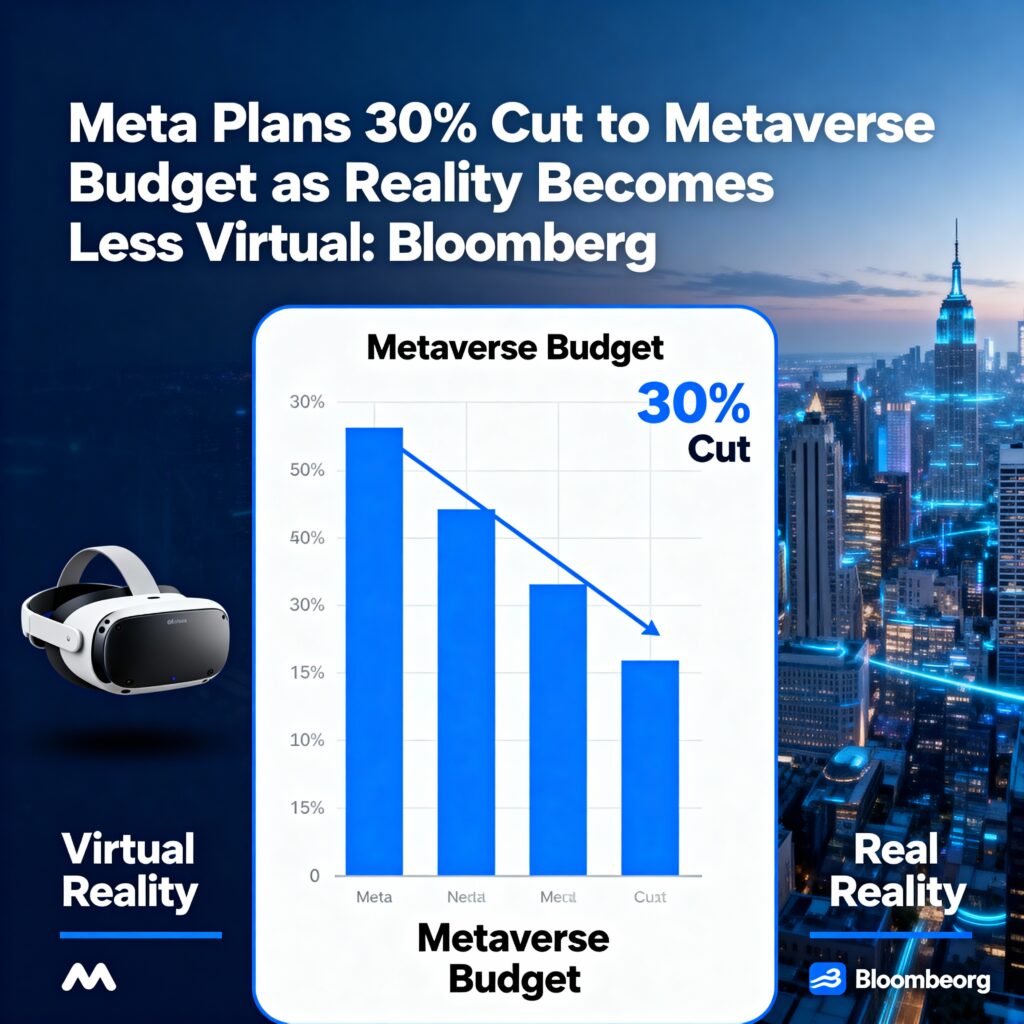
Meta Prepares Deep Cuts to Metaverse Budget as VR Bet Continues to Shrink
Meta’s Horizon Worlds and Quest teams are expected to face layoffs as the company scales back its once–high-profile push into virtual reality, Bloomberg reported, citing people familiar with the discussions.
Executives are weighing budget reductions of up to 30% for the firm’s metaverse division in 2026. The unit includes Horizon Worlds, Meta’s flagship social VR platform, and the Quest headset business. The proposed cuts would include staff reductions, according to the report.
While CEO Mark Zuckerberg has asked all departments to trim roughly 10% in costs as part of ongoing budget cycles, the metaverse group was directed to make deeper reductions. The move reflects slower-than-hoped industry adoption of VR and the broader metaverse vision that Meta aggressively championed.
The largest cutbacks are expected within the virtual reality hardware group, which represents the bulk of the company’s metaverse spending. Horizon Worlds is also likely to see trimmed resources.
Meta shares climbed 4% on Thursday after the report and are up more than 10% year-to-date.
The metaverse—once promoted as a network of immersive virtual worlds accessed through VR headsets—captured Silicon Valley’s imagination at its peak, with companies racing to acquire virtual land, build digital assets and pioneer new forms of online interaction.
Meta led that charge, rebranding from Facebook to Meta in 2021 and committing tens of billions of dollars to what Zuckerberg called the “next frontier” of computing. But real-world adoption lagged, and industry momentum shifted. Apple pivoted toward spatial computing with the Vision Pro, Microsoft dialed back its mixed-reality strategy, and AI became tech’s primary focus.
Meta’s metaverse efforts sit within its Reality Labs division, which has accumulated more than $70 billion in losses since early 2021, Bloomberg reported.
About The Author





More Stories
Franklin Templeton added approximately $150 million in tokenized money market fund shares to the XRP Ledger on Friday, with all newly issued tokens sent to a single wallet. Two subscription transactions recorded on Thursday nearly quadrupled the fund’s token supply on the network.
Apex Group CEO Warns U.S. Clarity Act Delay Could Boost Asia and Middle East
a16z Rebrands Crypto Fund as a16z Frontier to Expand Its Investment Focus