

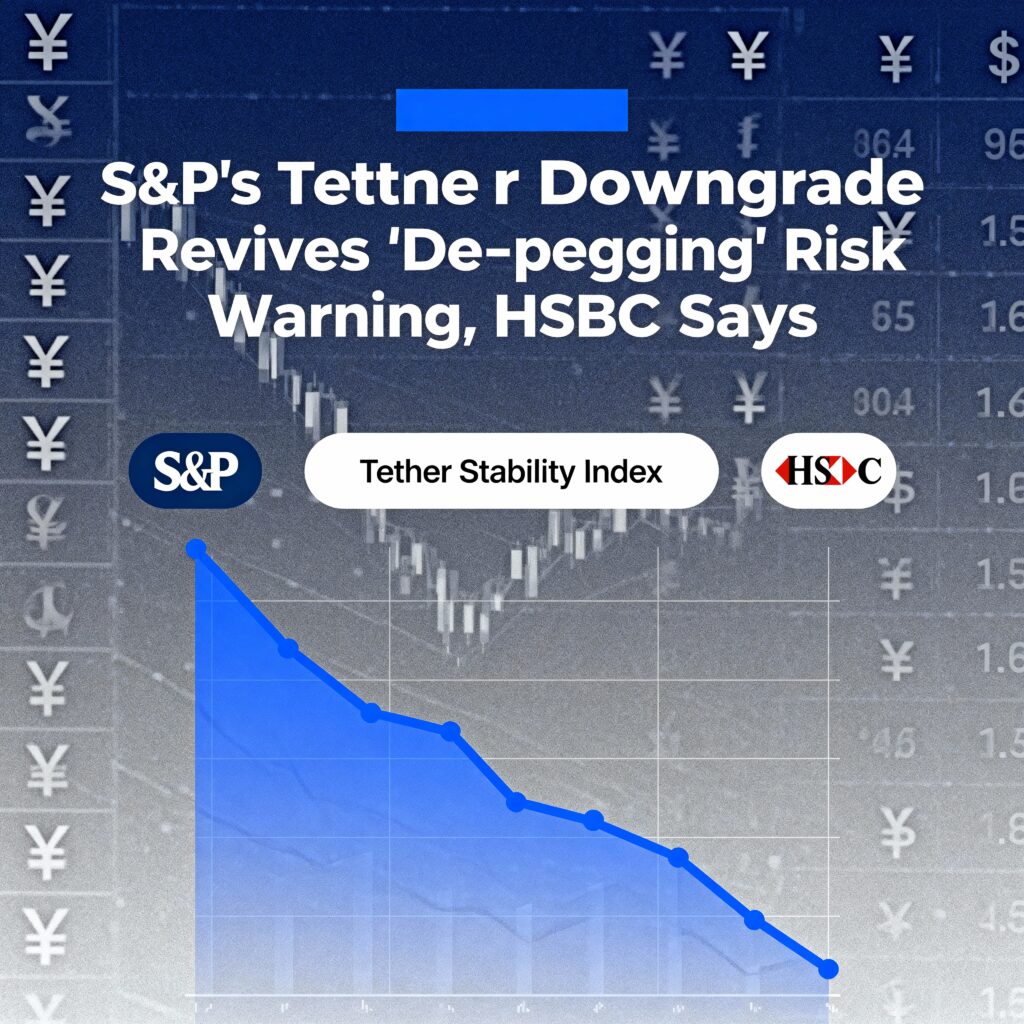
HSBC: S&P Tether Downgrade Highlights De-Pegging Risks, Shifts Focus to Higher-Rated Stablecoins
HSBC said S&P Global Ratings’ downgrade of Tether’s reserve assessment to “weak” highlights the embedded “de-pegging” risk in stablecoins—a risk not present in other forms of tokenized money.
The main concern is straightforward: if holders rush to redeem, issuers need reserves that are highly liquid and low-risk, or the stablecoin’s price can deviate from its intended peg, analysts Daragh Maher and Nishu Singla wrote in a Monday report.
Stablecoins, pegged to fiat or other assets, underpin much of the crypto economy by enabling payments and cross-border transfers. Tether’s USDT remains the largest stablecoin, followed by Circle’s USDC. Analysts noted that the market often treats these coins as infrastructure, so reserve concerns can ripple across exchanges, trading pairs, and DeFi protocols.
S&P’s framework ranks stablecoin reserves on a five-point scale from “very strong” to “weak,” emphasizing that governance, transparency, and reserve quality are now critical for institutional adoption. The downgrade reflects Tether’s increasing exposure to higher-risk assets relative to cash and short-dated Treasuries.
HSBC said this shift underscores why regulated, transparent stablecoins are likely to attract institutional investors. Circle’s USDC, rated higher than USDT, illustrates the type of stablecoin poised to benefit if ratings and regulations become key selection criteria. Tether has indicated plans for a U.S.-based, dollar-backed stablecoin to meet stricter requirements, showing how issuers may tailor products by jurisdiction and audience.
About The Author

More Stories
Bitcoin Stays Above $81K as Markets Stabilize and Oil Prices Rise
Bitcoin Holds Near $81,700 as Altcoins Recover and PEPE Jumps 13%
Bitcoin May Be Breaking Away From Its Midterm Cycle Bottom Pattern