


What do you call a market that absorbs negative headlines without breaking down? One with resilience—and strong underlying demand.
That’s been the case for bitcoin in recent weeks. The cryptocurrency has managed to hold near the $70,000 level despite mounting geopolitical tensions linked to the Iran war, rising oil prices, and fading expectations for Federal Reserve rate cuts. On the surface, this stability suggests a bullish undertone.
However, a closer look at key indicators paints a more mixed picture.
One metric raising concern is the Coinbase Premium, which tracks the price difference between bitcoin on Coinbase and Binance. Typically, a positive premium signals stronger demand from U.S. institutional investors and has historically accompanied major rallies, including bitcoin’s surge toward $100,000 in late 2024.
At present, the premium has flipped negative—its lowest level in over a month, according to Coinglass. This means bitcoin is trading at a discount on Coinbase, indicating relatively weaker demand from U.S. buyers. The shift began around March 19 and has persisted since.
Another important indicator—spot bitcoin ETF flows—has also lost momentum. Data from SoSoValue shows that the 11 U.S.-listed spot bitcoin ETFs attracted $1.53 billion in net inflows this month, snapping a three-month streak of outflows. However, nearly $1.3 billion of that total came in the first half of the month, with inflows slowing sharply to just $195 million since then.
Analysts have repeatedly highlighted that consistent and strong ETF inflows are essential for sustaining bullish price action.
Vikram Subburaj, CEO of Giottus, noted that while institutional demand remains present, it has become more selective and less steady compared to earlier accumulation phases.
According to data from CoinDesk, bitcoin is currently trading around $70,000—holding firm for now, but facing signals that challenge the strength of the bullish narrative.
About The Author




More Stories
Another 500 bitcoin moved by Bhutan to exchanges, bringing total 2026 outflows above $150 million.
Circle’s recent decline may be overstated, with analysts pointing to a crypto bill that undercuts Coinbase’s edge.
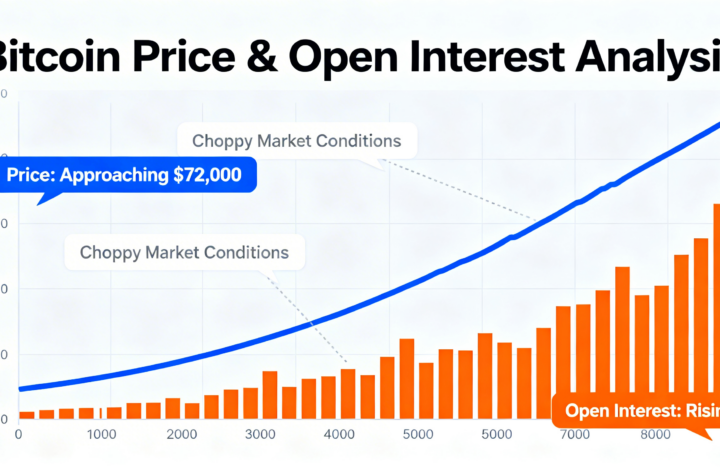
Bitcoin edges toward $72K with open interest climbing, signaling growing leverage amid choppy conditions.