

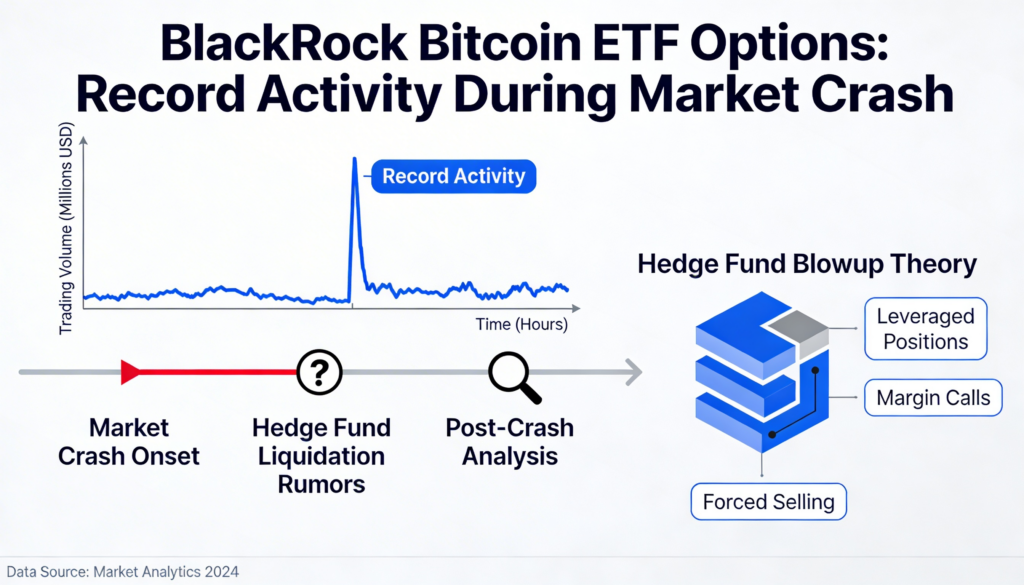
Trading in options linked to BlackRock’s spot bitcoin ETF, IBIT, exploded to record levels last week as bitcoin tumbled, prompting debate over whether a hedge fund liquidation intensified the selloff.
IBIT has drawn billions of dollars since its launch, becoming a favored vehicle for investors seeking bitcoin exposure without dealing directly with crypto wallets or exchanges. Until now, institutional sentiment has largely been gauged through ETF inflows. Thursday’s market turmoil suggests options activity may be just as revealing.
As bitcoin slid, IBIT options volume surged to an all-time high of 2.33 million contracts. By Friday, the ETF had fallen 13% to its weakest level since October 2024. Put options slightly outnumbered calls, signaling elevated demand for downside protection—typical during sharp market declines.
Options allow traders to hedge risk or make leveraged bets with limited losses. Calls provide upside exposure if prices rise above a preset level, while puts offer protection if prices fall below it. In both cases, losses are limited to the premium paid.
One of the most notable figures from the session was the roughly $900 million in premiums paid by IBIT options buyers, the highest single-day total on record. The sum rivals the market value of many cryptocurrencies outside the top tier.
Speculation swirls around hedge fund liquidation
Market analyst Parker fueled speculation in a widely shared post on X, suggesting the record activity stemmed from the collapse of one or more hedge funds heavily concentrated in IBIT. According to the theory, the fund had accumulated large positions in out-of-the-money call options following the October pullback, wagering on a swift rebound.
Those positions were reportedly financed with leverage. As IBIT continued to fall, the calls lost value, triggering margin calls from brokers. Unable to post additional collateral, the fund was allegedly forced to dump substantial IBIT holdings, contributing to roughly $10 billion in spot trading volume. At the same time, the fund may have rolled or closed expiring options, driving premiums sharply higher.
Shreyas Chari, director of trading and head of derivatives at Monarq Asset Management, said forced selling dynamics were evident across the market.
“Systematic selling across the majors yesterday was probably tied to margin calls, especially in the ETF with the highest crypto exposure, IBIT,” Chari said, adding that rumors circulated of an options-focused entity liquidating aggressively as key price levels gave way.
Skeptics point to broader market panic
Others caution against attributing the surge to a single fund failure. Tony Stewart, founder of Pelion Capital, said IBIT options likely amplified volatility but argued the evidence does not conclusively point to a hedge fund blowup.
Citing Amberdata, Stewart noted that about $150 million of the $900 million in premiums came from traders buying back put options they had previously sold. As IBIT plunged and those puts gained value, short sellers were forced to close positions to limit losses—an unpleasant but common occurrence during market stress.
The remainder of the premium activity, Stewart said, appeared to consist largely of smaller trades typical of a chaotic session. From an options perspective, he argued, the data does not clearly support the liquidation theory, though he acknowledged that some activity may have taken place in opaque over-the-counter markets.
Whether driven by forced liquidations or widespread panic, the episode highlights how ETF options are becoming an increasingly important driver of volatility in the crypto market—and a critical signal for tracking institutional behavior.
About The Author





More Stories
U.S. job growth exceeds estimates with 178,000 added in March
Crypto markets stabilize amid fading volatility, but futures lean bearish
Naoris Protocol debuts quantum-resistant chain as Bitcoin, Ethereum face looming ‘Q-Day’ challenge