


Bitcoin Miners Face Power Crunch as Next Halving Looms, MARA CEO Warns
Fred Thiel, CEO of MARA Holdings (MARA), says the bitcoin mining industry is entering a critical phase — one defined by shrinking rewards, rising energy costs, and intensifying competition.
“Bitcoin mining is a zero-sum game,” Thiel told CoinDesk. “As more people add capacity, it gets harder for everybody else. Margins compress, and the floor is your energy cost.”
Thiel warned that only miners with direct control over their power supply or diversified business models will survive the coming years. Many firms, he noted, are already pivoting to new areas such as artificial intelligence (AI) or high-performance computing (HPC) infrastructure, while others are being outcompeted by hardware manufacturers and large-scale operators with cheaper self-deployed equipment.
“You now have hardware vendors running their own mining farms because customers aren’t buying as much gear,” he said. “The global hashrate keeps climbing, which means everyone’s margins keep shrinking.”
The Halving Pressure
The next bitcoin halving, expected in 2028, will cut block rewards to around 1.5 BTC, further squeezing profitability. Unless bitcoin’s price rises dramatically or transaction fees grow significantly, many smaller operators may not survive.
“Bitcoin was designed so that transaction fees would eventually replace the subsidy,” Thiel said. “But that hasn’t happened. If bitcoin doesn’t grow 50% or more annually, the economics become very difficult after 2028 — and even tougher in 2032.”
While occasional fee spikes linked to Ordinals and inscriptions have provided temporary boosts, Thiel said they’re too short-lived to sustain miners long term. He added that banks or financial institutions pre-purchasing block space could offer a more reliable revenue stream in the future, though no such model has materialized yet.
Consolidation and Control
With profitability under pressure, the mining industry is consolidating. Larger operators are securing their own energy infrastructure or diversifying into AI and data processing to hedge against bitcoin volatility.
“Our goal is to stay in the lowest quartile of production costs,” Thiel said. “Because in a tight market, 75% of the other guys have to shut down before we do.”
Thiel predicts that within the next few years, miners without direct access to energy will struggle to compete. “By 2028, you’ll either be a power generator, be owned by one, or be partnered with one,” he said. “The days of being a miner plugged into the grid are numbered.”
About The Author

More Stories
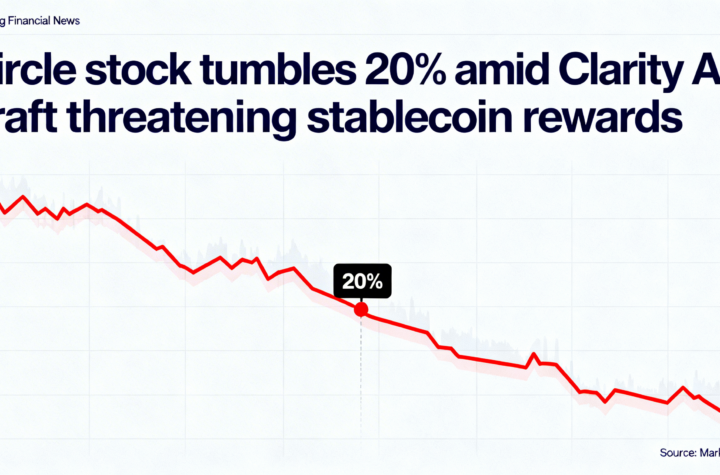
Circle stock drops 20% after new Clarity Act draft threatens stablecoin yield incentives.
Bitcoin falls under $70K, with Circle’s 16% slide leading declines in crypto stocks.
Has Bitcoin already bottomed near $60,000? Here’s why it might have.