

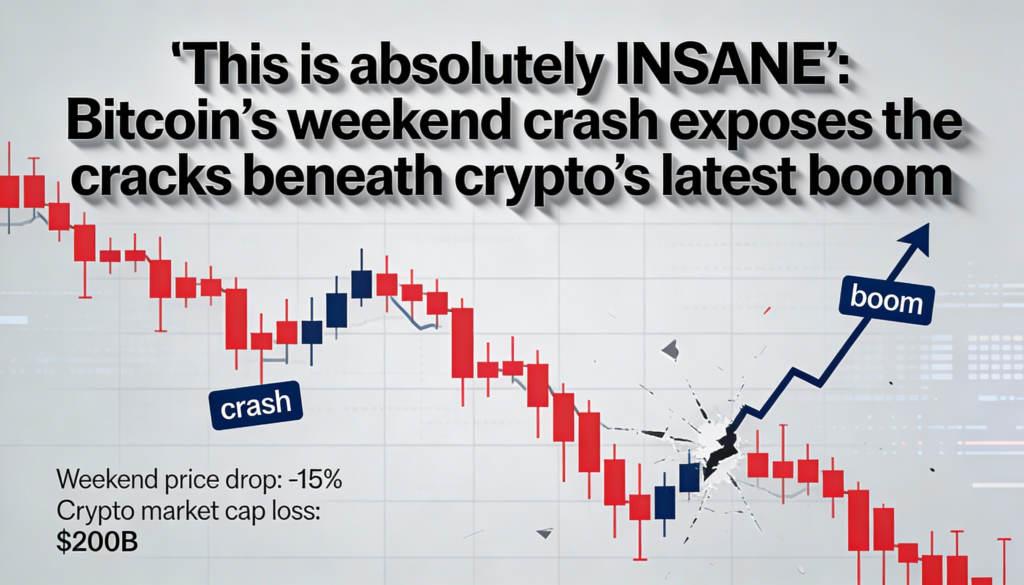
Bitcoin Tanks to $77K as Crypto Markets Hit “Extreme Fear”
Bitcoin’s weekend selloff has rattled the crypto world. The largest digital asset plunged past $80,000, briefly touching $77,000—levels not seen since April 2025’s “tariff tantrums.” By Saturday, bitcoin had lost $800 billion in market value from its October peak above $126,000. Leveraged longs suffered too, with $2.5 billion liquidated in just 24 hours.
The fallout pushed bitcoin out of the global top 10 assets, trailing heavyweights like Tesla and Saudi Aramco. Social media is awash with panic, and the selloff isn’t limited to crypto: tech stocks and precious metals also took a beating.
Here’s what’s driving the market’s sudden shift into Extreme Fear.
1. Geopolitics Sparks Panic
Saturday’s catalyst: reports of potential U.S.–Iran military escalation. Traders didn’t see bitcoin as a safe haven—they sold it to raise cash.
During crises, investors typically move into the U.S. dollar. Bitcoin, trading 24/7, often acts as a “first responder,” getting liquidated to cover losses in thin weekend markets. Liquidity hasn’t fully recovered since October 10’s crash, making the system even more fragile.
2. Gold and Silver Collapse
Bitcoin wasn’t alone. Gold dropped 9% to $4,900, and silver crashed 26% to $85.30. Analysts point to a surging U.S. dollar—boosted by Kevin Warsh’s Fed nomination—pricing out international buyers.
By early Sunday, both metals rebounded slightly: gold near $4,730, silver around $81.
3. The Liquidation Domino
The geopolitical shock hit an already fragile market. Over $850 million in long positions were liquidated in hours, eventually totaling nearly $2.5 billion, according to Coinglass.
These automatic sell-offs create a domino effect: falling prices trigger more liquidations, which push prices even lower. Nearly 200,000 traders saw their accounts wiped out Saturday.
Michael Saylor’s Brief Underwater Moment
Bitcoin briefly fell below Michael Saylor’s MSTR average entry (~$76,037), sparking fears he might need to sell his holdings. While none of his coins are pledged, limiting forced sales, the market still reacted to the perception of reduced buying power, deepening the selloff.
Wall Street Feels the Ripple
U.S. stock futures for Sunday evening show a negative start: Nasdaq down 1%, S&P 500 off 0.6%. The selloff is spilling beyond crypto.
Retail Panic vs. Whale Accumulation
Wallet data reveals the divide: small investors (less than 10 BTC) are selling after a 35% drop from the $126,000 high. Meanwhile, mega-whales (1,000+ BTC) quietly add to positions, absorbing retail sales but not enough to lift prices.
Bigger Picture: Boom, Bust, and Human Behavior
Despite this turmoil, crypto markets are more institutionalized than ever. BlackRock and JPMorgan are deeply involved, regulations are expanding, and public crypto companies are part of major fund allocations.
Yet human behavior hasn’t changed. Speculative bubbles, panic selling, and boom-bust cycles mirror past crashes. If history repeats, an 80% drop from the October peak could bring bitcoin near $25,000—painful but potentially necessary to reset the market.
As Warren Buffett warned: “It’s only when the tide goes out that you discover who’s been swimming naked.” The tide may not be fully out yet—but the warning signs are flashing red.
About The Author




More Stories
Several bitcoin indicators continue to trend negatively, casting doubt on the bullish $70,000 support narrative
Another 500 bitcoin moved by Bhutan to exchanges, bringing total 2026 outflows above $150 million.
Circle’s recent decline may be overstated, with analysts pointing to a crypto bill that undercuts Coinbase’s edge.