


Sygnum Bank Chief Investment Officer Fabian Dori says a short-term liquidity squeeze is driving the recent crypto downturn, with further declines possible, though improving fundamentals could support a quicker recovery.
Bitcoin (BTC $71,385.87) is likely to remain volatile as markets contend with constrained liquidity and weak sentiment. “Volatility is likely to stay high in the short term, and prices could go lower from here,” Dori told CoinDesk. “Investor trust and confidence are very limited.”
The divergence between gold, which has held steady, and innovation assets like Nasdaq tech stocks and bitcoin underscores the fragility of the current market. But Dori warns there is no single explanation: “It’s a combination of factors that have built up over recent months.”
Macro headwinds and uneven institutional flows have pressured crypto, while sticky inflation and shifting expectations for Federal Reserve rate cuts have dampened risk appetite. Geopolitical flare-ups, thin ETF flows, liquidity stresses, and leveraged liquidations have amplified downside moves, repeatedly testing key support levels.
“Crypto has been on thin ice for some time,” Dori said. Long-term holders are cautious of bitcoin’s four-year cycle, leaving fewer strong hands to absorb volatility.
Liquidity pressures are compounded by broader macro dynamics. Increased U.S. Treasury issuance has boosted balances in the Treasury General Account at the Federal Reserve, effectively pulling liquidity from markets. “Crypto, being one of the most liquidity-sensitive assets, was heavily affected,” Dori noted. A record liquidity event on Oct. 10 further reduced market depth, while uncertainties including bitcoin’s store-of-value narrative, quantum computing risks, and delayed U.S. legislation such as the Clarity Act have added to investor caution.
Bitcoin has drawn down roughly 40–50% from recent highs, similar to 2022 declines, though Dori says the current environment is fundamentally different: regulatory clarity, institutional adoption, and counterparty strength reduce systemic risk.
Dori views the current weakness as a short-term liquidity squeeze rather than a structural problem. Positive signs are emerging: U.S. ISM data has surprised to the upside, and inflation trends may allow the Fed to resume rate cuts, easing liquidity pressures.
Crypto fundamentals remain constructive. Stablecoin growth continues, token activity on Ethereum and Solana is robust, and institutional adoption is progressing. “Once sentiment normalizes and liquidity improves, crypto should narrow its gap with traditional assets,” Dori said.
For now, sentiment dominates. Fear-and-greed indicators sit at extreme fear, showing limited appetite for exposure. Potential catalysts include U.S. crypto legislation, easing geopolitical tensions, and continued institutional inflows.
“Short-term conditions aren’t great,” Dori said, “but structurally, the foundation is stronger than it appears. Volatility may persist, and prices could test lower levels—but improving liquidity and macro data could trigger a faster recovery than expected.”
About The Author


More Stories
Bitcoin ETFs have attracted more than $1 billion in fresh capital, yet the asset’s price is barely reacting, analysts say.
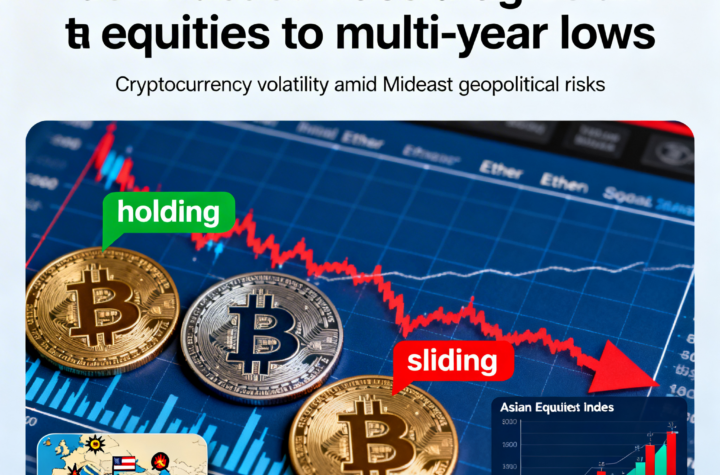
Bitcoin stabilizes as ether, solana decline amid Middle East turmoil hitting Asian markets.
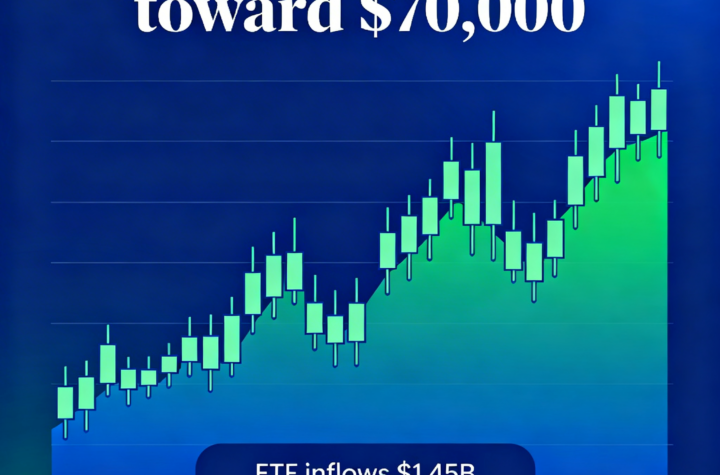
Bitcoin rebounds near $70,000 with $1.45B flowing into ETFs in the past five sessions.