

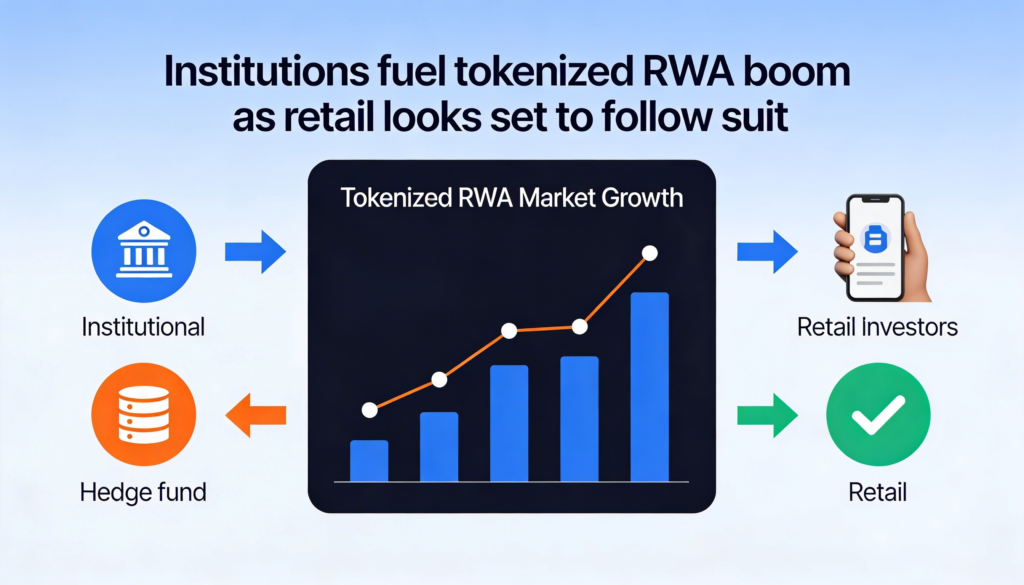
Institutions Drive Tokenized RWA Growth as Retail Adoption Remains Early
Demand for tokenized real-world assets (RWAs) took center stage at Consensus Hong Kong 2026, where industry leaders explored how digital asset infrastructure is reshaping traditional finance. The panel featured Evan Auyang, Group President at Animoca Brands; Christian Rau, Senior Vice President of Digital Assets and Blockchain at Mastercard; Nicola White, VP of Crypto Institutions at Robinhood; and was moderated by Marcin Kazmierczak, Co-Founder of RedStone.
Speakers reinforced a striking comparison made by BlackRock COO Rob Goldstein, who recently described digital ledgers as the most transformative innovation in finance since double-entry bookkeeping emerged 700 years ago.
For now, the tokenized RWA market remains largely institutionally driven. Demand is concentrated in tokenized money market funds, U.S. Treasuries, stablecoin integrations, and collateral optimization solutions. Products such as BlackRock’s BUIDL fund and initiatives from Robinhood and Bitstamp illustrate how major financial players are actively building in the space.
Retail adoption, however, is still in its infancy. During the session, only a small portion of attendees indicated they personally hold tokenized RWAs. Panelists noted that Europe’s clearer regulatory framework is helping accelerate tokenized listed equities, while sectors such as private credit, real estate, art, and private equity present significant long-term opportunities.
As companies remain private for longer periods and investor appetite grows for fractional ownership and 24/7 market access, tokenization could unlock vast pools of previously illiquid capital.
The panel’s conclusion was clear: tokenized RWAs have progressed beyond hype and are delivering tangible institutional use cases. The next major growth phase may depend on bringing retail investors into the fold — a shift that could open access to trillions of dollars in traditionally illiquid markets once regulatory and infrastructure hurdles are resolved.
About The Author


More Stories
Robinhood falls short of Q4 revenue expectations as crypto downturn weighs on quarterly results.
Bithumb concedes that critical vulnerabilities left its internal infrastructure open to potential tampering.
Crypto’s latest downturn reflects turbulence in traditional financial markets rather than an industry-specific crisis.