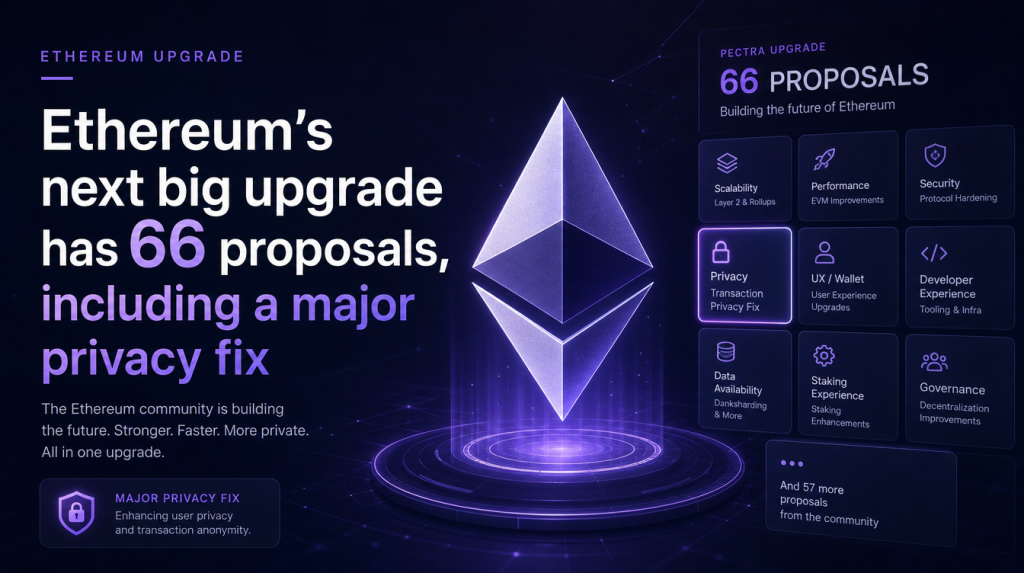
Ethereum’s Next Upgrade Includes 66 Proposals and a Major Privacy Push
2 months ago
Ethereum developers are narrowing down the proposals for the blockchain’s next major upgrade, Hegotá, with one package aimed at improving privacy and giving wallet developers more flexibility over how transactions are approved and paid for.
The Hegotá upgrade could make it easier to develop private transactions directly on Ethereum without depending as heavily on third-party infrastructure.
Like other public blockchains, Ethereum keeps addresses and their transaction histories visible. Anyone can inspect an address, track its activity and see its balance, which can create privacy concerns for payroll, corporate treasury operations and users who do not want their finances publicly exposed.
Privacy solutions have largely been developed at the application layer. One group of proposals under consideration would shift some of that functionality into Ethereum’s core infrastructure.
At the center of the proposal package is Frame Transactions, or Ethereum Improvement Proposal 8141 (EIP-8141). It would allow accounts to specify how transactions are authorized, processed and funded instead of requiring every wallet to follow the same transaction model.
For users, the change could enable features such as having another party pay transaction fees, combining multiple actions into a single transaction or changing the cryptographic method used to authorize transactions without creating a new account.
Toni Wahrstätter, an Ethereum Foundation researcher and co-author of the proposal, outlined its potential as developers began determining which proposals should make the final Hegotá lineup.
Developers currently have 66 proposals under consideration for Hegotá. The list will be reduced during upcoming core developer meetings to determine which proposals can realistically be implemented, tested on devnets and testnets, and potentially deployed in 2027.
Ethereum already supports privacy applications that use cryptographic proofs to conceal transaction details. However, getting those transactions onto the blockchain can require additional infrastructure, with some systems relying on relayers that submit transactions on users’ behalf.
Frame Transactions is one of the 66 proposals being evaluated for Hegotá, which is expected to follow this year’s Glamsterdam upgrade and target a 2027 release. Developers will now assess which changes can realistically be developed, tested and delivered within the available timeframe.
Two related proposals address challenges that could arise when multiple private transactions are processed through the same account. Keyed Nonces, or EIP-8250, would allow transactions to use independent counters rather than waiting in a single sequence, preventing a delayed transaction from blocking subsequent activity.
Another proposal, EIP-8272, would allow transactions to verify themselves against a recent cryptographic record without relying on information that could change before the transaction is processed.
Together, the three proposals could reduce the amount of external infrastructure currently required by Ethereum privacy applications.
The proposals would not make Ethereum itself private. Transactions between ordinary Ethereum addresses would remain publicly visible as they are today. Instead, privacy applications would gain more native tools while requiring fewer external services.
Frame Transactions is still not guaranteed to become part of Hegotá. Although developers have listed it as under consideration, that status does not mean it has received final approval.
So far, only one proposal has been approved for the upgrade, and it focuses on censorship resistance. Under the current system, block builders decide which pending transactions are included in each block, potentially excluding certain transactions. The approved FOCIL proposal would allow a group of network participants to create a list of transactions that block builders must include, reducing the control of any single builder.
Other proposals under consideration seek to accelerate block production, change validator rewards and prepare Ethereum for cryptographic systems capable of resisting attacks from quantum computers.
The deadline for submitting new proposals was Aug. 6. Developers will determine which proposals remain in the upgrade during the next several core developer meetings.







More Stories
Bitcoin Starts New Quarter Stuck in Familiar $82K-$85K Range
Citigroup Lifts 12-Month Bitcoin Target to $113K as ETF Inflows Return
Bitcoin’s Inflation-Fueled Jump to $85.5K Fades as Yields Stay High