

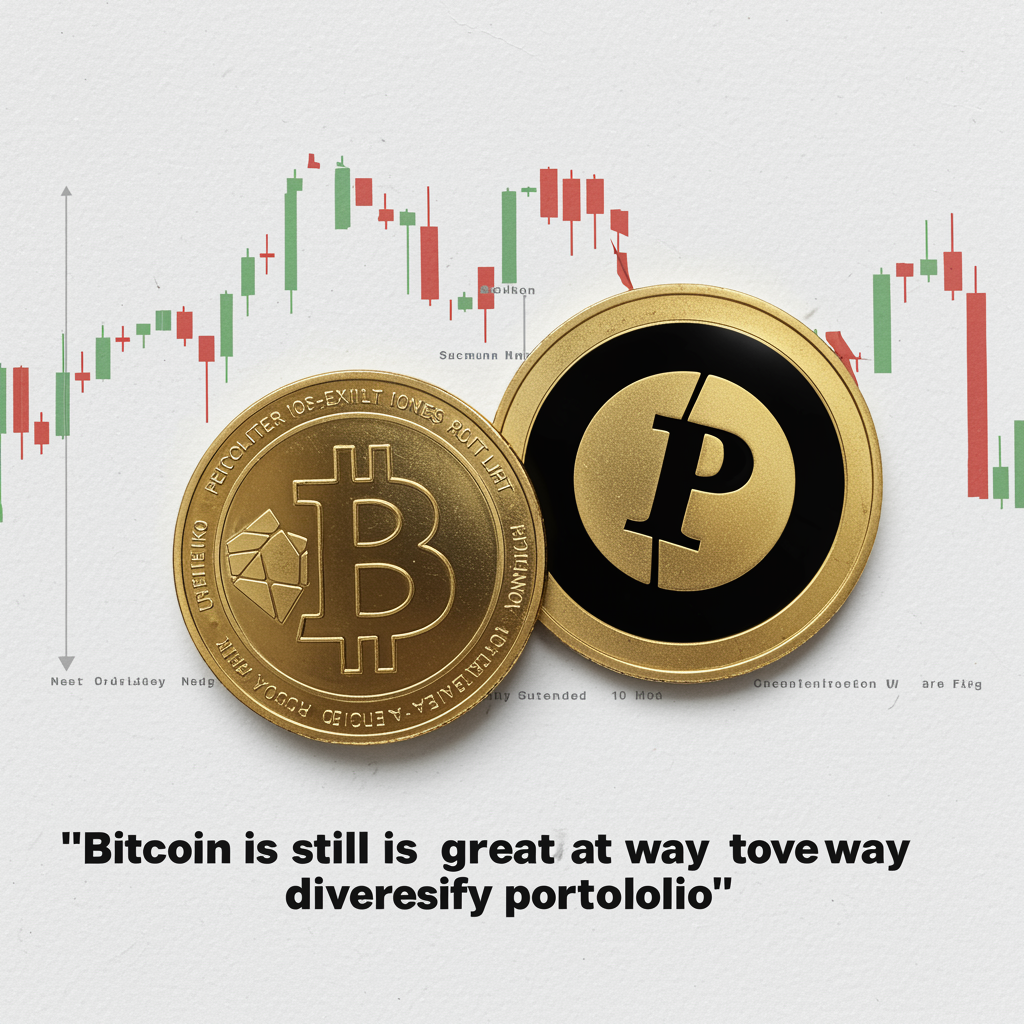
The discussion around Bitcoin has evolved significantly. Instead of questioning whether the digital asset can endure, critics are now debating whether it could eventually serve as a reserve asset for sovereign institutions. As bitcoin gains wider acceptance, it is increasingly being evaluated through the lens of institutional finance.
Despite bitcoin’s recent tendency to move alongside U.S. equities, that pattern does not undermine its potential as a portfolio diversifier, according to financial services firm NYDIG. In a weekly market update, the firm’s global head of research, Greg Cipolaro, noted that bitcoin’s correlation with major stock benchmarks—including the S&P 500, the Nasdaq 100 and the software-heavy iShares Expanded Tech-Software Sector ETF (IGV)—has climbed in recent months.
That development has prompted some observers to claim that bitcoin now behaves like a technology stock proxy. Cipolaro, however, pushed back on that interpretation.
Even when correlations approach 0.5, equities account for only a limited share of bitcoin’s price movements, he explained. From a statistical standpoint, such a level implies that roughly 25% of bitcoin’s price changes can be attributed to stock market influences, while the remaining 75% are driven by factors unique to the cryptocurrency market.
These factors include inflows into bitcoin-related funds, shifts in derivatives positioning, trends in network adoption and changes in regulatory conditions.
Cipolaro suggested that the recent price alignment between bitcoin and equities likely reflects the current macroeconomic environment rather than a lasting connection between the two asset classes. Both bitcoin and growth-oriented technology stocks tend to respond to broader forces such as global liquidity and investor appetite for risk.
Still, the relationship does not negate bitcoin’s diversification benefits. While correlations with equities have risen, they remain far from determining bitcoin’s overall performance, Cipolaro wrote.
Bitcoin’s changing narrative
NYDIG’s analysis also addressed recent remarks from prominent investors including Chamath Palihapitiya and Ray Dalio, whose comments have reignited debate about bitcoin’s long-term prospects.
Palihapitiya, an early supporter who once described bitcoin as “Gold 2.0” in 2013, recently questioned whether the asset is suitable for sovereign balance sheets. Dalio has long voiced similar reservations, citing volatility, regulatory uncertainty and possible long-term technological risks such as advances in Quantum Computing.
Cipolaro argued that these criticisms reflect the evolving expectations placed on bitcoin as it transitions from a retail-dominated market to one increasingly shaped by institutional investors. However, he emphasized that bitcoin’s future growth does not rely on central bank adoption.
Instead, the network’s ownership base has gradually expanded—from individual users to family offices, asset managers and exchange-traded funds—following a trajectory that differs from many traditional financial innovations that initially depended on institutional capital.
While central bank adoption could further validate the asset class, Cipolaro noted that it is not a prerequisite for bitcoin’s continued development.
According to the report, bitcoin ultimately derives its value from its globally distributed network, political neutrality and technical characteristics that enable censorship-resistant transfers of value, enforce digital scarcity and allow the system to function independently of any single government, institution or monetary authority.
About The Author


More Stories
Crude exported from the Middle East climbs above $100 per barrel. Here’s the potential impact on bitcoin.
Bitcoin’s pullback may persist as whale selling into retail accumulation points to a bearish market signal.
Bitcoin slides past the $68,000 mark as the dollar logs its sharpest weekly gain in a year.