


Last week’s crypto slump was driven less by internal industry stress and more by macro turbulence spilling over from traditional finance, according to speakers at Consensus Hong Kong 2026.
HONG KONG — The recent wave of selling in digital assets reflected a broader unwind of leveraged macro trades rather than a crypto-specific crisis, market participants said during a panel discussion at Consensus Hong Kong.
“This wasn’t a 2022-style event,” said Fabio Frontini, founder of Abraxas Capital Management, referring to the industry scandals and collapses that rocked the market three years ago. “A lot of risk had already been taken off after Oct. 10. What we’re seeing now is entirely linked to TradFi. The markets are fully interconnected.”
Panelists identified the unwinding of yen carry trades as a central trigger behind the volatility. The strategy involves borrowing Japanese yen at low interest rates and converting the funds into other currencies to invest in higher-yielding or risk assets — including bitcoin, ether, gold and silver.
Thomas Restout, group CEO of B2C2, explained that the trade works smoothly while the yen remains weak and funding costs stay low. But when Japanese rates rise or the currency strengthens, investors must buy back yen to repay loans, raising borrowing costs and forcing positions to be cut.
“As funding costs increased, leverage became more expensive,” Restout said. At the same time, rising volatility pushed margin requirements higher across asset classes. “In metals, margin requirements moved from roughly 11% to 16%,” he noted, adding that higher collateral demands compelled some traders to unwind positions.
The result was broad-based pressure across risk assets, with crypto moving in tandem with equities and commodities rather than breaking independently.
Spot bitcoin exchange-traded funds (ETFs) recorded elevated volumes during the pullback, though panelists dismissed suggestions of large-scale institutional retreat. Bitcoin ETFs once held around $150 billion in assets at their peak and now sit near $100 billion, Restout said. Since October, cumulative net outflows total roughly $12 billion — sizable, but small relative to total assets under management.
“That’s more rotation than capitulation,” Restout said, suggesting that ownership is shifting rather than exiting the space altogether.
Looking ahead, speakers argued that the convergence between traditional finance and blockchain infrastructure is accelerating. Emma Lovett, credit lead for Market DLT at J.P. Morgan, described 2025 as a regulatory inflection point, particularly in the U.S., where a more supportive environment has encouraged greater experimentation with public blockchain networks.
“What we began to see in 2025 was the use of public chains and stablecoins for settling traditional securities,” Lovett said, pointing to deeper integration between conventional financial systems and crypto rails as a defining theme for 2026.
About The Author




More Stories
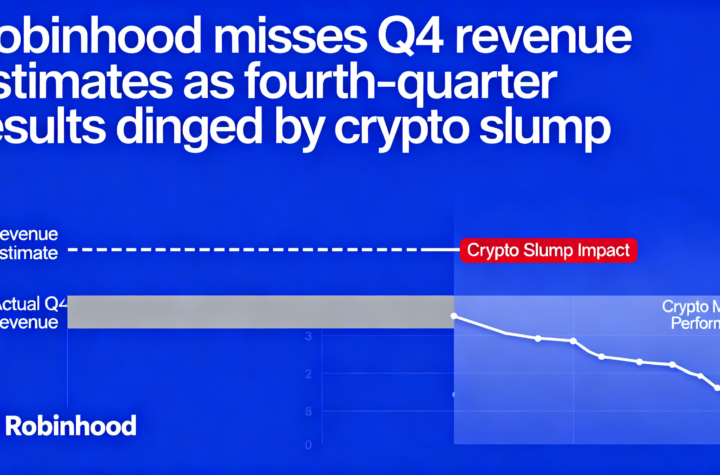
Robinhood falls short of Q4 revenue expectations as crypto downturn weighs on quarterly results.
Bithumb concedes that critical vulnerabilities left its internal infrastructure open to potential tampering.
SkyTelecom.io Launches High-Performance Global SIP Calling and SMS Platform with Crypto Payment Support