

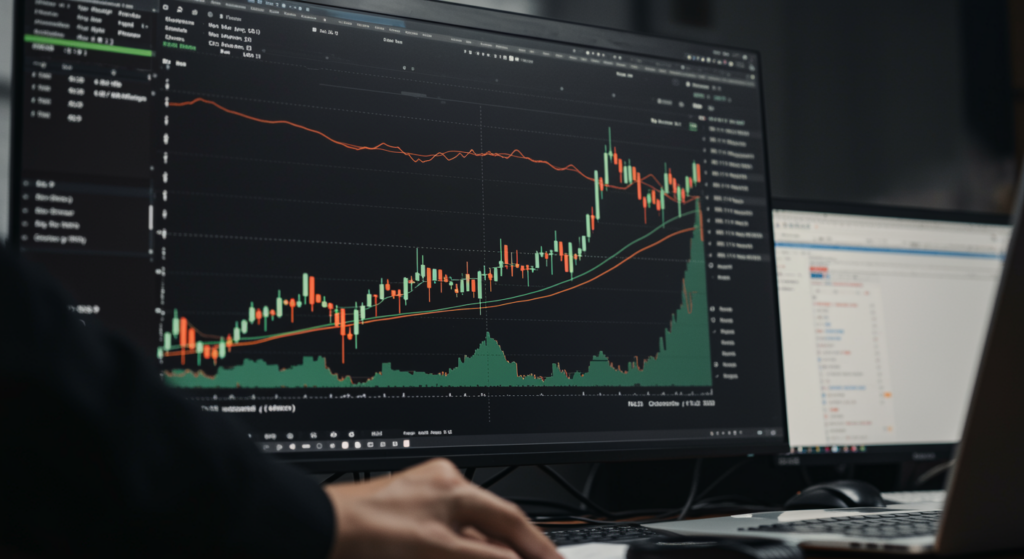
Bitcoin is holding steady near $67,000, continuing to trade within a narrow range that has defined price action since early February, even as select altcoins post short-lived gains.
During low-liquidity Asian hours, several smaller tokens moved higher, with ALGO and RENDER recording double-digit advances over the past 24 hours. Still, these rallies have not altered the broader trend. The overall market remains in a macro downtrend that began in October, marked by consistent lower highs and lower lows.
In traditional markets, U.S. equities were largely unchanged, with volatility cooling after recent comments from Donald Trump suggesting a potential resolution to tensions with Iran. However, Brent crude hovering around $109 per barrel indicates that geopolitical uncertainty remains elevated.
Derivatives positioning
Crypto derivatives markets have been relatively quiet, with the holiday period keeping volumes thin. Open interest in bitcoin and ether futures has stayed broadly flat over the past day, reflecting a lack of strong directional conviction.
Solana futures, however, have seen a notable increase in activity. Open interest has climbed above 65 million SOL, the highest level since early February. Paired with negative funding rates and weak cumulative volume delta, this suggests traders are increasingly leaning bearish, with short positions building. Similar setups are visible in TRX and BCH.
Zcash offers a contrasting signal. Open interest in ZEC futures has remained steady near 1.7 million tokens, while cumulative volume delta is among the strongest across major assets, pointing to sustained buying interest and clearer directional conviction.
At the same time, volatility continues to decline. Bitcoin’s 30-day implied volatility has dropped to around 51%, its lowest since February, while ether’s volatility has also eased to multi-week lows. Despite ongoing geopolitical tensions, options markets show little sign of stress.
Even so, sentiment remains cautious. On Deribit, put options for both bitcoin and ether are still priced higher than calls, reflecting ongoing demand for downside protection.
Glassnode data highlights an additional risk factor. Dealer gamma exposure remains negative between $68,000 and $50,000, meaning market makers may need to sell into falling prices to hedge positions—potentially amplifying any downside move.
Altcoin divergence
While bitcoin remains rangebound, certain segments of the altcoin market—particularly DeFi and AI tokens—have outperformed. The DeFi Select Index (DFX) has gained about 1.3%, while the Computing Select Index (CPUS) is up roughly 1.5%, both outpacing broader benchmarks such as the CoinDesk 20.
This type of outperformance is common in consolidation phases. When bitcoin trades sideways, traders often rotate into smaller-cap assets seeking higher returns. However, these moves are typically short-lived and tend to fade once bitcoin establishes a clearer directional trend.
For now, the market remains in a consolidation phase—marked by subdued volatility, selective altcoin strength, and derivatives positioning that suggests traders are increasingly hedging against potential downside.
About The Author


More Stories
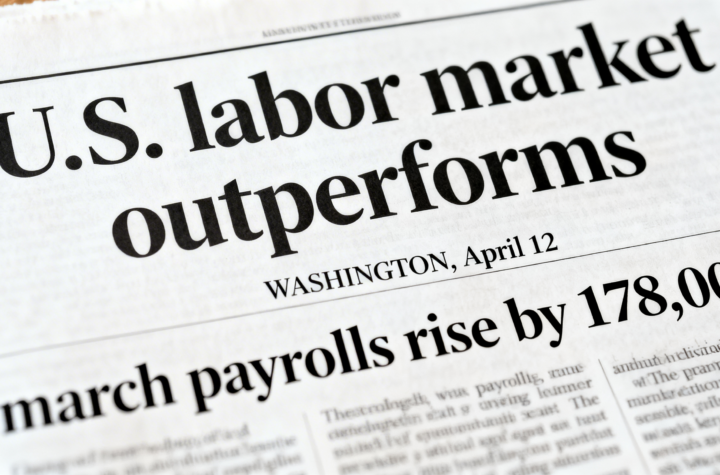
U.S. job growth exceeds estimates with 178,000 added in March
Naoris Protocol debuts quantum-resistant chain as Bitcoin, Ethereum face looming ‘Q-Day’ challenge
Crypto markets brace for holiday lull as ETF and CME flows switch off, leaving bitcoin exposed